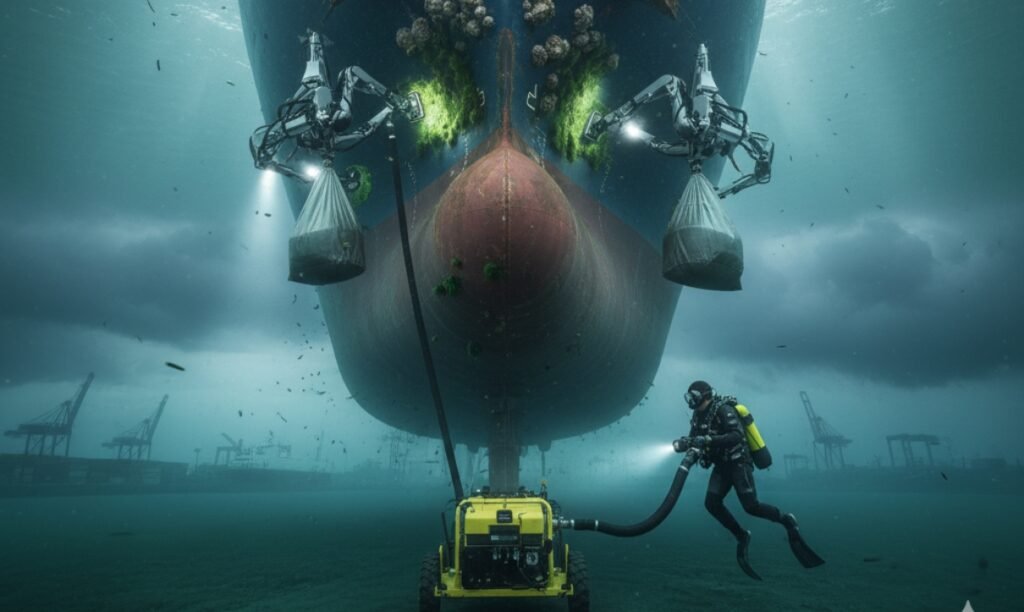
Underwater Hull Cleaning in Indiana: Why It Matters for Your Vessel
Importance of Underwater Hull Cleaning in Indiana – Why every ship needs it regularly Underwater hull cleaning in Indiana is crucial to maintain vessel performance and longevity. Over time, biofouling like barnacles, algae, and marine growth accumulates on hull surfaces, causing drag that slows vessels and increases fuel consumption.
Benefits of Regular Underwater Hull Cleaning in Indiana – Fuel efficiency, speed, reduced maintenance
Regular underwater hull cleaning enhances fuel efficiency by reducing surface friction, allowing your ship to glide through water more easily. This translates into faster transit times and lower fuel bills. Additionally, cleaning helps preserve anti-fouling coatings, preventing costly damage and dry-docking.
Environmental Advantages of Eco-Friendly Cleaning – MARPOL and local compliance
Eco-friendly underwater hull cleaning in Indiana aligns with MARPOL and local regulations by minimizing marine pollution. Modern cleaning technologies use non-invasive methods like cavitational cleaning and water jets, avoiding toxic chemical release. Compliance with environmental standards protects marine ecosystems by controlling biofouling without harming wildlife.
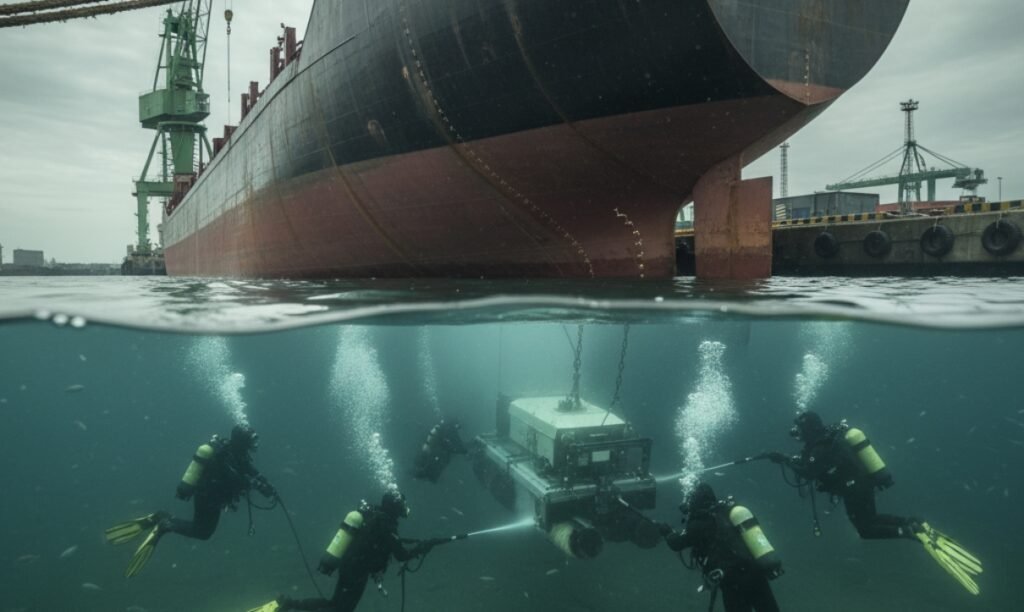
Professional underwater hull cleaning in Indiana waters
Cost Savings Through Underwater Hull Cleaning in Indiana – Reduced fuel and dry-docking costs
Investing in regular hull cleaning yields tangible cost savings, primarily by lowering fuel consumption through minimized hydrodynamic drag. Reduced fouling also delays the need for expensive dry-docking maintenance and repairs. By maintaining an efficient hull surface, vessels spend less time idle or undergoing costly overhauls, strengthening operational budgets and extending vessel service life.
Hull Biofouling Prevention Techniques – Anti-fouling coatings and best practices
To prevent biofouling, ships use specialized anti-fouling coatings that repel marine organisms and minimize growth. Regular inspections and timely cleaning help maintain these coatings’ effectiveness. Best practices include selecting appropriate coatings for local Indiana waters and conditions, scheduling consistent cleaning routines, and monitoring hull condition post-cleaning.
Robotic Underwater Hull Cleaning in Indiana Innovations – Using ROVs and automated cleaning systems
Robotic hull cleaning innovations employ remotely operated vehicles (ROVs) equipped with brushes and water jets to clean vessels underwater autonomously. These systems reduce diver risk and improve cleaning precision. Automated cleaning robots efficiently manage large hull surfaces, optimize cleaning schedules, and preserve coating integrity. Also read about 7 Powerful Benefits of Underwater Hull Cleaning in Boston.
Manual vs Mechanical Cleaning – Pros, cons, and safety considerations
Manual underwater hull cleaning uses divers with hand tools or suction systems, offering detailed cleaning in complex areas, but it involves human risk. Mechanical cleaning deploys machines or ROVs for faster, consistent results with reduced safety hazards. Both methods have pros and cons: manual cleaning is flexible but labor-intensive, while mechanical cleaning is efficient but depends on technology availability.
Inspection and Maintenance Integration – Combining cleaning with surveys
Integrating underwater hull cleaning in Indiana with inspections and maintenance surveys streamlines vessel upkeep. While cleaning removes biofouling, inspections identify damage, corrosion, or coating wear early, allowing timely repairs. This integration reduces downtime by coordinating hull cleaning with classification or regulatory surveys, ensuring compliance and vessel readiness.
Scheduling Underwater Hull Cleaning in Indiana – Frequency based on vessel type and waters
Hull cleaning frequency depends on vessel type, usage, and local water conditions. Ships operating in warm or nutrient-rich Indiana waterways may require cleaning every few months, while cold water environments allow longer intervals. Cargo vessels, ferries, and workboats have distinct cleaning needs. Regular assessments guide flexible scheduling to balance cost and performance benefits, enhancing hull integrity and efficiency.
Underwater Hull Cleaning in Indiana Regulations – IMO, MARPOL, and local port rules
Indiana ship operators must comply with the IMO, MARPOL conventions, and local port rules governing underwater hull cleaning. These regulations ensure environmentally safe practices, protect marine life, and maintain shipping standards. Proper documentation demonstrating compliance is often required during port calls. Staying informed on these evolving regulations supports legal operation and port acceptance. Learn more about the Top 7 Benefits of Underwater Ship Hull Cleaning in Jersey.
Crew Safety During Cleaning Operations – Diver protocols and risk management
Crew safety involves strict diver protocols, including training, health monitoring, and drug & alcohol testing, critical to minimize risks during underwater cleaning. Risk assessments, emergency procedures, and the use of remote technologies enhance protection. Indiana ship operators emphasize safety culture to ensure divers’ well-being and uninterrupted vessel maintenance.
Hull Cleaning in Cold vs Warm Waters – Regional differences and challenges
Cleaning effectiveness varies between cold and warm waters due to biofouling types and growth rates. Warm Indiana waters foster faster fouling, requiring more frequent cleaning, while cold waters see slower accumulation. Cleaning techniques adapt to seasonal challenges such as ice or turbidity. Understanding local conditions helps optimize hull maintenance strategies. Read more about 7 Powerful Benefits of Underwater Hull Cleaning in Philadelphia.
Technology in Hull Cleaning – Sensors, AI, and real-time monitoring
Technology advancements include hull sensors detecting fouling levels, AI systems optimizing cleaning schedules, and real-time monitoring improving maintenance decisions. These innovations increase cleaning precision and predictive maintenance capabilities, lowering costs and enhancing vessel efficiency. Indiana operators adopting these technologies gain operational insights and compliance benefits.
Documentation and Compliance Support – Linking cleaning with flag documentation
Underwater hull cleaning in Indiana ties closely with flag documentation requirements to prove compliance and maintenance standards. Documentation includes cleaning records, inspection reports, and environmental compliance certificates necessary for flag state verification. Proper record-keeping supports regulatory audits and vessel classification, reinforcing maritime law adherence. Read more about 7 Essential Benefits of Underwater Ship Hull Cleaning in Aberdeen.
Fuel Efficiency Case Studies – Real-world examples of savings post-cleaning
Case studies show vessels post-cleaning can reduce fuel consumption by 10-15%, translating into thousands saved annually on fuel costs. Improved hull conditions increase speed and operational efficiency. Indiana shipowners who invest in regular underwater hull cleaning in Indiana report measurable ROI through these documented savings.
Port-Specific Cleaning Guidelines – Rules in New Plymouth, Tacoma, Columbus
Different ports enforce unique cleaning guidelines addressing environmental and safety concerns. Ships operating near key ports like New Plymouth, Tacoma, and Columbus must follow localized regulations on cleaning methods and disposal procedures. Awareness and adherence to these port rules avoid delays or penalties during port visits.
Drug & Alcohol Testing for Crews – Ensuring safety during hull operations
Mandatory drug and alcohol testing ensures crew fitness during cleaning activities, reducing accident risks underwater. This safety measure complies with international regulations, including IMCA guidelines. Indiana maritime operations that implement such testing demonstrate high safety standards and regulatory conformity. Also read about Crew Alcohol and Drug Testing: 7 Safety Essentials.
Future Trends in Underwater Hull Cleaning in Indiana – Smart cleaning, eco-innovation, and predictive maintenance
Future hull cleaning trends focus on smart cleaning systems with AI, eco-friendly materials, and predictive maintenance using data analytics. These innovations promise efficient, cost-effective, and environmentally responsible cleaning solutions for maritime industries. Indiana vessel operators preparing for these advances will enhance compliance and a competitive edge.
Marine Supercargo Special Section
Marine Supercargo offers global underwater hull, tank, and hold cleaning services, coupled with expert cargo supervision and compliance support. Recently, they added professional drug & alcohol testing services to enhance crew safety and meet stringent maritime regulations. This comprehensive service suite ensures operators worldwide maintain compliance, safety, and operational excellence, reinforcing Marine Supercargo’s reputation as a trusted maritime partner.
High-quality underwater hull cleaning in Indiana to remove fouling
Conclusion
Underwater hull cleaning in Indiana is a vital practice for maintaining vessel efficiency, safety, and environmental compliance. Regular cleaning reduces fuel consumption, prevents costly repairs, and aligns with rigorous international and local regulations. Embracing innovations in cleaning technology and integrating maintenance with documentation enhances operational success. Ship owners and managers are encouraged to partner with trusted providers like CleanShip.co for expert compliance and maritime services, ensuring sustainable and cost-effective vessel operations.
FAQs:
Q1. How does underwater hull cleaning in Indiana Camden compare to?
Underwater hull cleaning in Camden follows similar principles but may have different environmental regulations and biofouling types. Local port requirements influence cleaning frequencies and methods. Ensuring compliance with regional rules is essential for efficient hull maintenance.
Q2. Why is flag documentation important for ship safety and compliance?
Flag documentation certifies a vessel meets safety, maintenance, and environmental standards mandated by the flag state and international maritime law. It protects crew, cargo, and the environment by ensuring operational compliance and aids in regulatory inspections.
Q3. What is the connection between documentation and maritime law?
Maritime law requires vessels to maintain accurate documentation of maintenance, inspections, and compliance activities. Proper documentation proves adherence to legal standards, supports dispute resolution, and facilitates port state control and flag state audits.
Q4. What role does drug & alcohol testing play in maritime operations?
Drug & alcohol testing ensures crew are fit for duty, preventing accidents during critical operations like underwater hull cleaning. It complies with international safety regulations, enhancing overall onboard safety and operational integrity.
Q5. How does proper documentation benefit crew and vessel management?
Accurate documentation streamlines maintenance planning, compliance tracking, and crew accountability. It improves operational transparency, reduces risks, and supports regulatory and safety audits, contributing to efficient and safe vessel management.