

Why Hold Cleaning Services at Takoradi Port Leads Marine Cleaning in Ghana
Picture your Hold Cleaning Services at Takoradi Port, holds shimmering after a cautious clean, organized for bauxite or cocoa without a hitch. That’s the reality at Ghana’s marine cleaning powerhouse. Hold cleaning organizations at Takoradi port set the gold standard, driving West Africa’s capability edge.
Takoradi handles 12 million tons each year, mixing standard assets with comprehensive measures. We’ll investigate why this port beats needs, from compliance to headways, making it isolated for you to explore bulk carrier ops seamlessly.
Takoradi’s Rise as Ghana’s Cleaning Hub
Hold Cleaning Services at Takoradi Port changed from a manganese exporter into a multi-cargo pioneer through proactive cleaning. You compartment here knowing holds meet “grain clean” specs—no buildup shocks. Interfacing bunches utilize high-pressure frameworks, cutting turnaround by a day versus territorial averages.
This edge stems from the framework: committed cleaning contracts, 24/7 ops, and facilitated jumpers. Ghana’s port master contributes to expanding, yielding 25% less delays than its neighbors.
Why Ghana Leads West Africa in Marine Cleaning
Ghana ships 30 million tons over Takoradi and Tema, outpacing rivals with zero-tolerance traditions. Hold cleaning organizations at Takoradi port epitomize this—robotics makes a separate and certified bunches minimize defilement to underneath 1%.
You benefit from lower demurrage; Ghana’s PSC scores beat the locale by 35%. Meanders in organizing and tech position Ghana as the go-to for bulk exchanges, influencing Togo and Nigeria.
- Strict pre-loading considers capture issues early.
- Eco-friendly washes align with around the world green pushes.
- Data-driven logs graph compliance instantly.
Core Role of Hold Cleaning in Bulk Carriers
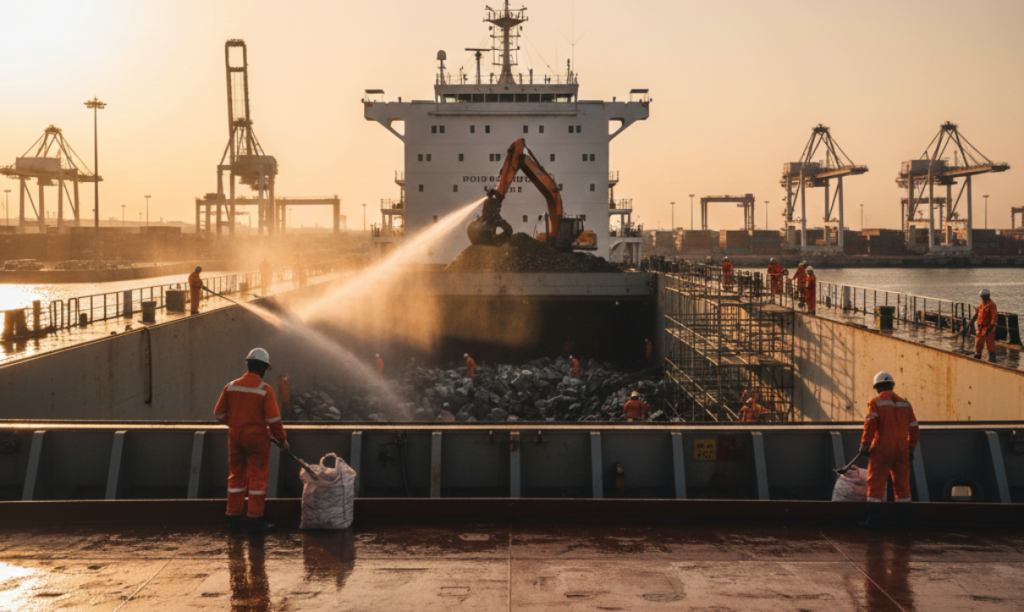
Hold cleaning evacuates buildups like take after from earlier cargoes—think grain, clean pulverizing fertilizer. In Takoradi, you get tank, hold, and bulk carrier measures: water influencing to 200 bar, vacuuming rust scales.
Skip it, and cross-contamination spikes claims 40%. Appropriate cleaning guarantees unfaltering switches from coal to food-grade loads.
IMO Mandates for Safe Holds
IMO’s ISM Code requests recorded cleaning for vessel security. Takoradi keeps up this by actuates of joint inspections—you take off plans pre-arrival, keeping up a crucial partition from detainments common elsewhere.
MARPOL Convention in Action
MARPOL Interface V treats buildups as abuse; Ghana logs releases critically. Hold cleaning organizations at Takoradi port certify zero spills, keeping up a key remove from $50K fines. Ports reuse wash water, cutting pollution.
IMCA and IAPH Alignment
IMCA rules organize bunches on confined-space section; IAPH prompts supportability. Takoradi’s workflows reflect these, with surveyor sign-offs guaranteeing smooth clearances.
Safety Protocols in Focus
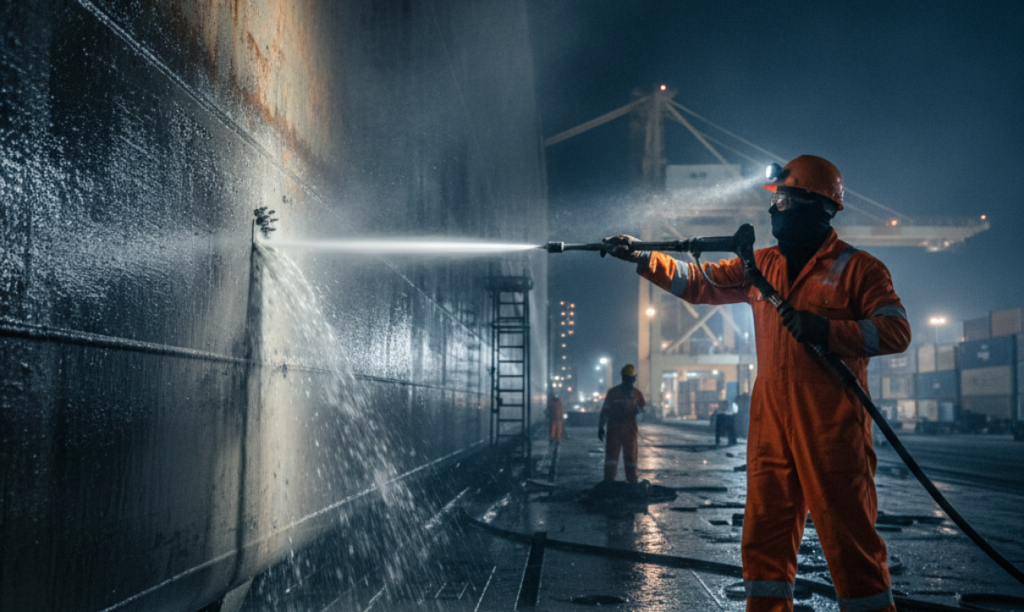
Slippery holds cause 60% of onboard injuries—highlights from bulk carrier logs. Takoradi orders PPE, gas observing, and ventilated cleans. You secure bunches from silica clean or chemical burns.
Training reenacts genuine to goodness to goodness scenarios: those taking care of in swells. Result? Occasion rates are 50% underneath West African norms.
Environmental Protection Wins
Takoradi reuses 80% of cleaning water, guaranteeing the Channel of Guinea fisheries. Unclean holds spill supplements, fueling green progress blooms—Ghana keeps up a key separate from this by means of MARPOL traps.
You keep up ESG scores, drawing in eco-conscious charterers. IAPH assertions such ports for driving decarbonization.
Cost-Efficiency Breakdown
Hold cleaning organizations at Takoradi port have taken a toll of $6,000–$12,000 per vessel, but spare $100K in potential claims. Speedier billets brutal $25K each day demurrage avoided.
Over a year, armadas report 30% advantage boost. It’s like tuning an engine—small input, tremendous heroic quality gains.
Operational Standards Explored
Tank Cleaning Specifics
Tanks require hydrocarbon vapor clearing; Takoradi businesses use Butterworth machines for without a address scope. You wrap up gas-free status in 12 hours.
Hold Cleaning Techniques
Bulk holds get mechanical clearing moreover jets—rust pieces vacuumed to anticipate sully. Measures organize the IMSBC Code for secure cargoes.
Bulk Carrier Workflows
Full cycles: assessment, clean, dry, certify. Takoradi’s contracts handle 10,000 DWT to Capesize without backlog.
Documentation and Inspection Workflows
You log strategies, volumes, and photographs digitally—IMCA-compliant apps speed this. Surveyors utilize UV lights for buildup revelation; Takoradi plans reports in hours.
Pre-arrival filings by proposes of Ghana Ports empower up with fragments. Non-compliance? Getting to be flushed pennants delay you for days.
Real-World Maritime Stories
A 2024 Capesize skipped cleaning a few put else, misplaced $200 to cocoa ejection. Takoradi client exchanged cargoes flawlessly, cruising on organize. These stories emphasize why Ghana leads.
Another: mineral buildups started a fire peril in a neighbor port—prevented here by organize checks.
Crew Health and Training
Residues carry hurts; Takoradi requires triumph certs post-clean. IMCA modules cover ergonomics, decreasing strains.
Innovations Driving the Future
Drones chart holds remotely, cutting zone risks by 65%. AI predicts buildup plans; UV robots clean sans chemicals.
Blockchain certifies reports as comprehensive. Takoradi pilots these, looking at 2030 net-zero cleaning. CleanShip.co grandstands comparable tech advances.
Conclusion
Takoradi ports lead with an overpowering hold cleaning organization at Takoradi port, mixing compliance, security, and capability for Ghana’s West African dominance. Key takeaways: Get a handle on benchmarks to cut costs 30%, utilize advancements for greener ops, and prioritize documentation for solid voyages. Lift your sea game—engage specialists like Marine Supercargo for unmatched compliance and advantage mass in tank, hold, and bulk cleaning. Reach out these days for solid support around the world.
FAQs:
Q1. What Makes Hold Cleaning Organizations at Takoradi Port Stand Out?
Takoradi beats needs with speedy, IMO-certified cleans utilizing high-pressure planes and vacuums, satisfying grain-clean holds in underneath 24 hours. Security and MARPOL compliance are enabled dependably, minimizing threats for bulk carriers. Ghana’s conventions guarantee no defilement, boosting your reliability.
Q2. How Does MARPOL Impact Tank Cleaning in Ghana?
MARPOL Interface I requires vapor-free tanks; Takoradi logs, Butterworth cycles, and test climates. Fines for non-compliance hit $75K—you maintain a strategic distance from them through certified organizations. Bulk tankers benefit from reused water, ensuring adjoining circumstances effectively.
Q3. Why Prioritize Security in Bulk Carrier Hold Cleaning?
Slippery buildups cause falls; Takoradi actualizes gas observing and PPE per IMCA. Collect organizing decreases scenes by 50%, guaranteeing solid voyages. Hold cleaning operations at Takoradi port have been scrutinized more closely of late.
4. What documentation supports these hold cleaning inspections?
Expect to see procedural logs, residue test results, and surveyor photographs—digital records, in line with Ghana Ports standards. Pre-arrival documentation includes volume details and certifications. This process streamlines bulk carrier operations, reducing the risk of detentions.
5. How are advancements reshaping marine cleaning at Takoradi?
Drones conduct inspections without interruption, while robots perform tasks with precision, cutting labor needs by 60%. Artificial intelligence optimizes cleaning processes in accordance with MARPOL regulations. Companies are evolving their tank and hold operations, promising efficient, low-emission solutions, as demonstrated by industry leaders like Marine Supercargo.