Understanding Affordable Hold Cleaning in West African Ports: Basics
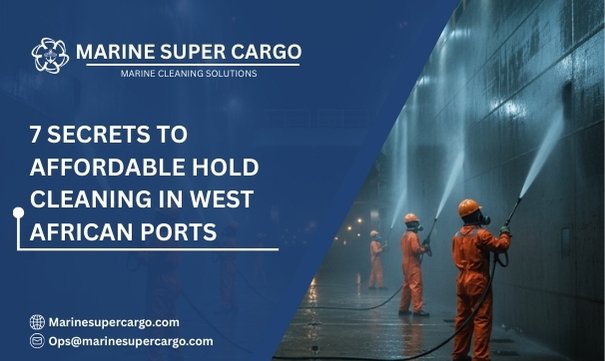
You pull into Lagos or Abidjan, holding caked with ore dust from the last run. Affordable hold cleaning in West African ports makes sure you scrub efficiently without breaking the bank. It’s like pressure-washing your garage after a muddy project—remove every trace to prep for grains or bauxite next. These services use high-pressure jets and safe chemicals to hit the “grain clean” standards surveyors demand. In humid West Africa, skipping this invites mold and rejection.
Operators prioritize cost-effective methods, blending manual labor with tools for quick turnarounds. You save by cleaning during laytime, avoiding extra hires.
Why West African Ports Need It
Ports like Tema in Ghana, Lagos in Nigeria, and Dakar in Senegal buzz with bulk trade. Residue contamination risks cargo claims, so affordable hold cleaning in West African ports ensures compliance before loading. Imagine a cocoa shipment tainted by coal—disaster. Local humidity accelerates buildup, demanding thorough preps.
Delays here cost fortunes due to congestion. Proactive cleaning keeps schedules tight, turning potential headaches into smooth sails.
Breaking Down the Cleaning Process
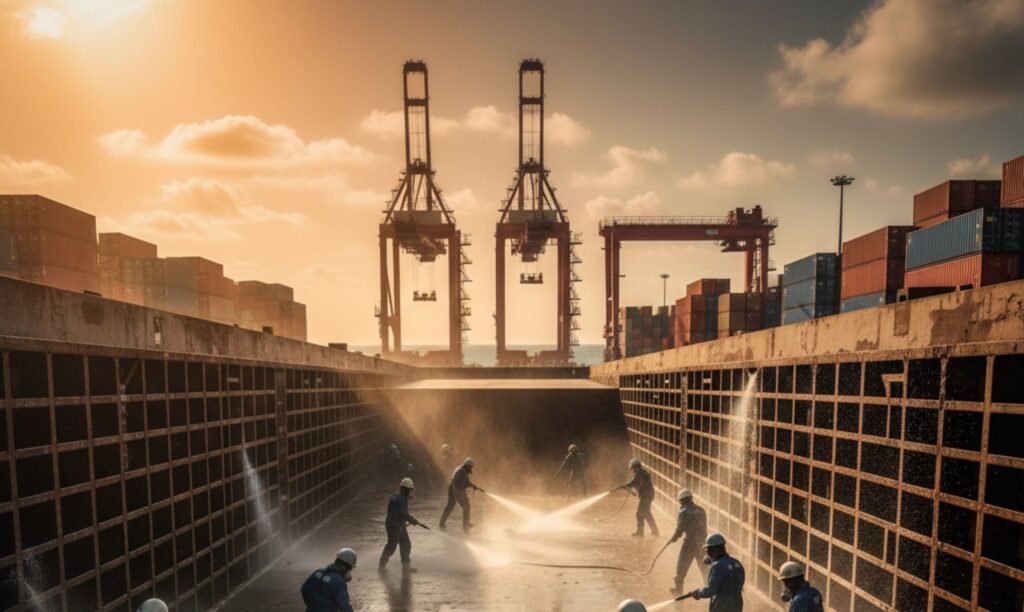
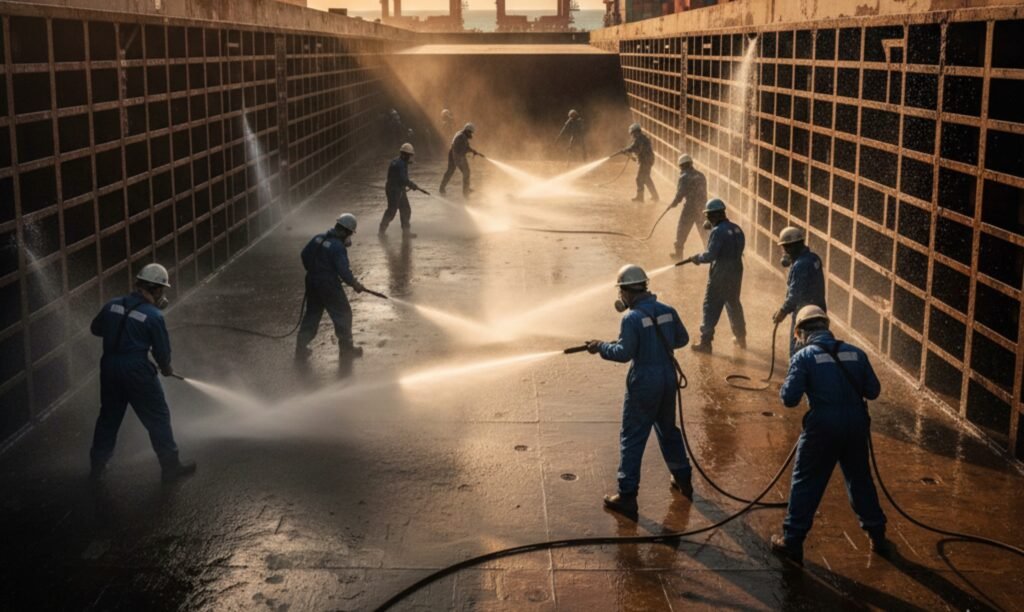
You ventilate first, then sweep debris. Affordable hold cleaning in West African ports deploys teams with hoses blasting from bulkheads down. Chemicals like alkaline cleaners dissolve oils; dryers expel moisture. It’s systematic, like detailing a car inside out.
- Initial sweep: Clear loose particles.
- High-pressure wash: Target stubborn spots.
- Chemical application: Break down residues.
- Rinse and dry: Achieve inspection-ready shine.
- Final check: Lights and mirrors for perfection.
This flow minimizes water use, keeping costs low.
Navigating Regulatory Compliance
Rules from IMO set global baselines, with MARPOL banning overboard dumps. Affordable hold cleaning in West African ports aligns with IMCA safety and IAPH sustainability. You log chemicals, waste volumes—paperwork proves eco-friendliness. Fines for violations sting in Nigeria’s ports.
Think of checklists as your roadmap; non-compliance echoes tales of seized vessels. Ghana Ports Authority mirrors these strictly.
Prioritizing Safety During Operations
Fumes and heights spell danger, but affordable hold cleaning in West African ports equips teams properly. Harnesses, gas monitors, respirators per IMCA—essential in confined spaces. Heat exhaustion hits hard; hydrate and rotate.
Drug & alcohol testing, now standard, keeps crews sharp. Real incident: A slippery deck slip in Abidjan—training averted worse.
Eco-Friendly Practices Explained
West Africa’s coasts suffer from pollution; MARPOL enforces onshore waste disposal. Affordable hold cleaning in West African ports uses biodegradable agents, collecting runoff. Like recycling kitchen scraps, it protects mangroves.
- Biodegradable detergents: No marine harm.
- Water recycling: Cuts usage by 40%.
- Waste segregation: Ports provide facilities.
IAPH pushes this for green ports.
Unlocking Cost-Saving Tactics
Demurrage devours profits—$15K/day easy. Affordable hold cleaning in West African ports negotiates fixed rates, bundled with supervision. Off-peak scheduling shaves 20-30%. Track via apps for efficiencies.
Example: Lagos operator batched cleans, halving fees. It’s budgeting smart, not cheap.
Common Challenges You Face
Congestion at Apapa, Nigeria, limits access; monsoons flood the holds. Affordable hold cleaning in West African ports adapts with portable gear, weather delays. Skill gaps mean training investments.
Power flickers disrupt pumps—generators solve it. Stories from Dakar highlight flexibility wins. Read more about Hold Cleaning Services at Khorfakkan – 7 Powerful Benefits.
Stories from the Docks
Take the bulker in Takoradi: Skimped on cleaning, faced a week-long hold. Switched to affordable hold cleaning in West African ports—cleared fast, saved $40K. Another in Cote d’Ivoire used night teams for express results.
These tales underscore the value of reliability.
Emerging Innovations Ahead
Drones map residues; robots scrub autonomously. Affordable hold cleaning in West African ports tests enzyme cleaners—faster, greener. Blockchain tracks compliance docs.
Ports like Tema pilot these per IAPH, promising 50% time cuts by 2027.
Supercargo’s Support Role
Experts like Marine Supercargo oversee affordable hold cleaning in West African ports. They handle global tank/hold cleaning, cargo supervision, and compliance. New drug & alcohol testing bolsters safety. You gain unbiased eyes for surveys.
Hold Cleaning vs. Tank Services
| Feature | Hold Cleaning | Tank Cleaning |
|---|---|---|
| Cargo Type | Dry bulk | Liquids |
| Methods | Jets, sweeps | Pumps, steaming |
| Cost in WA Ports | Lower entry | Higher due to gas-free |
| Time | 1-3 days | 3-5 days |
Holds for grains; tanks for oils—both economical with pros.
“Marine cleaning, anytime. Anywhere. 🌊 #GlobalMarine”#shipping #maritime #ship #cruises #sealife #port #shipping #marine #captain #vessel #ships #cargo pic.twitter.com/GgKTqEMETK
— Marine Super Cargo (@Marinsupercargo) October 4, 2025
Boosting Crew Safety with Testing
Boosting crew safety is vital for affordable hold cleaning in West African ports, where high-risk operations demand zero tolerance for impairment. Random drug and alcohol testing prevents on-site accidents and ensures crews remain fully alert during cleaning tasks.
Marine Supercargo’s confidential and accurate testing services align with IMO and port safety standards, supporting smooth inspections and compliance. By integrating testing into daily operations, operators protect crew welfare, reduce liability, and maintain safe, efficient, and affordable hold cleaning across West African ports.
Mastering Documentation
Mastering documentation is essential for affordable hold cleaning in West African ports. Today, photos, certificates, and cleaning logs move through digital platforms designed for fast audits and transparent approvals. By standardizing records in IMO-approved formats, operators reduce inspection delays, prevent disputes, and improve compliance across multiple ports.
Digital documentation also creates a clear audit trail, helping charterers and port authorities verify cleanliness instantly. This smart, paperless approach saves time, lowers costs, and strengthens operational credibility in West African maritime trade.
Future of Affordable Services
The future of affordable hold cleaning in West African ports is driven by innovation and sustainability. AI-powered planning now optimizes cleaning schedules, reduces idle time, and cuts operational costs. At the same time, eco-friendly technologies and water-efficient systems lower environmental impact while improving compliance.
As West African ports modernize their infrastructure, these advancements make services faster, safer, and more cost-effective. Staying adaptive to these trends helps vessel operators maintain efficiency, meet regulations, and secure long-term savings in competitive regional trade.
Conclusion
Affordable hold cleaning in West African ports plays a critical role in modern maritime operations. It ensures full compliance with IMO and MARPOL regulations, helps vessel operators avoid costly delays and demurrage, and strengthens onboard safety and environmental performance.
By choosing professional, cost-effective services, you protect cargo quality and maintain smooth port calls across the region. For dependable results, Marine Supercargo delivers expert cleaning, cargo supervision, and crew testing services. Partner with them to achieve seamless compliance and operational excellence in West Africa.
FAQs:
Q1. What are affordable hold cleaning in West African ports?
Budget-friendly scrubs for cargo holds using efficient tools/chemicals. Targets residues for clean surveys at ports like Lagos. Complies with MARPOL, saves demurrage.
Q2. How do services cover hold, tank, and bulk carrier cleaning?
Hold for dry bulk, tanks for liquids via steaming/pumps. Bulk carriers get full prep. Marine Supercargo offers global, compliant solutions, including supervision.
Q3. Why prioritize bulk carrier cleaning in these ports?
Handles grains/ores prone to contamination. Affordable services ensure “rock clean,” meeting IMO. Prevents claims in humid climates like Senegal.
Q4. What compliance do these cleaning services ensure?
IMO, IMCA, MARPOL, and IAPH standards via logs/waste handling. Drug testing adds a safety layer. Essential for West African port clearances.
Q5. Any innovations for tank and hold services?
Robots, eco-enzymes speed processes. Affordable options integrate drones for inspections, cutting costs by 30%. Future-ready for ports.