Underwater Ship Hull Cleaning in Sekondi
Every vessel that sails across Ghana’s West Coast faces an invisible enemy—marine fouling. Over time, barnacles, algae, and slime stick to ship hulls, slowing voyages and driving up fuel costs. Underwater Ship Hull Cleaning in Sekondi provides ship owners with reliable, compliant, and sustainable maintenance solutions. Sekondi’s growing port operations make it a critical hub for ship servicing in West Africa.
With trained divers, advanced cleaning tools, and eco-safe methods, ships regain their hydrodynamic efficiency. The process not only improves performance but also protects the environment and extends hull coating life while ensuring vessels meet IMO standards.
Why Underwater Ship Hull Cleaning in Sekondi Matters
The ocean rarely forgives neglect. Even a thin layer of marine growth can drag performance down dramatically. Underwater Ship Hull Cleaning in Sekondi eliminates these unwanted hitchhikers, minimizing friction and increasing fuel efficiency. Tropical waters cause biofouling to form faster, turning a clean hull into a performance hazard. Studies show that severe fouling can slash speed by up to 30%.
Scheduled underwater cleaning keeps ships agile and compliant. For operators, it’s not just maintenance—it’s strategic risk reduction and smarter cost management that ensures ships operate efficiently and safely across regional and global trade routes.
Environmental Impact and Sustainability
Today, maintaining a clean hull is as much about protecting the planet as improving performance. Underwater Ship Hull Cleaning in Sekondi reduces greenhouse gas emissions by cutting fuel burn. It also prevents the spread of invasive species between ports, a key focus of the MARPOL Convention.
Professional teams use filtration systems to collect and remove biofouling safely, ensuring marine debris never contaminates nearby waters. Sekondi’s marine cleaning services follow eco-friendly practices that align with international regulations. This commitment to sustainable operations keeps both port ecosystems and global shipping routes in balance.
Cleaning Methods and Technologies
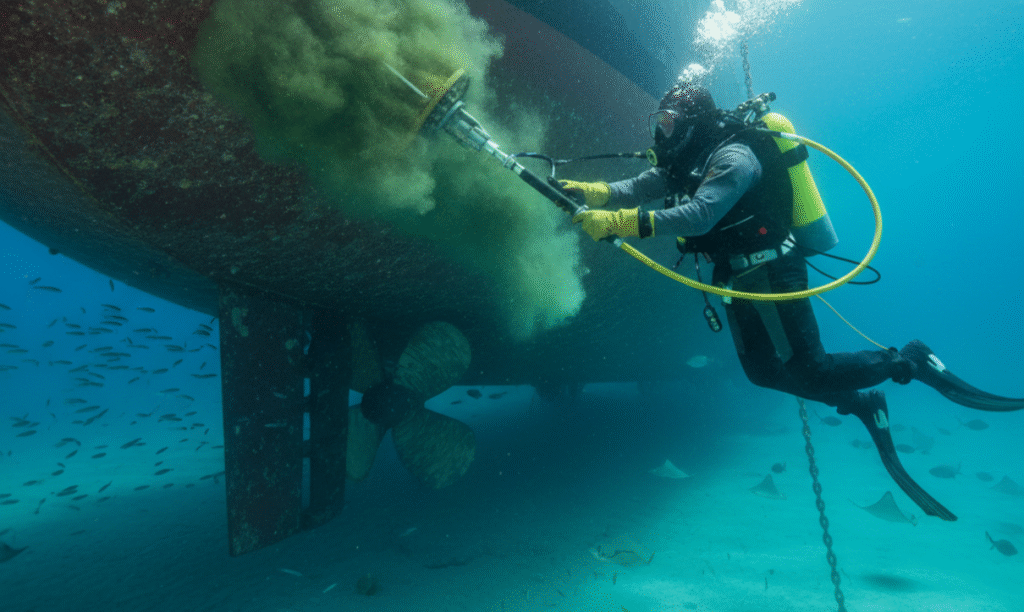
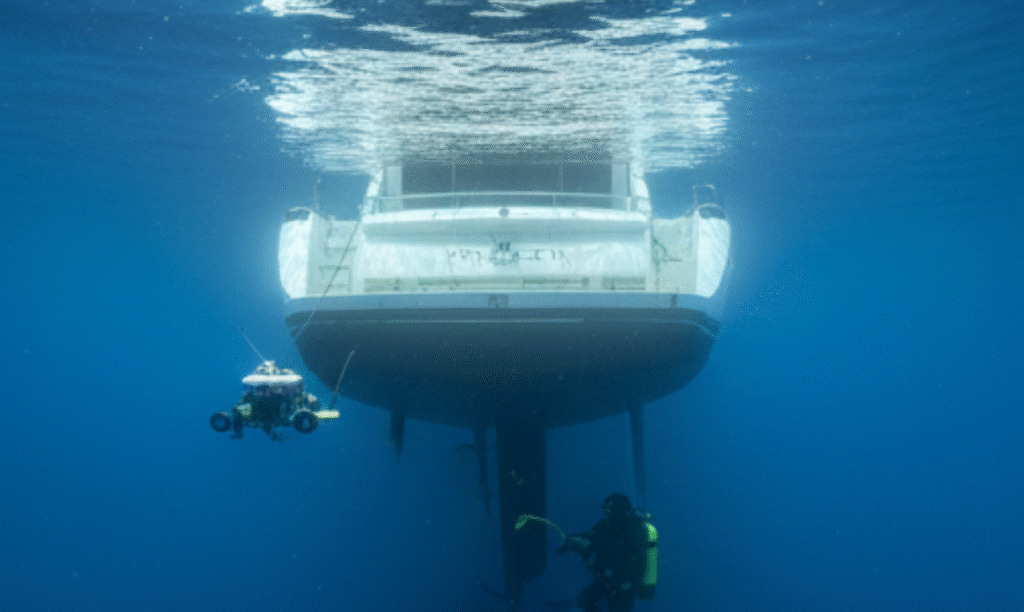
Modern underwater cleaning combines diving expertise with innovation. Underwater Ship Hull Cleaning in Sekondi relies on robotic systems, diver-operated tools, and cavitation technology. Hydraulic brushes handle rough fouling surfaces without damaging protective paint layers. Cavitation cleaners use water bubbles under pressure to lift debris gently.
Robots, fitted with cameras and sensors, deliver precision cleaning, allowing divers to focus on inspection and quality control. Before starting work, divers assess fouling levels, hull material, and coating condition to select the right method. This approach balances efficiency, safety, and energy conservation for maximum performance benefits. Read more about Underwater ship hull cleaning in Ghana.
Financial Benefits of Routine Cleaning
Every voyage costs money—and a fouled hull silently multiplies those costs. Underwater Ship Hull Cleaning in Sekondi lowers operational expenses by improving hydrodynamic efficiency. A clean hull reduces fuel usage and engine strain, saving up to 15% in fuel costs. Regular cleaning also extends coating life, postponing expensive reapplications and reducing dry-docking frequency.
Vehicle downtime is minimized, as these cleanings are performed in-water without disrupting sailing schedules. When combined with regular performance tracking, ship owners can forecast maintenance costs accurately. The result is a more predictable budget, better efficiency, and sustained profitability. Also read about Underwater Hull Cleaning in Sekondi
“Marine cleaning, anytime. Anywhere. 🌊 #GlobalMarine”#shipping #maritime #ship #cruises #sealife #port #shipping #marine #captain #vessel #ships #cargo pic.twitter.com/GgKTqEMETK
— Marine Super Cargo (@Marinsupercargo) October 4, 2025
Safety Standards and Best Practices
Safety remains paramount in underwater operations. Underwater Ship Hull Cleaning in Sekondi follows strict IMCA safety standards to protect divers, vessels, and the surrounding marine environment. Each project begins with a risk assessment detailing visibility, tidal conditions, and vessel size. Divers communicate continuously with surface teams for real-time monitoring.
Advanced air systems and emergency backup plans guarantee safety even under challenging underwater conditions. Equipment is inspected before and after use to ensure reliability. By maintaining high safety benchmarks, Sekondi’s diving teams safeguard both workers and machinery while delivering precision cleaning results. Also read about underwater ship hull cleaning in Takoradi.
Choosing the Right Hull Cleaning Partner
Finding a trusted partner for Underwater Ship Hull Cleaning in Sekondi ensures long-term fleet reliability. Experienced providers blend technical expertise, regulatory compliance, and environmental stewardship. They provide real-time progress updates, detailed before-and-after documentation, and digital inspection reports to support audits and insurance requirements.
Companies accredited by IAPH or certified by international bodies guarantee adherence to safety and environmental laws. Reliable teams don’t just clean—they monitor fouling trends, advise on coating choices, and create preventive maintenance plans. This proactive partnership ensures your fleet stays efficient, compliant, and prepared for global operations.
Marine Supercargo Expands Services: Drug & Alcohol Testing for Safer Seas
Marine Supercargo, renowned for its global marine cleaning expertise, is expanding its service portfolio to enhance crew safety at sea. The company now offers comprehensive Drug & Alcohol Testing for maritime operators in Sekondi and beyond. This initiative is designed to help ship owners and managers ensure compliance with IMO and MARPOL safety regulations.
With rigorous testing protocols, Marine Supercargo supports crews in maintaining alertness, reducing human error, and promoting a responsible onboard culture. Integrated alongside Underwater Ship Hull Cleaning in Sekondi, this service creates a complete ecosystem of safety, efficiency, and compliance—fostering healthier workplaces and smoother voyages across international waters. Also, know about underwater ship hull cleaning in Tema.
Innovation and Future Developments
The maritime industry is moving toward smarter, greener maintenance solutions. Underwater Ship Hull Cleaning in Sekondi is embracing this shift with technological innovation. AI-enabled robots can scan hulls and detect fouling before it becomes visible. Data analytics now predict when ships need cleaning, minimizing unplanned downtime.
New eco-friendly coatings deter marine growth naturally, reducing cleaning frequency. The future also points toward electric-powered underwater drones, cutting emissions further. Sekondi’s ship maintenance operators are adopting these technologies early, ensuring West Africa remains a competitive hub for efficient, environmentally sound maritime operations.
Training and Workforce Development
A skilled workforce anchors quality. Underwater Ship Hull Cleaning in Sekondi is performed by teams trained in diving, safety, engineering, and environmental management. Divers complete internationally accredited training programs, learning how to use cleaning robots, eco-filter systems, and hydraulic tools safely. Supervisors monitor both diver health and water quality throughout the process.
Ongoing education ensures crews can adapt to evolving IMO regulations and emerging technologies. Sekondi’s marine industry continues to invest in developing talent, partnering with maritime academies and global safety organizations to sustain excellence in marine cleaning and underwater operations.
Documentation and Quality Assurance
Transparency defines trustworthy service. In Underwater Ship Hull Cleaning in Sekondi, documentation begins before the dive and continues until project completion. Initial inspections determine fouling type and coating condition. Teams record water temperature, salinity, and growth patterns to create cleaning reports. Post-cleaning documentation includes photo evidence, waste collection logs, and maintenance recommendations.
Shipowners receive these reports digitally, supporting compliance audits and performance tracking. CleanShip.co uses analytics tools to compare past and current fouling data, ensuring continuous improvement. This systematic approach enhances accountability, consistency, and customer confidence in every operation.
Conclusion
Underwater Ship Hull Cleaning in Sekondi combines technology, safety, and sustainability to keep ships performing at their best. Regular cleaning reduces fuel costs, prevents long-term damage, and ensures total compliance with IMO and MARPOL regulations. These services enhance both vessel productivity and environmental responsibility.
By partnering with experts like CleanShip.co and adopting predictive cleaning schedules, ship owners can ensure smooth, cost-efficient, and compliant operations. Clean hulls lead to stronger fleets—gliding through Sekondi’s waters with efficiency, safety, and precision.
FAQs:
Q1. Why is underwater hull cleaning important for ships?
It removes marine growth that increases drag, improves speed and fuel efficiency, and ensures that ships meet international operating standards.
Q2. How often should vessels undergo cleaning in Sekondi?
Most ships need hull cleaning every 6–12 months, based on fouling levels, water temperature, and vessel activity across Ghanaian ocean routes.
Q3. How does Drug & Alcohol Testing improve safety?
Testing ensures crew fitness, reduces operational risks, prevents accidents, and enhances vessel performance through a culture of compliance and safety.
Q4. What technologies are used during cleaning?
Teams use hydraulic brushes, cavitation cleaners, and underwater robots equipped with cameras to remove fouling safely and efficiently.
Q5. How is environmental protection ensured?
All underwater hull cleaning in Sekondi operations collects waste using eco-filtration systems, preventing contamination and supporting marine sustainability.