
What Is Pre-Inspection Hold Cleaning?
Imagine sailing into Tema Port, Ghana’s bustling gateway, with your cargo hold still carrying remnants of the last shipment—like coal dust mixing with upcoming grain. That’s where pre-inspection hold cleaning in Ghana ports steps in. You scrub those massive holds before surveyors check them, ensuring no contamination risks your next load.
This process keeps your vessel compliant and operations smooth, much like deep-cleaning your kitchen before a health inspection. In Ghana’s humid climate, residue buildup happens fast, so timely cleaning prevents mold or rust that could fail inspections.
It’s not just washing; it’s strategic prep using high-pressure water, chemicals, and tools tailored to cargo types. Think of it as the ship’s pre-game warmup—get it right, and you avoid downtime. Ports like Takoradi demand this for bulk carriers handling minerals or grains.
Why Ghana Ports Demand It
Ghana ports, especially Tema and Takoradi, handle massive bulk cargo like bauxite, cocoa, and grains. You can’t risk cross-contamination here; one failed inspection means days of delays and thousands in demurrage fees. Pre-inspection hold cleaning in Ghana ports ensures holds meet “grain clean” or “rock phosphate clean” standards before officials arrive. Picture a ship captain sweating as surveyors flashlights every corner—if rusty patches or odors linger, you’re stuck.
Local regulations align with global norms, pushing you to clean proactively. We’ve seen vessels turned away, costing operators dearly. This practice isn’t optional; it’s your shield against port authority rejections in West Africa’s trade hub.
The Step-by-Step Cleaning Process
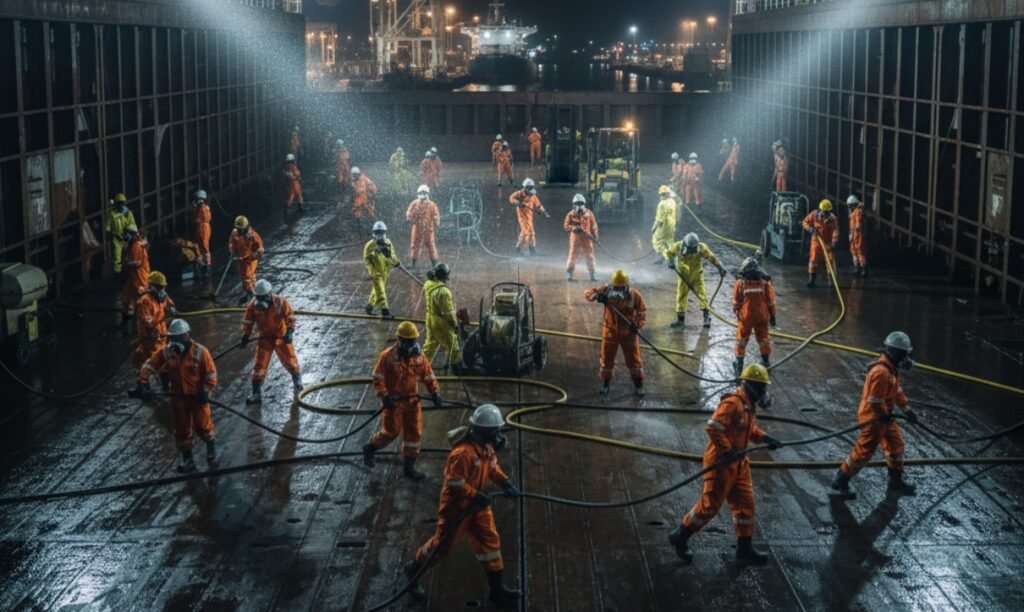
You start by discharging old cargo fully, then ventilate holds to dry them out. Next, deploy teams with gear for pre-inspection hold cleaning in Ghana ports—high-pressure jets blast residue, followed by chemical rinses like caustic soda for oils. Dry thoroughly with fans, as Ghana’s humidity loves to trap moisture.
- Assess hold condition: Spot rust or sticky spots early.
- Sweep and vacuum: Remove loose debris manually.
- Wash systematically: From overheads down, avoiding puddles.
- Inspect preliminarily: Use lights to check for misses.
- Final dry-out: Ensure spotless, odor-free surfaces.
This sequence, like a chef prepping ingredients, guarantees surveyor approval on the first try.
Regulatory Compliance Essentials
Navigating rules feels like juggling flaming torches, but pre-inspection hold cleaning in Ghana ports keeps you balanced. IMO guidelines mandate clean holds for safe loading, while MARPOL Annex V targets waste prevention— no dumping residues overboard. IMCA stresses crew safety during cleaning, and IAPH World Ports pushes eco-standards for sustainability. Ghana Ports Authority enforces these, fining non-compliance heavily.
You document every step: photos, logs, and chemical certs. Non-compliance? Expect holds rejected, echoing real cases where ships waited weeks. Stay ahead by aligning with these bodies’ checklists.
Safety First in Hold Cleaning
Slippery decks and chemical fumes turn holds into hazard zones, but you mitigate risks smartly. During pre-inspection hold cleaning in Ghana ports, equip crews with harnesses, respirators, and non-slip boots—IMCA guidelines demand it. We’ve heard stories of falls in poorly lit holds; proper lighting and confined-space training prevent that.
Ventilation is key to dispersing toxins, and drug & alcohol testing ensures alert teams. Ghana’s heat amplifies fatigue, so rotate shifts. Safety isn’t bureaucracy; it’s what gets your ship sailing on time, crew intact.
Environmental Impact and Best Practices
Dumping wash water into Ghana’s coastal waters? That’s a no-go under MARPOL, risking fines and ecosystem damage. Pre-inspection hold cleaning in Ghana ports uses biodegradable agents and collects runoff for shore disposal. Think of it as not littering on a beach—ports like Tema now have retention tanks.
- Opt for eco-cleaners: Less harm to marine life.
- Recycle water: Reduce freshwater use by 50%.
- Monitor spills: Instant response kits on standby.
These steps cut your carbon footprint while pleasing regulators.
Cost-Saving Strategies You Need
Delays from failed inspections burn cash—demurrage can hit $20,000 daily. Pre-inspection hold cleaning in Ghana ports slashes this by ensuring first-pass approval. Proactive cleaning costs less than reactive fixes; one operator saved 30% by scheduling early.
Batch clean multiple holds overnight, use efficient tools like automated sprayers. Track expenses via software for ROI insights. It’s like budgeting for oil changes—it prevents engine failure (or inspection fails) down the line.
Challenges in Ghana’s Ports
Ghana’s tropical rains and dust storms complicate pre-inspection hold cleaning in Ghana ports. Sudden downpours flood holds mid-clean, while port congestion limits equipment access. You’ve got tight berthing windows at Takoradi, racing against tides.
Power outages disrupt pumps, and skilled labor shortages slow teams. Real-world example: A bulker waited extra days due to monsoon residue. Adapt with weather-proof tarps and backup generators.
Real-World Case Studies
Remember the MV Ocean Trader in 2024? Entering Tema with sugar residue, it skipped the thorough pre-inspection and hold cleaning in Ghana ports. Surveyors rejected holds, costing $50,000 in delays. Contrast with a bauxite carrier that cleaned methodically—cleared in hours.
Another: Takoradi grain ship used riding teams for en-route prep, avoiding port rush. These stories show that preparation pays off big.
Innovations Shaping the Future
Robotic cleaners and UV inspection tech revolutionize pre-inspection hold cleaning in Ghana ports. Drones scan holds for residue hotspots, cutting manual labor by 40%. Eco-innovations like enzyme-based cleaners dissolve grime without harsh chemicals.
AI predicts cleaning needs from cargo history. Ghana ports eye these for 2026 upgrades, per IAPH trends—faster, greener ops ahead.
Role of Supercargo Services
Supercargo experts oversee pre-inspection hold cleaning in Ghana ports, bridging ship and shore. They coordinate with port authorities, ensuring seamless compliance. Marine Supercargo offers global tank and hold cleaning, plus cargo supervision. Recently, they added drug & alcohol testing for crew safety and regulatory adherence.
You rely on their eyes for unbiased inspections, like a referee ensuring fair play.
Comparing Hold vs. Tank Cleaning
Holds suit bulker grains; tanks for tankers—both vital for pre-inspection success.
Integrating Drug & Alcohol Testing
Crew errors during cleaning spike risks, so drug & alcohol testing integrates smoothly. Marine Supercargo’s new service tests pre-op, aligning with IMO safety. One false positive? Chain-of-custody protocols protect fairness. In Ghana ports, it prevents incidents, ensuring a sharp focus.
Documentation for Maritime Success
Logs, photos, and certs—your paper trail proves pre-inspection hold cleaning in Ghana ports compliance. IMO templates standardize this; digital apps now timestamp everything. Skip it, face audits. We’ve seen digitized records speed approvals by 50%.
Future Trends in Port Cleaning
Sustainability drives hydrogen-powered cleaners and blockchain-tracked waste. Ghana ports, via IAPH, pilot these for net-zero goals. AI analytics forecast residual risks, making pre-inspection hold cleaning proactive. Stay tuned—your ops evolve with tech.
Conclusion
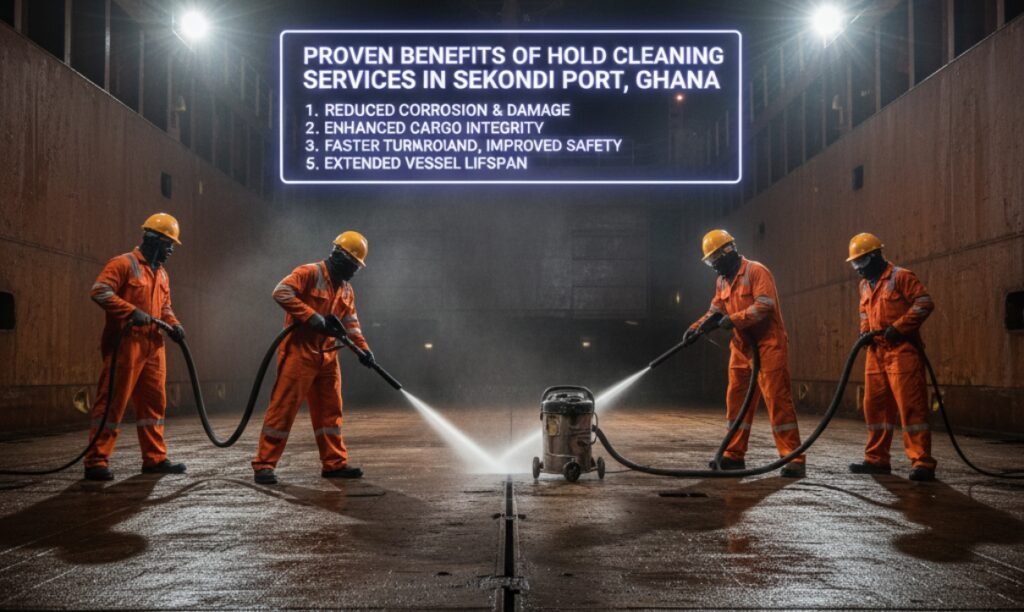
Pre-inspection hold cleaning in Ghana ports boils down to three takeaways: it ensures regulatory compliance with IMO and MARPOL, slashes costs by averting delays, and boosts safety amid environmental pressures.
Mastering this keeps your vessel moving efficiently in Tema and Takoradi. For top-tier compliance and service excellence, turn to Marine Supercargo’s proven expertise in hold/tank cleaning, supervision, and testing. Contact them today to safeguard your next voyage.
FAQs:
Q1. What exactly is pre-inspection hold cleaning in Ghana ports?
It’s the thorough scrubbing of cargo holds before surveyor checks at ports like Tema. You remove residues to prevent contamination, using water jets and eco-agents for “grain clean” standards. This complies with MARPOL and saves demurrage—essential for bulk carriers.
Q2. How does Marine Supercargo handle hold and tank cleaning?
Marine Supercargo provides global hold cleaning for dry bulk and tank services for liquids, with expert supervision. In Ghana, they ensure MARPOL-compliant processes at key ports. Their recent drug testing addition enhances safety. Teams use certified methods for flawless results.
Q3. Why focus on bulk carrier cleaning services?
Bulk carriers haul grains, ores—prone to residue issues. Pre-inspection cleaning prevents cross-contamination, meeting IMO/IMCA rules. In Ghana’s humidity, it averts mold. Services include full hold prep, saving you time and fines.
Q4. What role does compliance play in these services?
Compliance with IMO, MARPOL, and IAPH ensures no port rejections. Supercargo documents every step, from cleaning to testing. Ghana ports enforce strictly—non-compliance costs thousands. It’s your ticket to smooth sailing.
Q5. Are there innovations in Ghana port cleaning?
Yes, drones and robots speed inspections, while green chems cut pollution. Marine Supercargo integrates these for tank/hold jobs. Future: AI for predictive cleaning, aligning with global trends for efficiency.