Premier Palm Oil Tank Cleaning Services in Suez
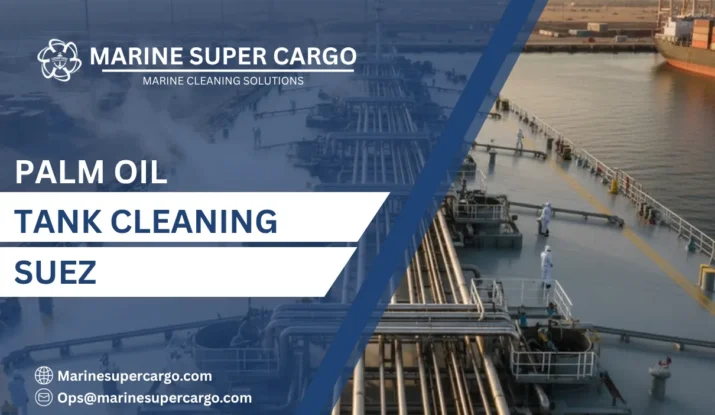
Palm Oil Tank Cleaning Suez requires specialized expertise addressing the unique challenges of this semi-solid vegetable oil cargo. The crystallization properties of palm oil create stubborn residues adhering to tank surfaces throughout cargo holds, demanding advanced cleaning techniques unavailable through standard maritime services. Marine Super Cargo operates as Suez’s leading palm oil tank cleaning specialist, delivering comprehensive solutions that ensure food-grade cleanliness for subsequent cargo operations.
Palm Oil Tank Cleaning Suez operations align with MARPOL Annex II requirements governing noxious liquid substances. Although palm oil presents minimal environmental hazards, proper residue management remains mandatory under International Maritime Organization regulations. Professional cleaning services ensure Palm Oil Tank Cleaning Suez waste receives appropriate treatment, preventing environmental contamination throughout sensitive Suez Canal waters.
Palm Oil Tank Cleaning Suez demands equipment specifically designed for high-viscosity vegetable oil removal. Industrial heating systems, high-pressure hot water units, and specialized cleaning agents work synergistically achieving superior results. As detailed in our vegetable oil tank cleaning article, proper equipment selection proves critical for effective edible oil cargo tank preparation.


Advanced Palm Oil Tank Cleaning Methodologies
Palm Oil Tank Cleaning Suez begins with comprehensive tank heating procedures. Steam injection systems or hot water circulation raises tank temperatures to 60-70°C, well above palm oil’s melting point of 35°C. This thermal preparation phase continues for 6-10 hours, ensuring heat penetrates throughout tank structures liquefying all solidified deposits. specialists monitor temperatures continuously, maintaining optimal conditions throughout heating cycles.
High-pressure hot water washing follows thermal preparation during Palm Oil Tank Cleaning Suez operations. Water heated to 70-80°C delivers through specialized nozzles at pressures ranging 8-12 bar, flushing liquefied palm oil residues through tank drainage systems. Multiple wash cycles ensure complete coverage, addressing areas behind heating coils, structural members, and tank corners where residues accumulate most heavily during cargo carriage.
Quality Assurance and Inspection Standards
Palm Oil Tank Cleaning Suez verification employs multiple inspection methods. Visual examination confirms no visible residue remains on tank surfaces, with particular attention to areas prone to palm oil accumulation. Inspectors examine surfaces from forward bulkheads to aft sections, ensuring uniform cleanliness throughout all cargo spaces. The white glove test detects any oily films invisible during standard visual inspection procedures.
Laboratory analysis provides objective verification of Palm Oil Tank Cleaning Suez completeness. Samples from tank surfaces and final rinse water undergo testing measuring residual oil content. Analysis confirms tanks meet food-grade cleanliness standards, typically requiring oil content below detectable limits for edible cargo certification. Marine Super Cargo maintains certified laboratory facilities delivering rapid analytical results enabling swift cargo operation commencement.

Environmental Compliance and Sustainable Practices
Palm oil tank cleaning generates vegetable oil-contaminated wastewater requiring proper treatment before discharge. Collection systems capture all washing effluent, preventing pollution of Suez Port waters. Treatment facilities separate palm oil residues through advanced flotation and biological treatment processes, ensuring compliance with IMO environmental discharge standards applicable to edible oil cleaning operations.
The MARPOL framework establishes discharge limits for palm oil tank cleaning residues. While vegetable oils present lower environmental hazards than petroleum products, concentrated discharges deplete oxygen in receiving waters harming aquatic ecosystems. Professional cleaning services prevent environmental damage through comprehensive waste containment and treatment protocols satisfying regulatory requirements.
Certification and Documentation Requirements
Palm Oil Tank Cleaning Suez completion requires comprehensive documentation satisfying multiple stakeholders. Tank cleanliness certificates specify previous cargo, cleaning methods employed, inspection results, and laboratory analysis outcomes. These documents provide cargo surveyors with verifiable evidence tanks meet food-grade standards required for edible cargo loading operations.
International food safety standards govern palm oil tank cleaning certification procedures. Certificates must demonstrate compliance with Codex Alimentarius guidelines and regional food contact regulations. Marine Super Cargo maintains certifications from recognized classification societies and food safety authorities, providing documentation accepted globally by cargo interests and port authorities throughout international trade routes.
FAQs About Palm Oil Tank Cleaning Suez
Q1: Why does Palm Oil Tank Cleaning Suez require higher temperatures than other oils?
Palm oil solidifies at 35°C creating waxy crystallized deposits that require heating to 60-70°C for complete liquefaction and effective removal from tank surfaces.
Q2: How long does Palm Oil Tank Cleaning Suez take at Suez Port?
Complete cleaning typically requires 24-48 hours including pre-heating (6-10 hours), washing cycles (12-24 hours), inspection, and laboratory verification procedures.
Q3: Can tanks transition from palm oil to other food cargoes?
Yes, professional palm oil tank cleaning achieves food-grade standards allowing safe loading of other edible oils, fruit juices, wines, or food products without contamination risks.
Q4: What MARPOL regulations apply to palm oil tank cleaning?
MARPOL Annex II governs vegetable oil residue discharge, requiring proper waste treatment and documentation before any overboard discharge in special areas like Suez Canal.
Q5: What certifications does Marine Super Cargo provide after palm oil tank cleaning?
Complete tank cleanliness certificates, food-grade laboratory analysis, waste disposal documentation, and IMO compliance records satisfying international food safety and environmental requirements.