Hold Cleaning Needs for Ships in Togo: What Operators Must Know
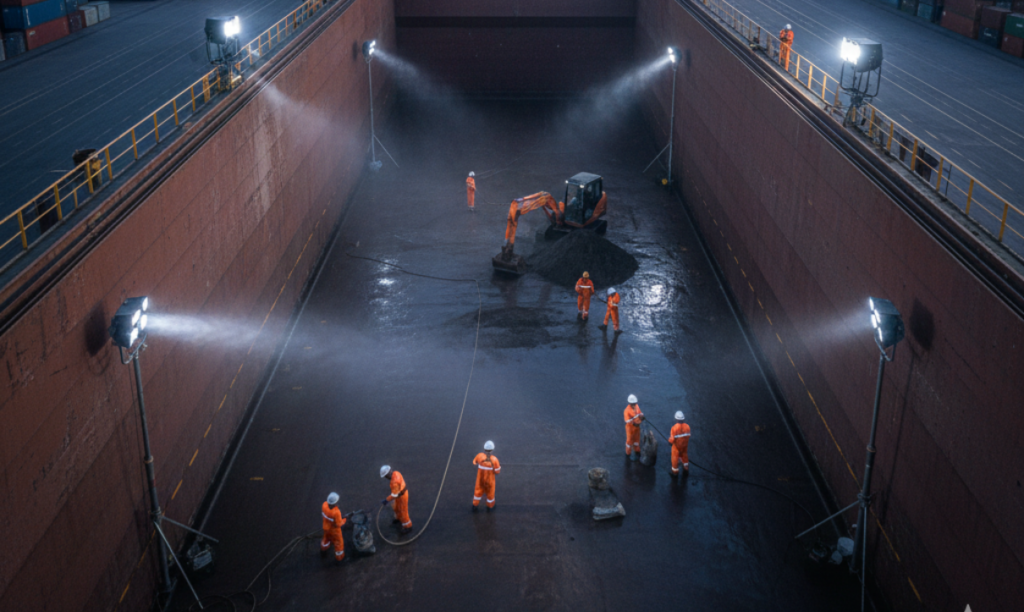
Hold Cleaning Needs for Ships in Togo are critical at Lomé Port, where dusty bulk cargoes such as cocoa, phosphates, and minerals leave residues that threaten the next load. Ship operators must apply thorough, inspection-ready cleaning to switch cargoes safely and meet IMO and MARPOL requirements. By following structured cleaning methods, proper waste handling, and documented inspections, vessels avoid cargo rejection, delays, and compliance risks while maintaining smooth operations in Togo’s high-traffic port environment.
Why Togo Ships Demand Rigorous Hold Cleaning Needs for Ships in Togo
Togo sits at West Africa’s trade crossroads, with Lomé Port handling over 12 million tons yearly. Holds pick up residues fast—think sticky cocoa butter or phosphate dust clinging like wet sand. Without proper cleaning, your next cargo risks contamination, leading to rejected shipments.
Picture a bulk carrier arriving from Brazil with soybeans. Leftover phosphate traces could ruin the lot, costing thousands. Regular hold cleaning keeps operations smooth.
Ghana’s Leadership in West African Marine Hold Cleaning Needs for Ships in Togo
Ghana leads West Africa in marine cleaning, thanks to Tema Port’s advanced facilities and strict enforcement. Companies there use high-pressure systems that cut cleaning time by 40%. Togo operators often look north for best practices, adopting similar tech.
Ghana’s edge comes from training programs aligned with IMCA standards. You benefit from their model: faster turnarounds mean more voyages per year.
Key Regulatory Frameworks Shaping Togo Operations
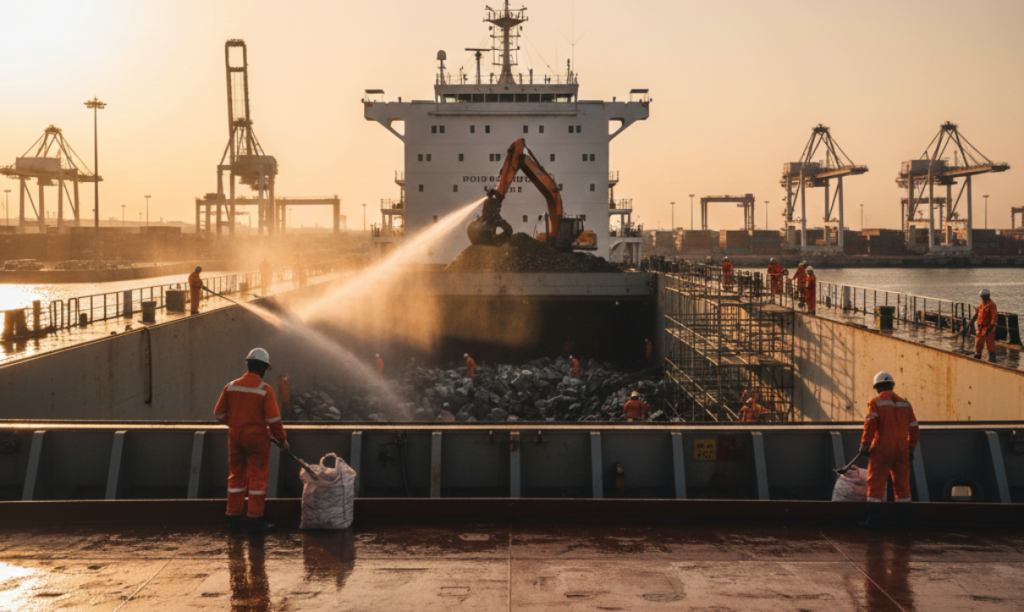
Global rules dictate the hold cleaning needs for ships in Togo. The MARPOL Convention bans oil residues in holds, while IMO guidelines demand gas-free certificates for safe entry. IMCA adds crew safety protocols for high-risk cleans.
IAPH World Ports pushes sustainability, urging ports like Lomé to cut waste. Non-compliance? Expect fines up to $50,000 or vessel detention. Stay ahead by logging every step.
MARPOL Compliance for Hold Cleaning Needs for Ships in Togo
MARPOL Annex V targets cargo residues as garbage. In Togo, you classify sweepings—non-hazardous bulk dust goes ashore; oily mixes need licensed disposal. Use checklists: inspect walls, floors, bilges.
Violations spike in busy ports. One overlooked stain, and surveyors halt loading. Tools like UV lights spot hidden residues easily.
IMO and IMCA Standards Explained
IMO’s ISM Code requires risk assessments before cleaning. IMCA’s guidelines detail equipment: turbo nozzles blast holds 10 times faster than hoses. You train crews on PPE—respirators against dust, harnesses for heights.
These bodies ensure uniformity. A Togo vessel following them sails trouble-free worldwide.
Safety Protocols in Togo Port Cleaning
Safety first: holds mimic echoey caves, with low oxygen risks. You ventilate 24 hours pre-entry, test the air quality. Fall arrest systems prevent slips on wet frames.
Hot work needs permits post-clean. Togo’s humid climate worsens rust—clean dry to avoid slips. Crews report zero incidents with dual-man checks.
Environmental Protection During Cleaning
Togo’s Gulf of Guinea location demands eco-focus. Runoff from holds harms mangroves. Use biodegradable detergents; capture wash water in certified tanks.
IAPH promotes zero-discharge zones. You comply by filtering to 15 ppm oil content. Result: cleaner seas, happier regulators.
Cost-Efficiency Gains from Proper Cleaning
Smart cleaning saves big. Manual scrubs take 5 days; automated rigs finish in 2, at $2,000 less per job. Prevent downtime—$10,000 daily for a bulk carrier.
Calculate ROI: one contamination claim offsets 10 cleans. Togo ships, averaging 20 port calls yearly, see 15% fuel savings from lighter, cleaner hulls.
Operational Standards for Bulk Carriers
Bulk carriers dominate Togo traffic. Clean to “Table A” for grains—no visible residue. Frames, tank tops, and bilges get equal attention.
Sequence matters: dry sweep, high-pressure wash, chemical rinse. Dry 48 hours. You inspect via drone for hard-to-reach spots.
Tank Cleaning Specifics for Tankers
Tankers need vapor control. Pre-clean with crude oil washing, then water. Togo mandates SIRE inspections.
Pumps cycle solvents; nitrogen inerting prevents explosions. Hold standards overlap—both demand dryness below 20% humidity.
Hold Cleaning for Dry Cargo Vessels
Dry cargo ships haul Togo’s minerals. Use alkaline cleaners for phosphates; acids for rust. Multi-stage: scrape, jet, vacuum.
Post-clean, butter tests confirm readiness—no stickiness for new loads. You log photos for disputes.
Documentation and Inspection Workflows
Paperwork proves compliance. Pre-clean survey, method statements, waste manifests. Togo Port Authority stamps gas-free certs.
Digital apps track via QR codes. Inspectors check 10% of holds randomly. Full records shield against claims.
Step-by-Step Compliance Workflow
- Plan: Assess residue type, select agents per IMO.
- Prep: Isolate holds, ventilate.
- Clean: High-pressure at 150 bar, 80°C.
- Rinse: Fresh water to neutrality (pH 6-8).
- Inspect: Third-party verifies.
- Certify: Issue reports for charterers.
This workflow cuts errors by 70%.
“Marine cleaning, anytime. Anywhere. 🌊 #GlobalMarine”#shipping #maritime #ship #cruises #sealife #port #shipping #marine #captain #vessel #ships #cargo pic.twitter.com/GgKTqEMETK
— Marine Super Cargo (@Marinsupercargo) October 4, 2025
Innovations Transforming Hold Cleaning
Robotic crawlers map residues in 3D. UV coatings glow under blacklight for checks. AI predicts cleaning needs from cargo history.
Togo pilots drone inspections. Blockchain verifies waste chains. Expect 50% faster ops by 2030.
Future Trends in Maritime Compliance
Sustainability drives change. Bio-enzymes replace chemicals. EU’s Fit for 55 pushes low-carbon cleaning.
Togo aligns via AfCFTA. Autonomous vessels will self-clean holds. You adapt now for the edge.
Marine Supercargo’s Industry Practices
Marine Supercargo handles global tank and hold cleaning with expert supervision. Their operations ensure MARPOL adherence across ports.
They recently added drug & alcohol testing to boost crew safety. This supports compliance in high-stakes environments like Togo.
Challenges Unique to Lomé Port
Lomé’s swell complicates diving support. Dust storms coat the hold mid-voyage. Limited freshwater means efficient rinsing.
You counter with onboard recyclers. Traffic peaks strain waste facilities—book ahead.
Best Practices for Togo Ship Operators
- Schedule cleans 72 hours pre-arrival.
- Train per IMCA modules.
- Partner with locals like CleanShip.co for hull tie-ins.
- Audit quarterly for trends.
These keep you audit-ready.
Conclusion
Master hold cleaning needs for ships in Togo with three takeaways: prioritize MARPOL and IMO compliance to avoid detentions; embrace safety and eco-practices for cost savings up to 20%; adopt innovations like drones for efficiency. Ghana’s model proves scalable standards work.
For compliance and maritime service excellence, contact Marine Supercargo. Their global expertise ensures your vessel meets every standard seamlessly. Act today—safe voyages start with clean holds.
FAQs:
Q1. What are the main hold cleaning needs for bulk carriers in Togo?
Bulk carriers in Togo need residue-free holds for cargoes like phosphates and grains. Key steps include high-pressure washing at 150 bar, alkaline detergents for dust, and 48-hour drying. Gas-free certification from the port authority prevents delays. Inspect bilges last—hidden sludge causes most rejections. Follow IMO Table A for grades.
Q2. How does MARPOL affect tank cleaning in Lomé Port?
MARPOL Annex I limits oil in wash water to 15 ppm. Tankers pre-wash with crude, then hot water at 60°C. Togo requires waste manifests for discharge. Non-compliance risks $20,000 fines. Use nitrogen purging for safety. Documentation proves the chain of custody.
Q3. Why prioritize safety in Togo’s hold cleaning?
Togo’s humid holds trap gases, risking explosions. Mandate air monitoring (oxygen >19.5%), full-body harnesses, and buddy systems. IMCA training cuts incidents 80%. Recent crew data shows fatigue from long scrubs—rotate shifts. Safety logs protect operators legally.
Q4. What innovations help with ship hold cleaning?
Drones scan 95% of surfaces without entry. Robotic blasters halve labor. Bio-based cleaners cut environmental impact by 70%. Togo tests these via IAPH pilots. AI apps forecast residue by cargo type. Integrate for under 24-hour cleans.
Q5. How does Ghana’s expertise apply to Togo ships?
Ghana’s Tema Port uses automated rigs, inspiring Togo. Standards match: IMCA-compliant crews, waste recycling. Togo vessels cross-train there. Shared West Africa regs ensure seamless ops. Benchmark against Ghana for 30% efficiency gains.