
Why Grain-Ready Hold Cleaning Matters in Tema Port
Imagine your bulk carrier anchored off Tema Port, Ghana’s bustling gateway for West African grain trade, with holds still dusted from the last coal shipment. You’re racing against the clock for soybean loading, but surveyors reject the holds due to lingering residues. Grain-ready hold cleaning in Tema Port transforms this nightmare into smooth operations.
It means holds swept clean, washed with fresh water, free of insects, odors, rust flakes, and previous cargo traces—ready for sensitive grains without contamination risks. You save demurrage fees and keep charterers happy. In Tema, where grain imports surge, skipping this step invites costly delays and claims.
What Defines Grain-Ready Standards Exactly
Grain-ready hold cleaning in Tema Port follows strict definitions: holds must be clean, swept, washed down with fresh water, and free from insects, odors, residues, lashing gear, loose rust scale, or paint flakes. Surveyors use a flashlight test—shining light in corners to spot any rub-off dust that could taint grain. It’s tougher than standard clean, tolerating no traces in stiffeners, tank tops, or hatch undersides.
Picture a hold like a blank canvas; any smudge ruins the artwork. In practice, this means high-pressure hydro-blasting at 450-500 bar, chemical treatments for stains, and thorough drying. No seawater rinses, as salt crystals contaminate. You achieve this through zoned cleaning: tank tops first, then frames and underdecks.
Tema Port’s Unique Grain Trade Challenges
Tema Port handles massive grain volumes—millions of tons yearly for regional food security. Switching from coal or clinker to grains amplifies contamination risks, turning grain-ready hold cleaning in Tema Port into a must-do. Local weather, humid and dusty, traps residues, demanding extra drying time.
Real-world example: A Panamax vessel post-clinker discharge faced 48-hour delays until professional crews blasted holds at anchorage. You face similar pressures with Ghana Ports and Harbours Authority timelines. Ports like Tema prioritize clean tonnage to avoid reject cargoes, so proactive cleaning keeps you ahead.
Step-by-Step Grain-Ready Hold Cleaning Process
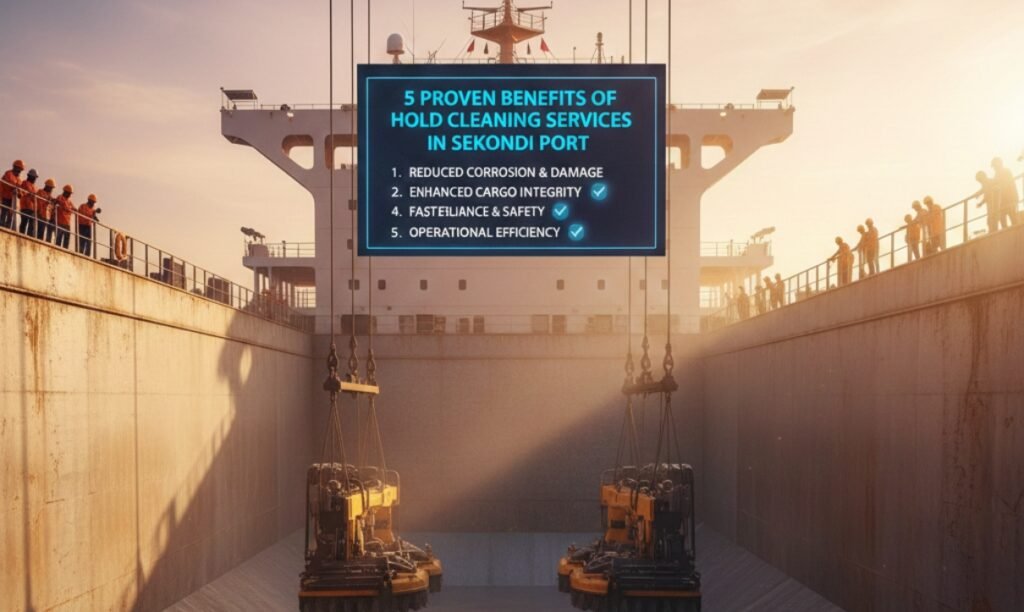
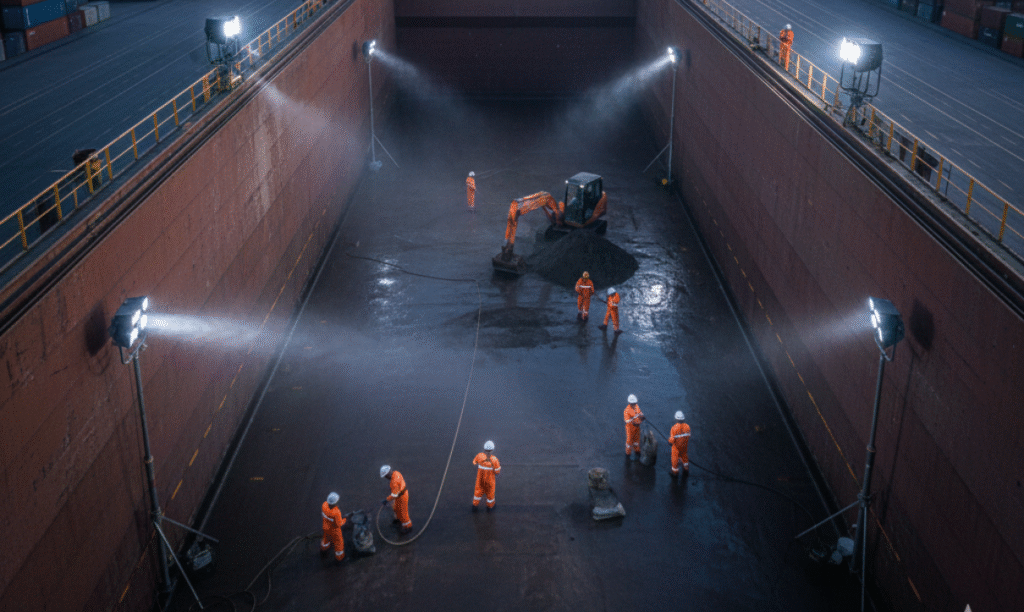
Start with pre-inspection: Document hold conditions via photos for baseline records. Deploy teams for high-pressure fresh water blasting, zoning from bottom up.
- Sweep loose residues manually.
- Blast at 450+ bar, using detergents for oily stains.
- Rinse thoroughly, then dry with air movers.
- Spot-check rust scale and paint flakes.
- Final surveyor pass before berthing.
This 1-2 day process at anchorage prevents alongside rushes. We see crews using ship hoses failing—opt for specialist gear instead.
Regulatory Compliance You Can’t Ignore
Grain-ready hold cleaning in Tema Port aligns with IMO guidelines for safe bulk cargoes, IMCA standards for hold inspections, and MARPOL Annex V for residue discharge prevention. IAPH World Ports Sustainability Programme pushes zero-discharge cleaning to protect coastal waters.
Violations trigger fines or port bans. For instance, MARPOL bans oily water runoff, mandating contained washdowns. IMCA’s hold cleanliness guidelines detail tolerances—no more than light adherent rust. You document via certificates, proving compliance with the charterers.
Safety Risks and How to Mitigate Them
Confined spaces in holds pose slips, falls, and fume hazards during grain-ready hold cleaning in Tema Port. Crews face rust flakes or chemical splashes without gear.
Key protections:
- Gas-free certifications pre-entry.
- Harnesses for upper structures.
- Ventilation to clear detergents.
A 2023 incident off West Africa saw a crewman slip on wet tank tops—proper matting prevents this. Train teams on IMO safety codes; rotate shifts to fight fatigue.
“Marine cleaning, anytime. Anywhere. 🌊 #GlobalMarine”#shipping #maritime #ship #cruises #sealife #port #shipping #marine #captain #vessel #ships #cargo pic.twitter.com/GgKTqEMETK
— Marine Super Cargo (@Marinsupercargo) October 4, 2025
Environmental Impacts and Green Practices
Traditional washing dumps residues into the sea, breaching MARPOL. Grain-ready hold cleaning in Tema Port now uses bioremediation—enzymes breaking down organics without harm.
- Collect washwater in skips for shore disposal.
- Eco-detergents biodegrade fast.
- Dry cleaning for light residues cuts water use by 70%.
Tema’s port authority enforces IAPH green port policies, rewarding compliant vessels with priority berths. This slashes your carbon footprint while meeting ESG demands.
Cost-Saving Benefits of Proactive Cleaning
Delays from unclean holds cost $20,000+ daily in demurrage. Grain-ready hold cleaning in Tema Port at anchorage runs $10,000-15,000 for five holds—far cheaper than off-hire.
Break it down:
- Avoid surveyor rejections.
- Faster loading cycles.
- Fewer claims from grain taint.
One operator saved 3 days per voyage by pre-cleaning, boosting annual revenue. Calculate ROI: Cleaning pays back in one trip.
Real-World Case Study from West Africa
Consider MV Ocean Grain, arriving at Tema post-fertilizer. Holds had yellow stains; the crew wash failed. Specialists intervened: a 36-hour blast-dry cycle passed the surveyors’ first time.
Loading started on schedule, avoiding $50,000 losses. You learn: Target underdeck pipes early—they hide residues. This story mirrors countless in busy ports like Tema.
Tools and Tech for Effective Cleaning
Modern grain-ready hold cleaning in Tema Port uses hydro-blasters, robotic sweepers, and UV lights for residue detection. Drones inspect upper frames safely.
- High-pressure units: 500 bar fresh water.
- Biodegradable chemicals per IMO.
- Moisture meters ensure dryness.
Forget old brooms; these cut labor by 40% and time.
Role of Marine Supercargo Services
Marine Supercargo offers global tank and hold cleaning, plus expert cargo supervision and compliance support. They recently added professional drug & alcohol testing services to enhance crew safety and ensure maritime regulatory compliance.
In Tema, their teams handle full grain-ready protocols, from inspection to certification. This integrated approach streamlines your ops without hype—just reliable execution.
Future Trends in Hold Cleaning Innovations
Expect AI-driven residue scanners and automated drones by 2030 for grain-ready hold cleaning in Tema Port. Blockchain for cleaning certificates ensures tamper-proof compliance.
Nano-coatings reduce rust buildup; waterless dry-ice blasting minimizes waste. IAPH pushes these for sustainable ports. Stay ahead or lag.
Documentation Essentials for Surveyors
Log everything: Pre/post photos, chemical inventories, dryness readings. Grain-ready hold cleaning in Tema Port certificates reference IMO/IMCA formats.
- Timestamped hold logs.
- Surveyor sign-offs.
- MARPOL waste manifests.
Digital apps like CleanShip.co simplify this, cutting paperwork errors.
Common Mistakes to Avoid Entirely
Don’t use seawater—salt kills grain viability. Skip crew-only washes; they miss stiffener dust.
- Rushing drying in humidity.
- Ignoring hatch covers.
- Poor lighting for inspections.
These pitfalls cause 80% rejections—plan zones methodically.
Integrating Drug & Alcohol Testing
With cleaning’s confined risks, Marine Supercargo’s new drug & alcohol testing ensures fit crews. Random tests align with IMO crew welfare standards, preventing accidents during grain-ready hold cleaning in Tema Port.
Conclusion
Grain-ready hold cleaning in Tema Port delivers three key takeaways: It slashes delays and costs through proactive prep, upholds IMO/MARPOL compliance for safety and environment, and leverages innovations like eco-tools for future-proofing. Master these, and your voyages run seamlessly. For unmatched compliance and maritime service excellence, connect with Marine Supercargo—they handle hold cleaning, supervision, and testing with precision. Elevate your operations today.
FAQs:
Q1. What Exactly Is Grain-Ready Hold Cleaning in Tema Port?
Grain-ready hold cleaning in Tema Port prepares bulk carrier holds for grain by removing all residues, washing with fresh water, and eliminating odors, insects, rust flakes, or paint. It’s stricter than standard cleaning, ensuring no contamination. Surveyors verify via close inspection; expect 1-2 days at anchorage for full compliance.
Q2. How Does It Differ from Tank Cleaning Services?
Hold cleaning targets dry bulk residues for grains, while tank cleaning handles liquids like oil via specialized chemicals and gas-freeing. Both demand MARPOL compliance, but focus on dryness and dust-free surfaces. Marine Supercargo provides globally, tailoring to cargo type.
Q3. What Bulk Carrier Cleaning Services Cover in Tema?
Services include sweeping, high-pressure blasting, chemical treatments, drying, and certification for grain-ready holds. Bulk carriers get zoned cleaning for tank tops to underdecks, plus surveyor liaison. Integrated with cargo supervision, it prevents claims.
Q4. Why Include Drug & Alcohol Testing with Cleaning?
Testing ensures crew alertness for hazardous tasks like blasting in confined holds, aligning with IMO safety. Marine Supercargo’s service catches issues pre-job, reducing accidents and aiding compliance during grain-ready hold cleaning in Tema Port.
Q5. How to Achieve Cost-Effective Compliance?
Pre-clean at anchorage, use eco-methods to cut waste fees, and document per IMCA. Partner with experts for bundled hold/tank services—saves 50% vs. delays. Track via CleanShip.co tools for efficiency.