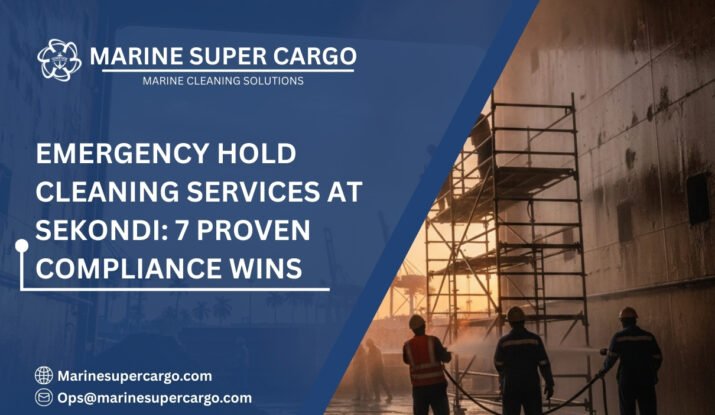
Emergency Hold Cleaning Services at Sekondi
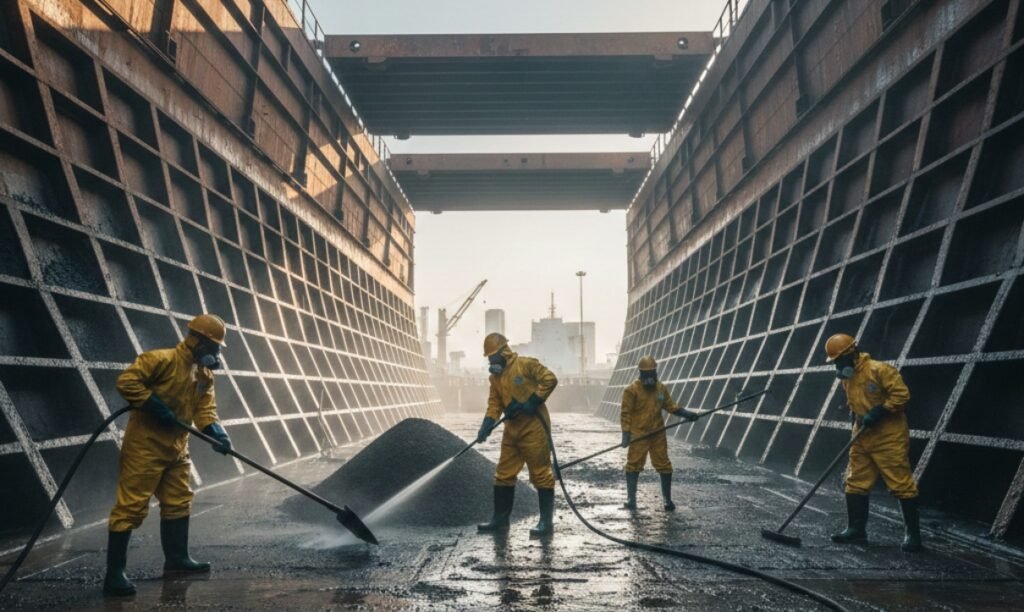
Ghana’s Sekondi–Takoradi hub has become one of West Africa’s most reliable bases for emergency hold cleaning, especially for bulk carriers operating tight schedules in global supply chains. When a vessel arrives with cargo residues, contaminant risks, or off-hire pressure, effective emergency hold cleaning services at Sekondi can be the difference between a smooth port call and costly delays.
Why emergency hold cleaning matters
Emergency hold cleaning services at Sekondi are not about cosmetics; they are about vessel earning days, cargo integrity, and regulatory exposure. When a receiver or shipper rejects a hold condition, you face:
- Delayed berthing or loading
- Off-hire claims and disputes
- Elevated inspection scrutiny
- Increased risk of non-compliance reports
By resolving these issues quickly at Sekondi, you keep the vessel on-hire, safeguard charter relationships, and reduce the risk of cargo contamination on the next voyage.
Ghana’s strategic position in West Africa
Ghana’s coastline positions emergency hold cleaning services at Sekondi at the heart of West African trade routes. Located on key bulk corridors for bauxite, manganese, and agricultural cargoes, Sekondi–Takoradi supports fast, compliant marine services tailored to bulk carriers.
Key strengths include:
- Deep-water access for larger vessels
- Established marine service and workshop capacity
- IMO- and MARPOL-aligned regulatory oversight
Why Ghana leads West Africa in marine cleaning
Ghana sets the benchmark for reliable marine support, especially emergency hold cleaning services at Sekondi, by combining regulation, infrastructure, and global collaboration. Unlike ad hoc regional practices, Ghana follows structured, auditable systems that shipowners trust during urgent operations.
Key reasons for leadership include:
- Strong alignment with IMO and MARPOL regulations
- Continuous port upgrades by the Ghana Ports and Harbours Authority
- Active collaboration with IAPH World Ports for sustainability
As a result, emergency hold cleaning services at Sekondi deliver compliant, efficient, and inspection-ready outcomes every time.
Regulatory compliance: IMO, IMCA, MARPOL, IAPH
Strict adherence to global regulations protects vessels during urgent operations. Emergency hold cleaning services at Sekondi operate within IMO safety standards, MARPOL Annex V discharge rules, IMCA operational guidance, and IAPH port best practices. Supervisors and port agents actively manage cleaning methods, waste segregation, and disposal routes. This structured compliance approach ensures emergency hold cleaning services at Sekondi meet environmental, safety, and inspection requirements without risking violations or operational delays.
Safety, environment, and cost-efficiency
Well-structured hold cleaning at Sekondi balances three pressures: safety, environmental protection, and cost. These are tightly linked:
- Unsafe entry into holds, poor ventilation, or improper chemical use can create acute hazards for crews and contractors.
- Inadequate containment of residues or wash water can lead to oiling of the sea surface, port fines, and reputational damage.
- Poor planning drives up costs through overtime, re-cleaning, or failed inspections.
Operational standards for hold, tank, and bulk carrier cleaning
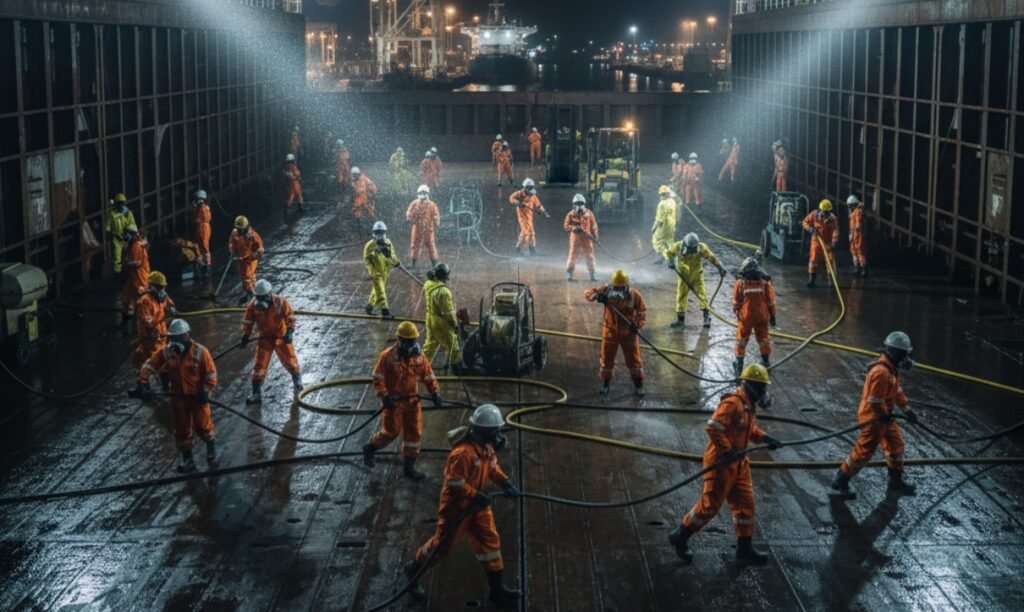
Modern maritime standards demand more than a basic sweep. Emergency hold cleaning services at Sekondi deliver cargo-ready conditions aligned with charter party clauses and surveyor expectations. Teams remove all sweepings, scale, oils, and residues to ensure dry, odor-free holds for sensitive cargoes.
For tanks, crews meet measurable criteria such as wall-wash results, chloride limits, and visual cleanliness through sequenced hot–cold washes and line flushing. These disciplined methods ensure fast approvals, compliance, and safe cargo transitions.
Step-by-step emergency hold cleaning workflow
A typical emergency operation in Sekondi follows a structured workflow that you can visualize as a short voyage plan:
- Pre-arrival assessment
- On-board inspection and planning
- Execution of cleaning
- Waste handling and documentation
- Final inspection and reporting
This structured approach is what makes emergency hold cleaning services at Sekondi reliable for owners, charterers, and cargo interests.
Documentation, inspection, and compliance workflows
Strong documentation protects shipowners during audits and inspections. After emergency hold cleaning services at Sekondi, operators deliver complete compliance packs covering work reports, approved chemicals, man-hours, waste transfer receipts, and time-stamped photos. Crews update garbage records and safety logs to maintain traceability. During Port State Control, charterer checks, or third-party audits, these records prove that emergency hold cleaning services at Sekondi followed IMO, MARPOL, and local port regulations without gaps.
Role of expert supercargo and cargo supervision
Expert supercargo supervision plays a critical role in complex port calls. Emergency hold cleaning services at Sekondi benefit greatly when specialists like Marine Supercargo guide operations. Supercargos advise on cargo-specific cleaning standards, coordinate seamlessly with masters, contractors, and surveyors, and align all photos, reports, and certificates with compliance systems. With experienced oversight, vessels reduce inspection failures, avoid costly re-cleaning, and achieve faster, smoother cargo approvals at Sekondi. Learn more about the Top 7 Benefits of Underwater Ship Hull Cleaning in the UAE.
Drug & Alcohol Testing and crew safety
Under tight schedules, safety risks rise during emergency hold cleaning services at Sekondi. Leading providers like Marine Supercargo integrate drug & alcohol testing to ensure crews remain fit for duty. Many confined-space incidents stem from human impairment, and charterers now expect documented testing programs. By combining testing with cleaning supervision, emergency hold cleaning services at Sekondi reduce accidents, meet regulatory expectations, and promote a safer, more reliable working culture on board.
“Marine cleaning, anytime. Anywhere. 🌊 #GlobalMarine”#shipping #maritime #ship #cruises #sealife #port #shipping #marine #captain #vessel #ships #cargo pic.twitter.com/GgKTqEMETK
— Marine Super Cargo (@Marinsupercargo) October 4, 2025
Emerging trends in marine cleaning and compliance
Global regulations and market pressures are reshaping emergency hold cleaning services at Sekondi. Stricter MARPOL enforcement now demands precise wash-water and residue control, leaving no room for informal practices. Operators increasingly rely on digital records, e-logs, and cloud audits to prove compliance.
At the same time, shipowners focus on lifecycle costs and environmental performance, pushing emergency hold cleaning services at Sekondi toward standardized procedures, advanced equipment, and eco-friendly cleaning solutions.
Innovation in cleaning methods and materials
Innovation is also changing the technical side of cleaning. In and around Sekondi, operators are gradually adopting:
- More efficient high-pressure and ultra-high-pressure systems that reduce water use and time
- Detergents and cleaning agents designed for lower toxicity and better biodegradability, helping align with port and IAPH environmental initiatives
- Improved access and ventilation equipment, such as portable fans and gas monitoring systems, enhances confined space safety
Reference platforms like CleanShip.co showcase broader industry developments in green ship operations, tank cleaning innovations, and compliance case studies that influence local best practice.
How Sekondi can stay ahead
To maintain its leadership in West African marine cleaning, Sekondi needs continued investment and governance. Key priorities include:
- Strengthening reception facilities and waste chains linked to hold and tank residues
- Enhancing training standards for cleaning crews and supervisors
- Expanding cooperation with international bodies like IMO, IMCA, and IAPH to benchmark against global ports
Owners and operators who make use of emergency hold cleaning services at Sekondi benefit when local port systems remain robust, transparent, and internationally aligned.
Practical tips for owners and operators
When planning emergency hold cleaning at Sekondi, you can improve outcomes by:
- Sharing cargo history, previous tank or hold cleaning reports, and next cargo specifications early
- Clarifying inspection criteria and acceptable standards with charterers and surveyors
- Ensuring the ship’s crew prepares holds as far as possible before contractors board
- Aligning cleaning plans with port schedules to avoid unnecessary waiting time
These steps help minimize misalignment, disputes, and unexpected costs during an already stressful operation.
Conclusion: choosing the right support
Emergency Hold Cleaning Services at Sekondi offer a powerful safety net when schedules, cargo quality, or inspections are at risk. Ghana’s regulatory alignment with IMO and MARPOL, along with growing adherence to IMCA guidance and IAPH World Ports initiatives, makes Sekondi a strong choice in West Africa for urgent hold, tank, and bulk carrier cleaning.
FAQs:
Q1. When do vessels require emergency hold cleaning at Sekondi?
Vessels need emergency hold cleaning at Sekondi when cargo residues, odors, or contamination risks threaten inspections, cargo acceptance, or charter schedules. Bulk carriers facing last-minute cargo changes or surveyor rejections rely on rapid, compliant cleaning to protect hire, timelines, and commercial credibility.
Q2. How do hold and tank cleaning services meet MARPOL compliance?
Professional hold and tank cleaning services at Sekondi operate within MARPOL requirements by controlling wash water, segregating residues, and using approved detergents. Waste moves through licensed reception facilities with full records, ensuring inspectors see clear compliance aligned with IMO environmental expectations.
Q3. What safety standards govern bulk carrier cleaning operations?
Bulk carrier cleaning follows strict safety protocols, including confined-space entry permits, gas testing, ventilation, and PPE. IMCA and IMO-aligned procedures guide high-pressure washing and chemical handling, reducing risks during emergency operations while maintaining safe, audit-ready working conditions.
Q4. Why does supercargo supervision improve cleaning outcomes?
Supercargo oversight aligns technical cleaning work with charter party clauses and surveyor standards. Specialists like Marine Supercargo coordinate crews, inspections, and documentation, minimizing re-cleaning risk and ensuring hold, tank, or bulk carrier cleaning meets both regulatory and commercial expectations.
Q5. How does drug & alcohol testing support cleaning operations?
Drug & alcohol testing strengthens safety during high-risk hold and tank cleaning tasks. By verifying crew fitness for duty, providers such as Marine Supercargo reduce human-factor incidents, support IMCA safety culture, and demonstrate strong compliance to charterers, terminals, and Port State Control authorities.