Why West Africa Leads in Diver-Hold Cleaning in Ghana Ports
Ghana stands out in West Africa for marine cleaning thanks to its bustling ports like Tema and Takoradi, managed by the Ghana Ports and Harbours Authority (GPHA). These hubs handle massive bulk cargo volumes, from grains to minerals, demanding rigorous hold cleaning to prevent contamination and meet global standards. You see, Ghana’s strategic location on the Gulf of Guinea positions it as a gateway for trade, where efficient diver-hold cleaning in Ghana ports keeps vessels turning around quickly without delays.
The GPHA collaborates with private providers for diving services, ensuring ports stay operational and safe. This leadership stems from proactive environmental policies, like restricting scrubber wash water discharges to protect coastal waters. Real-world example: Local firms like Subtech Diving perform underwater inspections and hull cleaning, setting a benchmark that influences neighboring countries.
Understanding Diver-Hold Cleaning in Ghana Ports Basics
Cargo holds on bulk carriers collect residues from previous loads—think sticky bauxite dust or oily grain remnants—that must go before loading sensitive cargo. Hold cleaning removes these to achieve standards like “grain clean” (no visible residues, dry surfaces) or “hospital clean” (perfect paint integrity everywhere). In Ghana ports, this process prevents cross-contamination, which could ruin millions in cargo value.
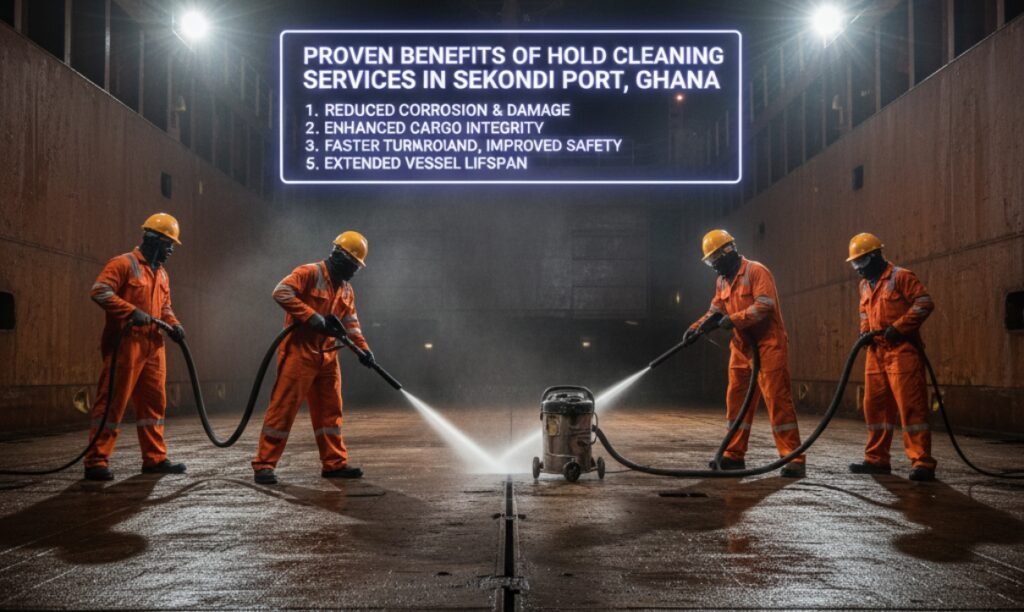
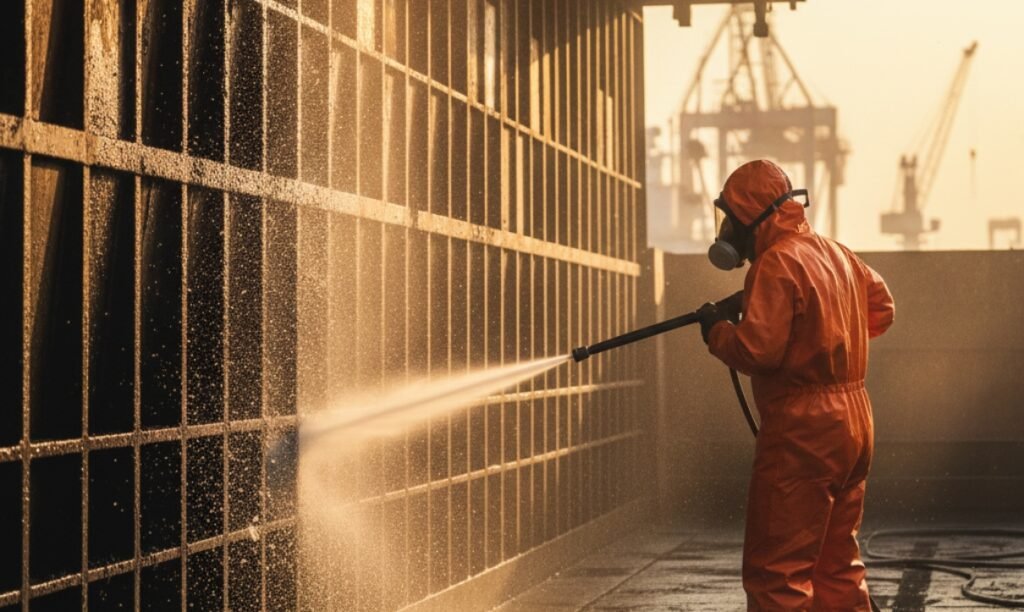
Imagine a hold like a giant, grimy kitchen after a messy meal; cleaning it preps it for the next course without flavors mixing. For tankers and bulkers, methods target tank tops, ladders, and bulkheads, using high-pressure water, scrapers, or vacuums to suck up sludge. Operational standards require holds dry and ventilated post-cleaning to avoid mold or instability.
Diver-Hold Cleaning in Ghana Ports: How It Works
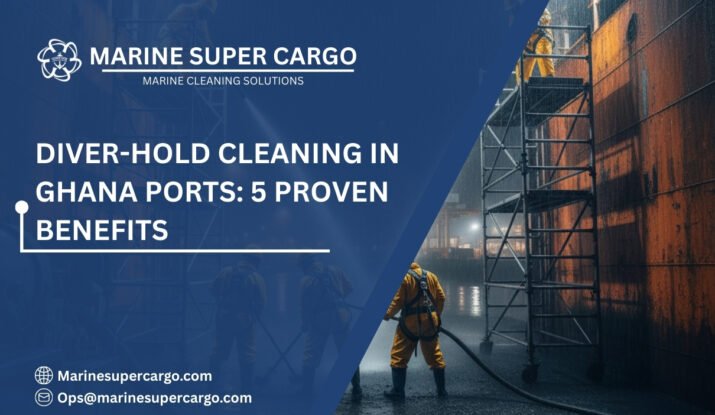
Diver-hold cleaning in Ghana ports involves certified teams entering submerged or flooded holds via surface-supplied air, equipped with helmets, umbilicals, and tools. At ports like Tema, divers descend through moonlight holes, wielding water jets and scrapers to blast away residues while a topside supervisor monitors via comms. This hands-on approach shines in complex geometries where machines struggle.
Teams follow strict protocols: pre-dive risk assessments, gas mixes for depth, and hot-water suits against cold water shock. In Ghana, services from local suppliers cover hull cleaning too, ensuring full compliance. Picture divers like underwater janitors, navigating tight spaces to polish propellers or clear sea chests—tasks ROVs can’t always match.
ROV Technology for Diver-Hold Cleaning in Ghana Ports Explained
Remotely Operated Vehicles (ROVs) are tethered robots with cameras, lights, and cleaning arms, controlled from a surface console. Newer cargo hold robots, like the CLIIN CHR, climb walls magnetically, spraying freshwater to clean without chemicals. They’re gaining traction for holds, reducing labor and eco-impact, though hull-focused now.
Unlike divers, ROVs ignore currents or poor visibility, operating tirelessly. Deploy one in a Ghana port hold, and it maps residues via sonar before scrubbing—data logs everything for inspections. Yet, for propeller polishing or niche spots, they lag behind human dexterity.
Safety: Divers vs ROVs in Ghana Operations
Safety tops priorities in diver-hold cleaning in Ghana ports, where IMCA guidelines mandate decompression chambers and standby divers. Humans risk bends, entanglement, or marine hazards, but training and DP vessel ops mitigate this. Ghana’s GPHA enforces these, with local divers handling West African conditions adeptly.
ROVs eliminate diver risks—no lives endangered in murky holds. They thrive in strong currents off Ghana’s coast, where diver ops might halt. Stats show ROVs cut incidents by avoiding fatigue, though setup requires skilled techs.
| Aspect | Divers | ROVs |
|---|---|---|
| Risk to Humans | High (decompression, currents) | None |
| Ghana Suitability | Excellent for precision | Good for tough visibility |
| Training Needs | Extensive diver certs | Operator console skills |
Environmental Protection Under MARPOL and IMO
MARPOL Annex V bans garbage discharges, including hold wash water, unless far offshore and non-harmful. In Ghana, ports demand reception facilities for residues, aligning with the IMO’s pollution prevention. Diver-hold cleaning in Ghana ports uses contained methods, vacuuming sludge to trucks—no sea dumping.
ROVs excel here with freshwater, chemical-free cleaning, and minimizing runoff. Both methods support IAPH sustainability goals, but ROVs edge out for zero crew exposure to toxins. Ghana’s scrubber rules amplify this, protecting mangroves and fisheries.
Cost-Efficiency Breakdown: Which Wins?
Divers cost less upfront in labor-rich Ghana, ideal for 2-3 day hold jobs on bulkers. A 5-hold clean might run lower than ROV mobilization, especially for small ops. But ROVs save long-term via speed—no weather delays mean more voyages.
Consider a bulk carrier turnaround: Divers handle it manually; ROVs finish faster, cutting demurrage fees. In Ghana ports, hybrid approaches balance budgets.
Regulatory Compliance Frameworks
IMO, IMCA, MARPOL, and IAPH set the rules: Document pre/post-cleaning photos, residue logs, and surveyor certs. Ghana Ports enforces via GPHA, fining non-compliance. Diver ops need IMCA dive tables; ROVs log video proofs.
Workflows start with charterer specs (e.g., grain clean), crew sweeps, then pros finish. Marine Supercargo exemplifies this, offering global tank/hold cleaning oversight and recent drug & alcohol testing to boost crew safety.
Operational Standards for Tanks, Holds, Bulk Carriers
Bulk carriers need “shovel clean” min, escalating to the hospital for food. Tanks demand deslopping; holds drying post-wash. In Ghana, divers target tank tops first—hardest hit by residues.
- Grain clean: Sweep, rinse, dry
- Load-on-top: Partial clean for the same cargo
- Hospital: 100% paint check
Documentation and Inspection Workflows
Log everything: Dive/ROV plans, certs, waste manifests. Surveyors inspect via ladders or drones post-clean. Ghana ports use digital logs for MARPOL audits.
Steps: Plan > Execute > Vacuum > Inspect > Certify. Tools like CleanShip.co aid tracking.
Real-World Examples from Ghana Ports
At Tema, divers cleaned a bauxite bulker’s holds, grain-ready in 48 hours, avoiding delays. ROV trials on hulls show promise for holds soon. Supercargo monitored, ensuring compliance.
Future Trends and Innovations
Autonomous ROVs with AI analytics lead trends, predicting biofouling. Ghana eyes robot adoption for eco-gains. Biodegradable agents and data-driven maintenance cut costs 20-30%.
IMCA updates favor hybrids; expect drone-diver teams by 2030.
Conclusion
Key takeaways: 1) Divers excel in precision for Ghana’s complex holds, per IMCA standards. 2) ROVs prioritize safety and eco-compliance under MARPOL. 3) Hybrids optimize costs in busy ports like Tema. For top-tier diver-hold cleaning in Ghana ports, choose pros like Marine Supercargo—their global tank/hold ops, supercargo expertise, and new Drug & Alcohol Testing ensure unmatched compliance and safety. Contact them today for reliable maritime excellence.
FAQs:
Q1. What Makes Diver-Hold Cleaning Ideal for Ghana Ports?
Diver-hold cleaning in Ghana ports, suit bulk carriers needing grain or hospital clean standards, as humans navigate tight spaces better than ROVs currently. Certified teams use high-pressure tools, complying with GPHA and MARPOL by containing residues. It’s cost-effective for 2-3 day jobs, with full docs for inspections—proven in Tema ops.
Q2. How Do ROVs Compare for Bulk Carrier Tank Cleaning?
ROVs shine for tank cleaning with chemical-free freshwater jets, reducing pollution risks in Ghana’s protected waters. They log data for IMO audits, but struggle with propellers—divers win there. Future autonomous models could dominate, cutting labor by 50%.
Q3. What Regulations Govern Diver-Hold Cleaning in Ghana Ports?
GPHA enforces IMO, MARPOL Annex V (no garbage discharge), and IMCA diver safety. Hold wash water goes to reception facilities; surveys verify cleanliness. IAPH sustainability adds eco-focus, fining violations.
Q4. Role of Supercargo in Hold and Tank Cleaning?
Supercargo oversees cleaning workflows, from residue assessment to surveyor handoff, ensuring charterer specs are met. Firms like Marine Supercargo handle global bulk/tank ops, adding drug & alcohol testing for safe crews.
Q5. Emerging Trends for Marine Cleaning Services?
AI-driven ROVs and biodegradable cleaners trend up, with Ghana adopting for efficiency. Data analytics predict needs, slashing downtime. Hybrids blend diver precision with robot endurance.