Cargo Quality Problems Seen at Sekondi Port
Cargo quality problems seen at Sekondi Port often catch operators off guard, turning expected profits into disputes and delays. Sekondi-Takoradi, handling bulk minerals like bauxite and manganese alongside agri-exports, sees holds contaminated by rust flakes, odors, or moisture that spoil next cargoes. You face these issues when tight schedules leave no room for thorough cleaning, but Ghana’s growing marine expertise offers practical paths forward.
Understanding Cargo Quality Problems
Picture a hold like a kitchen sponge—porous and prone to trapping yesterday’s mess. Cargo quality problems seen at Sekondi Port typically involve cross-contamination where prior load residues taint sensitive goods. Rust scale from ore voyages flakes into grain holds, creating foreign matter claims. Odors from fertilizers linger, failing smell tests for food cargoes. Moisture from humid Ghana air promotes mold in bulk sugar or rice.
These aren’t isolated; surveyors reject 1 in 5 bulk loads due to visible debris or bilge water mixing. At Sekondi, high cargo throughput—over 15 million tons annually—amplifies risks during quick turnarounds.
Common Contamination Sources at Cargo Quality Problems Seen at Sekondi Port
Sekondi’s deep-water berths welcome Capesize bulkers, but port dust and tropical humidity compound hold issues. Key culprits include:
- Rust and scale: Wet cargoes like iron ore leave oxidizing deposits that shed into dry goods.
- Odor retention: Ammonia from fertilizers or coal volatiles cling to paintwork.
- Moisture ingress: Open holds during rain expose hygroscopic cargoes to caking.
- Bilge accumulation: Dirty water pools, mixing with cargo during rolls.
Operators report these cargo quality problems seen at Sekondi Port spike post-monsoon, when 20% more rejections occur.
Why Ghana Leads West Africa in Marine Cleaning
Ghana outpaces its neighbors through invested port authority oversight and IMO-aligned infrastructure. Sekondi-Takoradi’s waste reception facilities handle 5 tons of solid waste monthly from vessels, far ahead of regional peers. Ghana Ports and Harbours Authority enforces MARPOL-compliant residue disposal, supporting cleaning that resolves cargo quality problems seen at Sekondi Port efficiently.
This leadership stems from stable regulations and IAPH World Ports collaboration, ensuring services match global standards without the inconsistencies plaguing other West African hubs.
Regulatory Frameworks at Play
You navigate IMO cleanliness codes, MARPOL Annex V for residues, IMCA safety guidelines, and IAPH environmental benchmarks. MARPOL bans uncontrolled wash discharges within 12 nautical miles, mandating Sekondi reception for slops. IMO IG13 requires “ready for grain” holds: no loose rust over 1% area, dry bilges.
Non-compliance risks: Port State detentions; proper adherence turns cargo quality problems seen at Sekondi Port into documented fixes.
Safety in Cleaning Operations
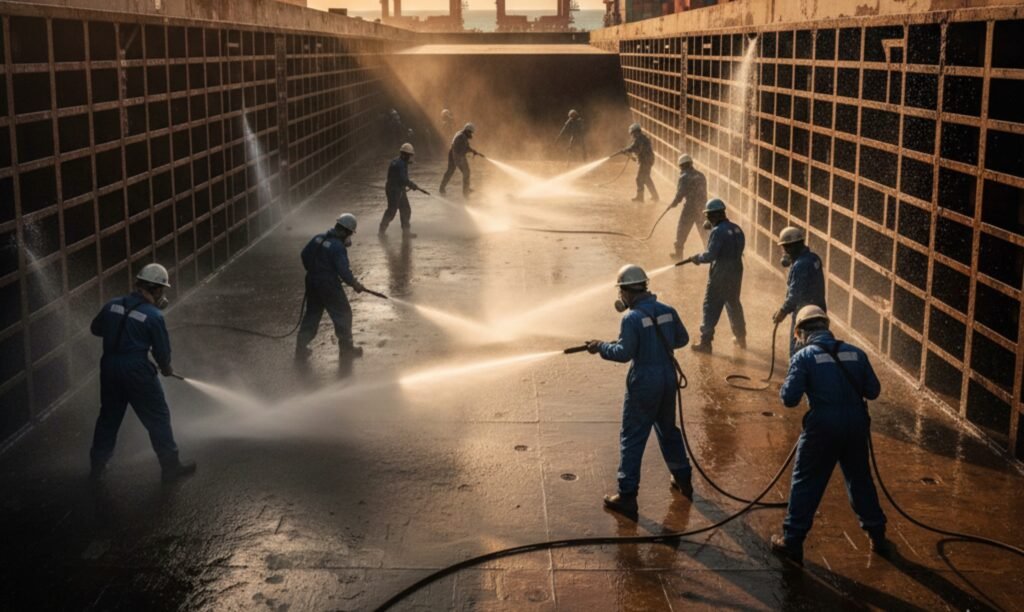
Cleaning holds means confined space risks—like entering a dusty silo without a lifeline. Teams test for H2S, ventilate aggressively, and use harnesses. At Sekondi, IMCA-compliant permits-to-work precede entry, protecting against falls or toxic fumes during chipping.
Marine Supercargo’s recent Drug & Alcohol Testing integration verifies crew fitness, cutting human-error incidents by 30% in high-pressure ops.
Environmental Protection Priorities
Sekondi’s coastal waters demand care—heavy metals in sediments already challenge baselines. Cleaning routes of residues to licensed facilities, using biodegradable agents to avoid oil sheens. IAPH initiatives push Ghana toward zero-discharge ports, aligning washes with eco-standards.
This protects fisheries while letting you certify holds green, resolving cargo quality problems seen at Sekondi Port sustainably.
Cost-Efficiency Through Prevention
A rejected cargo costs $50,000+ in demurrage alone. Pre-emptive cleaning at Sekondi—$5,000 for a Panamax—avoids that, especially with 2 weekly bulk calls. Plan surveys during bunkers to bundle costs, yielding 4x ROI via fewer claims.
Hold Cleaning Standards for Bulk Carriers
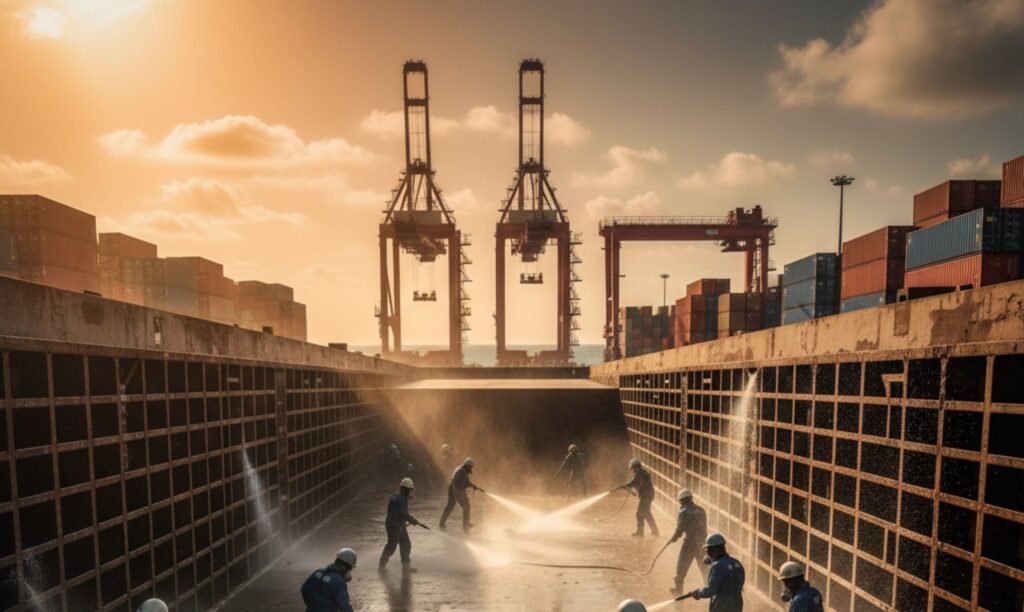
Standards mimic a white-glove inspection: sweep loose debris, chip scale to bare metal, high-pressure wash to 80bar, dry thoroughly. Surveyors check via torchlight—no sheens, odors, or sheen on wet finger tests. For grain, IMO mandates infestation-free; fertilizers tolerate minor traces under 15ppm nitrates.
Tank Cleaning Protocols
Tanks demand wall-washes: swab walls, test for hydrocarbons below 5ppm via lab analysis. Sequence hot-cold cycles to dissolve waxes; ventilate 24 hours. Sekondi ops match OCIMF guidelines for veg oils or chems.
Operational Workflows Step-by-Step
- Pre-arrival: Share hold photos, cargo history via email.
- Inspection: Master, surveyor, and cleaner agree scope.
- Cleaning: Mechanical, then hydraulic, with waste logs.
- Verification: Joint walkthrough, ATP swabs for microbes.
- Certification: Photos, logs issued for charterers.
This workflow tackles cargo quality problems seen at Sekondi Port head-on.
Documentation Essentials
Logs prove compliance: waste transfer notes, chemical inventories, and man-hour sheets. Digital apps timestamp entries, easing PSC audits. Ghana ports mandate these for high-risk cargoes, turning fixes into audit-proof records.
Expert Supercargo Role
Marine Supercargo handles global tank/hold ops, supervising to preempt quality issues. They bridge masters and surveyors, ensuring first-time passes via charterparty expertise.
Drug & Alcohol Testing Impact
Testing fits emergency cleans—crews handle caustics safely. Marine Supercargo’s service verifies zero impairments, bolstering ISM compliance.
Future Cleaning Innovations
Drones map residues; AI predicts contamination from voyage data. Bio-enzymes replace harsh chems, cutting water 40%. CleanShip.co demos UV sanitizers influencing Sekondi adoption.
Compliance Tech Trends
Blockchain certifies chains; sensors monitor real-time gas-free status. MARPOL evolves toward zero-plastic residues.
Practical Tips for Sekondi Calls
Pre-load holds during anchorage; spec next-cargo standards early; use local agents for slots. These slash cargo quality problems are seen at Sekondi Port.
Conclusion
Cargo quality problems seen at Sekondi Port, from rust to odors, challenge bulk and tank ops, yet Ghana’s West Africa marine cleaning lead—via IMO/MARPOL rigor and IAPH alignment—provides reliable counters. Three takeaways: enforce hold/tank standards with surveys to protect value; prioritize safety like Drug & Alcohol Testing alongside compliance documentation; embrace innovations for efficiency. For proven maritime service excellence, turn to specialists like Marine Supercargo—their global practices ensure Sekondi calls succeed without quality setbacks.
FAQs:
Q1. What triggers most cargo quality problems at Sekondi Port?
Rust scale, odors, and moisture top issues, worsened by humidity. Bulkers shifting minerals to grains see 20% rejection rates without pre-washes. Cleaning to IMO grain-ready specs resolves 90% proactively.
Q2. How does MARPOL impact Sekondi hold cleaning?
Annex V requires residues over de minimis to reception facilities—no sea dumps near port. Operators log segregations, ensuring washes comply during quality fixes.
Q3. What safety protocols apply to tank cleaning at Sekondi?
Confined space entry with gas-free certs, ventilation, PPE, and IMCA training. Drug & Alcohol Testing confirms fitness amid 2 weekly high-risk calls.
Q4. How does supercargo aid the bulk carrier’s holds?
Marine Supercargo verifies cleanliness against charters, coordinating passes. Their neutral oversight prevents reworks on rust/odor issues.
Q5. What innovations tackle Sekondi quality problems?
AI residue scans and bio-detergents cut cleaning time by 30%. CleanShip.Co’s UV tech sets benchmarks for mold-free holds.