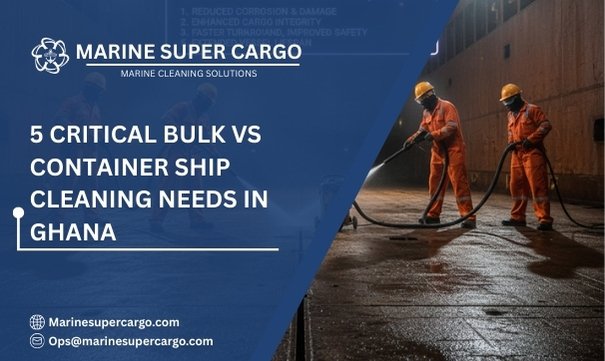
Bulk vs Container Ship Cleaning Needs in Ghana
Picture this: You’re docking a hulking bulk carrier loaded with bauxite at Tema Port, Ghana, while nearby a sleek container ship unloads electronics. Both need cleaning, but get it wrong, and you’re facing MARPOL fines or delays. Welcome to bulk vs container ship cleaning needs in Ghana—a tale of dry giants versus stackable seas.
We’ll unpack the differences conversationally, like mates swapping port stories. From IMO regs to local Ghana Maritime Authority rules, you’ll grasp why bulkers demand hold sweeps while containers need precise deck scrubs. Safety, costs, and eco-wins await.
Why Cleaning Differs for Bulk and Container Ships
Ghana’s ports, like Tema and Takoradi, buzz with trade, but bulk vs container ship cleaning needs in Ghana hinge on cargo type. Bulkers haul raw bulk like cocoa or iron ore—messy, dusty loads needing deep hold cleans. Containers? Sealed boxes with varied goods, focusing on external biofouling and deck residue. Misjudge this, and inspections bite. Per Ghana’s Maritime Pollution Bill, poor prep risks pollution charges. We’ve seen bulkers detained for days over grain dust, costing thousands. Master these needs for seamless ops.
Regulatory Backbone: IMO’s Influence
IMO sets the global tone for bulk vs container ship cleaning needs in Ghana. Their biofouling guidelines demand hull scrapes to curb invasives. For bulkers, MARPOL Annex V targets cargo residues; containers follow under Annex I for oils. Ghana aligns via its Shipping Act. Analogy: IMO’s your ship’s hygiene code—like washing hands before meals, but for oceans. Non-compliance? Port State Control holds you up.
- Bulk focus: Solid waste logs.
- Container: Liquid discharge certs.
IMCA Standards in Ghana’s Cleaning Protocols
IMCA shines for dynamic ops, influencing bulk vs container ship cleaning needs in Ghana. Bulkers need certified hold inspections for diver safety; containers prioritize crane pad cleans. In Takoradi, IMCA-compliant gear prevents slips on ore dust. Real example: A 2024 bulker passed post-IMCA audit swiftly, unlike a container ship dinged for overlooked lashing residues.
MARPOL: Pollution Prevention Differences
MARPOL is the eco-watchdog differentiating bulk vs container ship cleaning needs in Ghana. Bulkers scrub holds to <1% residue for Category Z cargos; containers manage washdowns without oily mixes. Ghana’s laws echo this, banning discharges near coasts. Think of it as segregated trash bins at sea. Fines hit GHS 100,000+ for spills. Pre-cleaning saves the day. Bulkers face stringent residue rules—ventilate holds post-discharge.
IAPH World Ports and Ghana Alignment
IAPH pushes green ports, tailoring bulk vs container ship cleaning needs in Ghana. Tema’s initiatives favor low-water cleaners for containers; bulkers use dry methods. This cuts pollution by 20%. Future: IAPH’s digital logs for real-time compliance.
Cost-Saving Angles for Bulkers vs Containers
Cleaning costs soar without smarts in bulk vs container ship cleaning needs in Ghana. Bulkers burn $5K on full holds; containers $2K for targeted decks. Use drones for bulk inspections—slash 30% time. Containers benefit from robotic washers. Ghana operators save via scheduled preps, dodging demurrage.
Safety Priorities in Cleaning Operations
Safety first: Bulk vs container ship cleaning needs in Ghana vary by hazard. Bulkers risk confined space gases—need atmos tests. Containers? Slip hazards from container leaks. Drug & alcohol testing, now standard, ensures steady hands. Per IMO, this halves the incidents.
- Bulkers: Gas monitors mandatory.
- Containers: PPE for chemical residues.
Environmental Impacts and Protections
Ghana’s coasts demand care in bulk vs container ship cleaning needs in Ghana. Bulkers’ dust harms mangroves; containers’ antifouling paints leach biocides. MARPOL-compliant methods protect fisheries. Analogy: Like recycling—bulkers sort bulk waste, containers filter hull slime.
Hold Cleaning: Bulkers’ Deep Dive
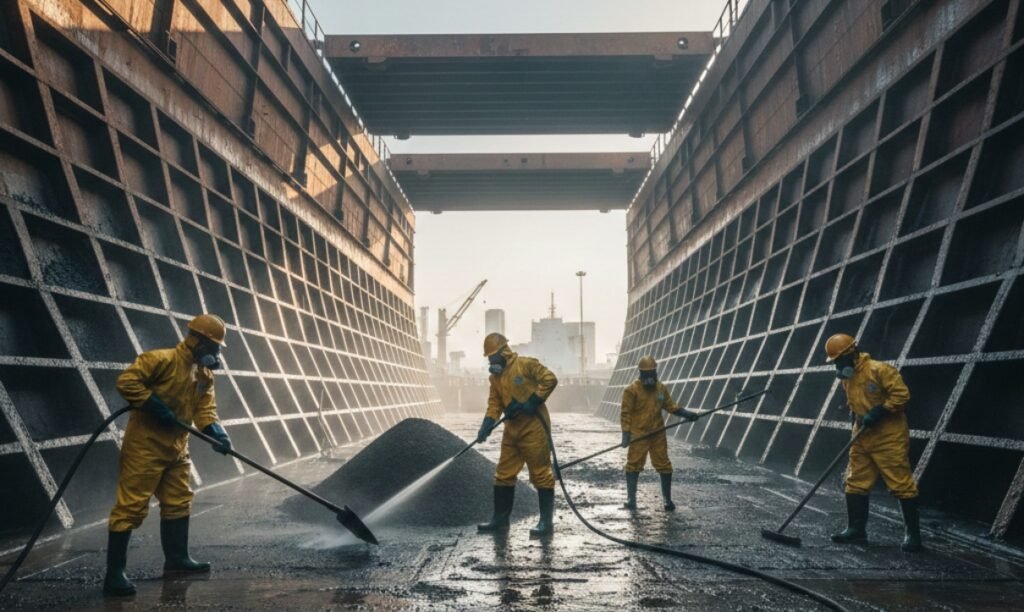
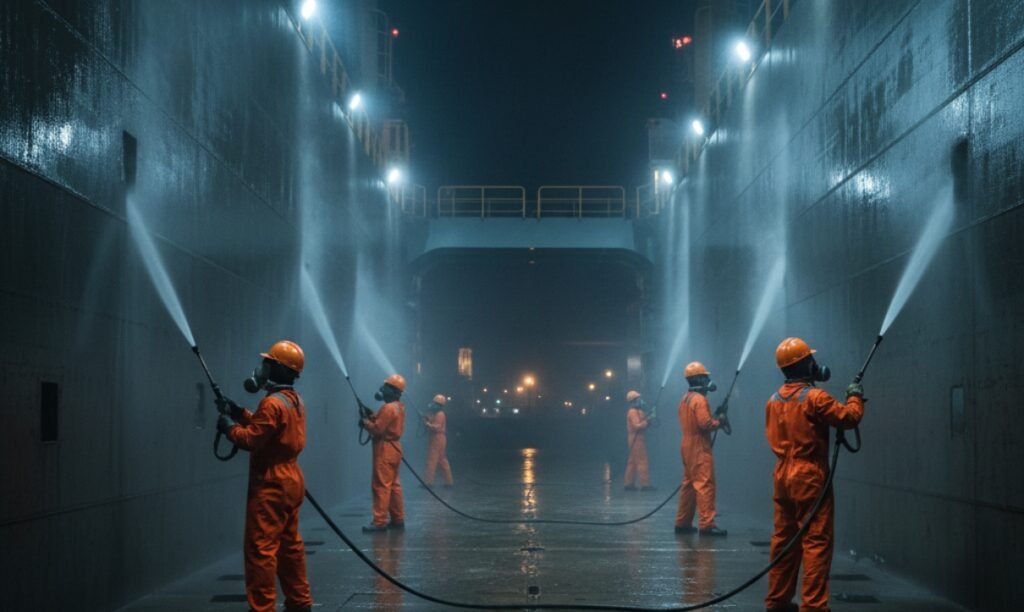
Holds define bulk vs container ship cleaning needs in Ghana for bulkers. Blast walls with high-pressure jets post-cocoa unload. Needs 24-48 hours, verified by surveys. Containers skip this—their “holds” are external.
Tank Cleaning Nuances for Both Types
Tanks matter less for pure bulkers, but hit tankers that double as bulk. Bulk vs container ship cleaning needs in Ghana include Butterworth cycles for residues. Containers rarely have tanks, focusing on bilges. Ghana regs require oil record books. Rare but critical for oil/bulk combos—pre-wash exemptions under MARPOL.
Container Ship Deck and External Focus
Containers shift bulk vs container ship cleaning needs in Ghana to decks and hulls. Scrub twistlock areas for vermin; hulls for barnacles. Quick 12-hour jobs vs bulkers’ marathons. Biofouling rules per IMO 2023 guidelines apply equally.
Expert Cargo Supervision Benefits
Supervision bridges gaps in bulk vs container ship cleaning needs in Ghana. Pros verify cleanliness, draft certs. Marine Supercargo’s global hold/tank cleaning and supervision ensures compliance factually. Their drug & alcohol testing adds crew safety layers.
Future Trends: Tech in Ghana Cleaning
Drones, AI predict residue in bulk vs container ship cleaning needs in Ghana. Blockchain, per IAPH, tracks documents. By 2030, autonomous cleaners rule Tema. Bulkers get robot sweeps; containers UV hull zaps.
A Tema bulker aced bulk vs container ship cleaning needs in Ghana with pro holds, berthing fast. A container ship? Delayed by deck slime, spilling schedules. Lessons etched in salt.
Integrating Services for Efficiency
Marine Supercargo handles tank/hold cleaning, supervision, and new drug testing for bulk vs container ship cleaning needs in Ghana. Factual support for regs without fanfare.
Conclusion
Key takeaways from bulk vs container ship cleaning needs in Ghana: Tailor cleans—deep holds for bulkers, decks for containers; prioritize MARPOL/IMCA for compliance savings; adopt tech for safety and eco-gains. These ensure efficient, penalty-free ops. For top-tier compliance and maritime excellence, turn to Marine Supercargo—their tank cleaning, supervision, and testing services deliver results. Reach out now to optimize your Ghana voyages.
FAQs:
Q1. What holds cleaning services suit bulk ships in Ghana?
Hold cleaning for bulk vs container ship cleaning needs in Ghana uses jets and vacuums for 95% residue removal. Services comply with MARPOL V, preventing dust pollution. Supervision confirms via lights/swabs, ideal for cocoa/ores at Tema.
Q2. How do tank cleaning services differ for Ghana vessels?
Tank services in bulk vs container ship cleaning needs in Ghana apply Butterworth to oily residues, testing <15ppm. Bulkers focus on cargo tanks, containers bilges. Global ops ensure Ghana Maritime Authority approval, minimizing environmental risks and fines.
Q3. Best bulk carrier cleaning for Ghana compliance?
Bulk carrier cleaning addresses bulk vs container ship cleaning needs in Ghana with dry sweeps, then rinses. Targets hold per CleanShip.co, verified surveys. Prevents vermin/cargo mix, aligning IMO—key for Takoradi bulk trades.
Q4. Why include drug testing in cleaning prep?
Drug & alcohol testing complements bulk vs container ship cleaning needs in Ghana by safeguarding crews during confined ops. Meets IMO standards; recent service additions ensure focus. Reduces slips in holds/decks.
Q5. How does cargo supervision enhance cleaning?
Supervision in bulk vs container ship cleaning needs in Ghana preps holds/tanks, issues certs. Experts spot issues early, integrating IAPH green methods. Boosts safety, compliance for both ship types.