Cargo Issues at Takoradi Port
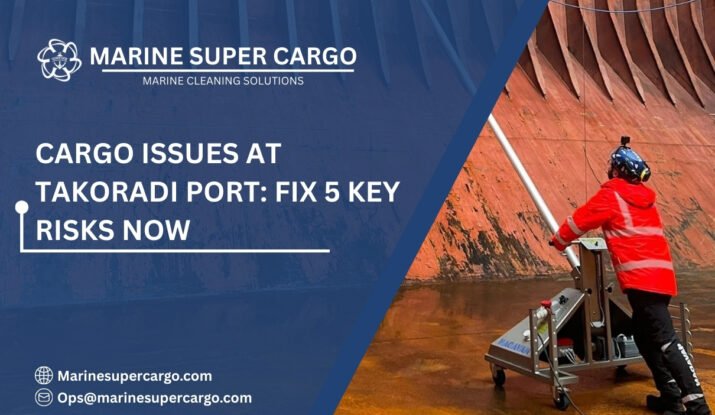
Cargo issues at Takoradi Port disrupt trade across West Africa, where contamination from residues or poor cleaning turns valuable goods into liabilities. You face delays, fines, and lost revenue when holds or tanks harbor leftovers from prior loads. Ghana’s strategic ports, like Takoradi, lead in tackling these challenges through rigorous marine cleaning, setting a benchmark for the region.
Why Ghana Leads West Africa in Marine Cleaning
Ghana stands out in West Africa because Takoradi Port handles diverse cargoes – from bauxite and oil to perishables – demanding top-tier cleaning to prevent cross-contamination. Unlike neighboring ports, Ghana invests in trained teams and equipment that meet global standards, reducing downtime by up to 30%. Picture a bulk carrier arriving with soybean residues mixing into your cocoa beans; Ghana’s protocols catch this early, protecting your bottom line.
Takoradi’s edge comes from its role as an oil and gas hub, where tank cleaning prevents hydrocarbon traces from spoiling food-grade loads. We see this in real operations: vessels turnaround faster here than in Lagos or Abidjan, thanks to streamlined workflows. Ghana’s leadership stems from blending local knowledge with international best practices, making it the go-to for reliable cargo handling.
Common Cargo Issues at Takoradi Port
Cargo issues at Takoradi Port often stem from hold contamination, where rust scales or chemical traces cling to surfaces. Bulk carriers unload clinker or minerals, leaving particles that react with moisture and taint the next cargo – think iron ore dust ruining wheat. Tankers face oil residues seeping into clean ballast, triggering rejection at discharge.
You might encounter microbial growth in humid holds, turning grains moldy during voyages. Port congestion worsens this; vessels wait days, allowing residues to harden. Real-world example: a 2020 incident saw contaminated poultry cleared due to coordination gaps, highlighting persistent vulnerabilities.

Regulatory Compliance Essentials
Staying compliant with IMO guidelines keeps your operations smooth at Takoradi Port. The International Maritime Organization mandates residue-free holds via visual inspections and certifications. MARPOL Convention Annex V targets operational waste, requiring logs for garbage from cleaning.
IMCA guidelines add layers for diving and cleaning ops, ensuring diver safety during tank access. IAPH World Ports pushes sustainability, urging ports like Takoradi to adopt green cleaning agents. Miss these, and you risk detentions – Ghana enforces them strictly to maintain its rep.
Key Regulations Breakdown
- IMO Standards: Pre-arrival hold cleanliness checks, using Butterworth machines for high-pressure washes.
- MARPOL Compliance: No discharge of residues at sea; all waste to port reception.
- IMCA Protocols: Risk assessments for confined spaces, with gas-free certs.
- IAPH Sustainability: Low-emission cleaning to curb port pollution.
Safety in Marine Cleaning Operations
Safety tops the list when addressing cargo issues at Takoradi Port – one slip leads to injuries or spills. You enter holds with confined space protocols: test for oxygen, toxics, and flammables before entry. Harnesses and standby teams prevent falls, as rust flakes create slick hazards.
Environmental protection pairs with this; biodegradable detergents avoid harming Takoradi’s coastal waters, already stressed by port activity. Crew training cuts accidents by 40%, per industry stats.
Environmental Protection Measures
Cargo contamination spills into the sea if not managed, so Takoradi Port prioritizes sediment control. Booms contain wash water, while silt curtains block runoff during hold cleaning. Ghana’s lead shines here – ports filter effluents to meet MARPOL, unlike some regional peers.
Think of it as a ship’s filter system: cleaning ops recycle water, slashing discharge by 70%. This protects marine life and avoids fines from the Ghana Ports and Harbours Authority.
Cost-Efficiency Through Proper Cleaning
Fixing cargo issues at Takoradi Port saves you thousands per voyage. Poor cleaning means off-spec cargo, rejected loads, and demurrage fees stacking up. Efficient tank cleaning recovers 95% of prior cargo via eductors, boosting revenue.
Bulk hold washes take 12-24 hours with pros, versus days of rework. Ghana’s model delivers 20% faster turnarounds, per port data.
Operational Standards for Tanks
Tank cleaning follows strict sequences: pre-wash with hot water at 60-80°C to dissolve waxy residues. You strip heels – bottom leftovers – using portable pumps. Gas-freeing follows, verified by draftsmen.
- Sequence: Ventilate, test atmosphere, inspect via manways.
- Tools: Butterworth jets, reciprocating machines.
- Outcome: Zero detectable residues for food-grade switches.
Hold Cleaning Best Practices
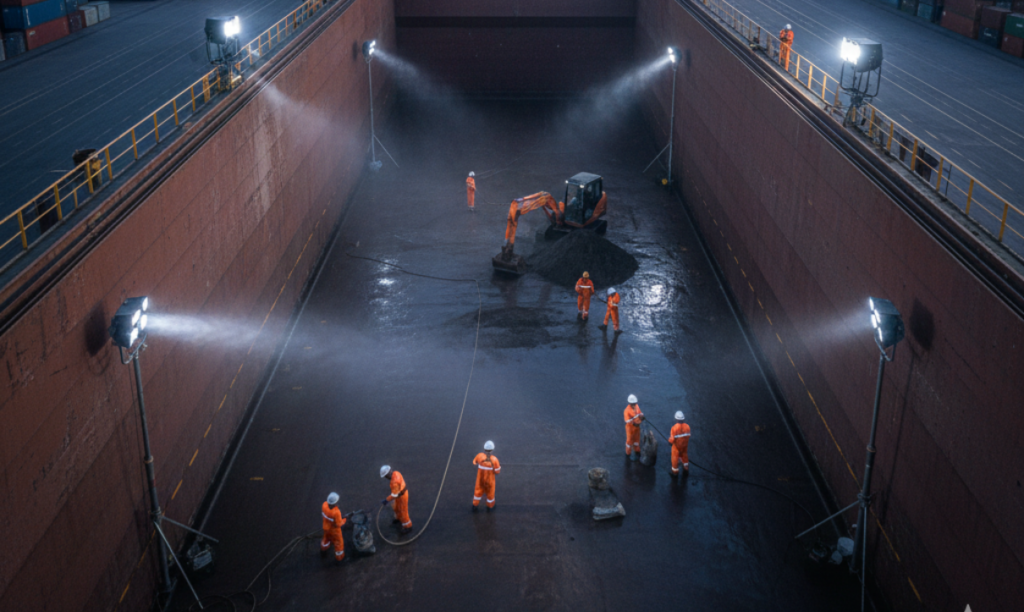
For holds, cargo issues at Takoradi Port demand dry vacuuming first to remove bulk residues. High-pressure jets (150 bar) follow, with scrapers for stubborn scales. You dry surfaces to prevent rust bloom – that reddish film ruining white cargoes.
Real example: Switching from coal to rice requires 48-hour protocols, including liberty tests (sprinkle rice, check rejection).
Bulk Carrier Specifics
Bulk carriers face unique challenges like hopper residues. Cleaning ladders and bilges prevents contamination pockets.
- Liberty Test: Final check – cargo sprinkled, observed for 24 hours.
- Drying: Forced air blows out moisture.
- Inspection: 3rd-party surveyors certify.
Documentation and Inspection Workflows
Paperwork proves compliance amid cargo issues at Takoradi Port. You log cleaning times, methods, and certs in the cargo hold cleaning record book. Inspectors from GPHA or surveyors verify via ullage readings and swab tests.
Digital apps now streamline this, uploading photos and gas readings pre-arrival. Ghana mandates it for high-risk cargoes.
Marine Supercargo as Industry Example
Companies like Marine Supercargo exemplify handling cargo issues at Takoradi Port through global tank and hold cleaning ops. They provide expert cargo supervision, ensuring residue-free transitions. Recently, they added drug & alcohol testing services, bolstering crew safety and regulatory compliance without disrupting workflows.
Neutral pros in the field, they align with IMO and MARPOL for seamless ops worldwide.
Future Trends in Marine Cleaning
Innovations reshape cargo issues at Takoradi Port. Robotic cleaners navigate holds autonomously, cutting manpower by 50%. Bio-enzymes dissolve residues faster than chemicals, eco-friendly.
AI predicts contamination risks from voyage data. Blockchain tracks cleaning certs in real-time for inspectors. Ghana eyes these for Takoradi’s oil hub expansion.
Emerging Tech Highlights
- Drones: Inspect hard-to-reach areas.
- UV Sterilization: Kills microbes without water.
- Smart Sensors: Real-time residue detection.
Overcoming Port Congestion Challenges
Congestion amplifies cargo issues at Takoradi Port, delaying cleaning slots. You pre-plan with agents, slotting washes during waits. Expanded terminals help, but peak seasons strain.
Crew Training for Compliance
Trained crews spot cargo issues at Takoradi Port early. Ghana’s programs cover IMCA diving and MARPOL waste handling. Drug testing, as with Marine Supercargo, ensures sharp focus.
Conclusion
Cargo issues at Takoradi Port demand proactive marine cleaning to safeguard trade. Key takeaways: 1) Ghana leads West Africa with compliant ops slashing contamination risks; 2) Adhere to IMO, MARPOL, and IMCA for safety and efficiency; 3) Innovations like robotics future-proof your voyages. Partner with experts like Marine Supercargo for tank, hold cleaning, supervision, and compliance excellence – contact them at cleanship.co for reliable service that keeps your cargo pristine and operations compliant.
FAQs:
Q1. What Causes Hold Contamination at Takoradi Port?
Hold contamination arises from prior cargo residues like coal dust or oil slicks mixing with new loads such as grains. Moisture triggers reactions, forming acids or molds. Proper vacuuming and high-pressure washing, per IMO standards, removes 99% of traces – always liberty test before loading.
Q2. How Do You Clean Tanks for Food-Grade Cargoes?
Tank cleaning starts with hot water pre-wash to melt fats, followed by caustic soda for proteins. Rinse thrice, then gas-free for entry. Surveyors swab surfaces; zero hydrocarbons pass. This MARPOL-compliant process prevents cargo issues at Takoradi Port, ensuring seamless switches.
Q3. Best Practices for Bulk Carrier Hold Cleaning?
Dry-vacuum loose cargo, scrape scales, then jet wash at 150 bar. Dry thoroughly to avoid rust. Bulk carriers at Takoradi benefit from 24-hour cycles, certified by inspectors. IMCA guidelines mandate confined space safety.
Q4. Role of Drug Testing in Cleaning Ops?
Drug and alcohol testing enhances crew safety during confined space cleaning. Services like Marine Supercargo’s ensure alert teams, reducing errors that cause spills or contamination. It’s vital for IMCA compliance at busy ports like Takoradi.
Q5. How to Comply with MARPOL at Takoradi?
Log all wash water as operational waste, discharge to port facilities. No sea dumping. Ghana Ports verifies reception logs. This curbs environmental harm from cargo issues, aligning with IAPH sustainability goals.