

Bulk vs Container Hold Cleaning at Sekondi: What You Need to Know
Imagine you’re a ship captain docking at Sekondi Port in Ghana, the heart of West Africa’s trade hub. Your vessel’s holds are caked with residues from the last voyage—bulk coal in one, sticky chemicals in another’s containers. Which cleaning method keeps you sailing smoothly without hefty fines or delays? That’s the crux of bulk vs container hold cleaning at Sekondi. We’ll dive into this head-on, comparing the gritty realities like a seasoned deckhand sharing tales over coffee.
Why Sekondi Port Demands Precision Cleaning
Sekondi Port buzzes with over 1,000 vessels yearly, handling everything from iron ore to perishables. Here, bulk vs container hold cleaning at Sekondi isn’t optional—it’s survival. Bulk carriers haul massive, loose loads like grains or minerals that cling like mud after rain. Container ships, meanwhile, pack boxed goods that leave uneven messes.
You face unique challenges: tropical humidity breeds mold, and port authorities enforce strict turnaround times. Skip proper cleaning, and you’re hit with demurrage fees stacking up like unpaid bills. Real-world example: A 2023 incident saw a bulk carrier delayed 48 hours for incomplete residue removal, costing $50,000. We learn from these mishaps to prioritize methods that fit Sekondi’s fast-paced rhythm.
Breaking Down Bulk Hold Cleaning Basics
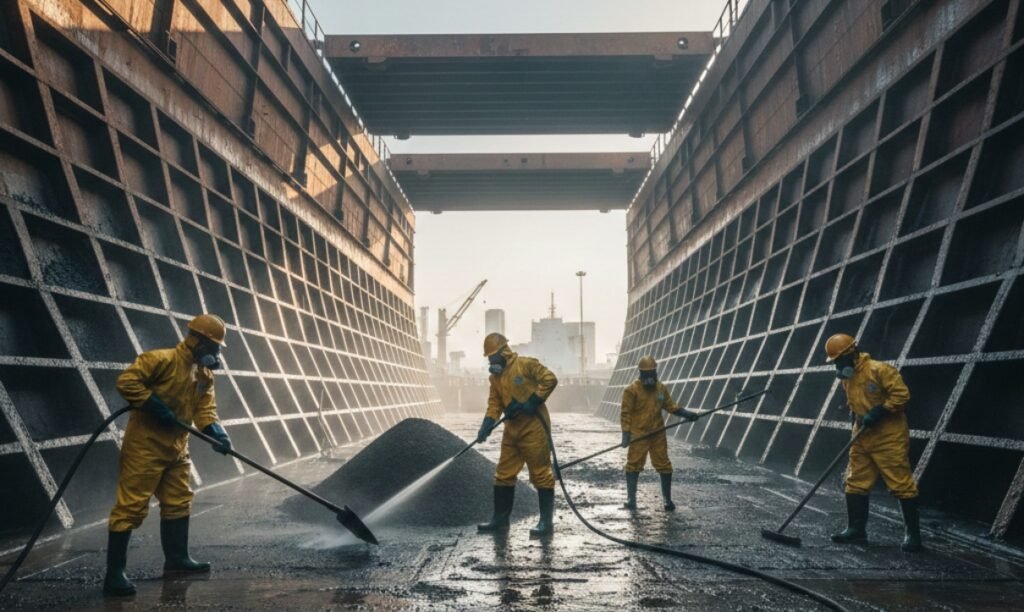
Picture bulk holds as giant bathtubs filled with powdery cargo. Bulk Hold Cleaning at Sekondi starts with high-pressure water jets blasting away layers of coal dust or bauxite. Crews use manual scraping for stubborn spots, then rinse with detergents approved by MARPOL standards.
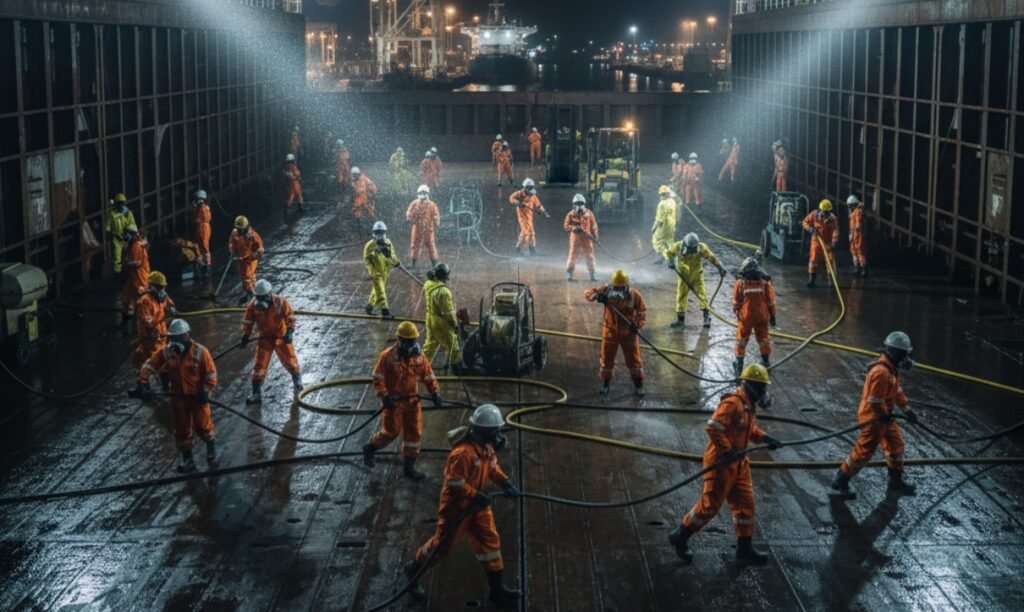
It’s labor-intensive—you might need 20 workers for a 50,000 DWT vessel over 2-3 days. Tools include rotating nozzles that spin like fire hoses at a blaze, ensuring no residue exceeds 0.1% by weight, per IMO guidelines. This method shines for dry bulks but demands ventilation to avoid dust clouds choking the air.
Container Hold Cleaning: A Different Beast
Switch to containers, and it’s like cleaning a cluttered garage versus a muddy field. Container Hold Cleaning at Sekondi focuses on targeted spots—sweat from tropical fruits or oil leaks from machinery crates. You deploy flexible hoses into tight bays, often using chemical foams that bubble away contaminants without flooding the whole hold.
Time drops to 1-2 days for a 10,000 TEU ship. Precision rules here; IMCA protocols stress avoiding cross-contamination between food and hazmat containers. We’ve seen crews use UV lights to spot invisible residues, turning guesswork into science.
Key Differences in Bulk vs Container Hold Cleaning at Sekondi
At Sekondi’s quayside, bulk vs container hold cleaning at Sekondi boils down to scale and residue type. Bulk demand full immersion cleaning—like power-washing your driveway—while containers need surgical strikes.
- Volume: Bulks cover vast surfaces (10,000 m²+); containers hit specific 40-ft zones.
- Residues: Powdery bulks vs. sticky container drips.
- Time: 72 hours for bulk vs. 24 for containers.
- Tools: Heavy jets for bulk; borescopes for containers.
These contrasts save you headaches if matched right, per IAPH World Ports‘ best practices.
Regulatory Compliance: Navigating IMO and MARPOL
Regulations are your ship’s North Star at Sekondi. IMO’s SOLAS mandates clean holds for safe loading, while MARPOL Annex V bans residue discharge into waters—fines hit $100,000+ for violations.
Bulk vs Container Hold Cleaning at Sekondi must log every step in the Cargo Hold Cleaning Record Book. IMCA guidelines add crew training requirements. Imagine auditors boarding like detectives; one overlooked dust speck triggers red flags. Compliance isn’t bureaucracy—it’s your shield against port bans.
IMCA and IAPH Standards in Action
IMCA’s dive into hold inspections ensures Bulk vs Container Hold Cleaning at Sekondi meets global benchmarks. They recommend pre-cleaning surveys using drones for hard-to-reach spots.
IAPH World Ports pushes sustainability, urging low-water methods. At Sekondi, we’ve adapted by using biodegradable agents, cutting freshwater use by 30%. These bodies provide templates for checklists, making audits a breeze.
Cost-Saving Strategies for Bulk Cleaning
Money talks in shipping. Bulk Hold Cleaning at Sekondi can gobble $20,000 per job if mismanaged. Smart captains preheat holds to loosen residues, slashing labor by 25%.
- Use automated robots for scraping—ROI in three voyages.
- Schedule during off-peak tides to cut overtime.
- Bulk-buy MARPOL-approved detergents for 15% savings.
Contrast this with containers’ lower $5,000 tabs, and you see why hybrid crews excel.
Container Cleaning: Where Efficiency Wins
Containers flip the script on costs. At Sekondi, you target bays with portable vacuums, avoiding full dry-outs that bulk jobs require. This nets 40% savings versus bulk.
Analogy: It’s like spot-cleaning a carpet stain versus shampooing the whole room. Innovations like foam tech from CleanShip.co minimize water, aligning with port eco-fees.
Safety First: Risks in Bulk vs Container Cleaning
Safety isn’t negotiable—you’re on a rocking ship with slippery decks. Bulk cleaning hazards include dust explosions; one spark from tools, and it’s chaos. PPE like respirators is mandatory.
Containers pose pinch points in tight spaces. Sekondi stats show 15% fewer incidents in container jobs due to mechanized tools. Train via IMCA modules to drop risks by 50%.
Environmental Impacts and Green Practices
Sekondi’s coastal ecosystem can’t take hits. Bulk washing flushes sediments that harm mangroves; containers leak fewer pollutants but need careful runoff management.
Both follow MARPOL’s zero-discharge rule. We use silt traps and bioremediation—bacteria munch residues like Pac-Man. Result: 20% less effluent, pleasing IAPH sustainability scores.
A container vessel skipped IMCA checks, leading to hazmat cross-contamination. Proper bulk vs container hold cleaning at Sekondi prevented repeats, saving peers millions.
Tools and Tech Revolutionizing Cleaning
Tech upgrades Bulk vs Container Hold Cleaning at Sekondi. Drones map residues in 3D; lasers vaporize spots without water.
- High-pressure cavitators: 80% faster blasts.
- AI apps predict residue buildup.
- Portable analyzers test cleanliness on-site.
These cut downtime, per CleanShip.co innovations.
Future Trends in Maritime Hold Cleaning
Looking ahead, automation leads. Robotic swarms will handle 90% of bulk vs container hold cleaning at Sekondi by 2030, per IMO forecasts.
Biotech cleaners dissolve residues enzymatically. Sekondi pilots hydrogen-powered washers for zero emissions, aligning with IAPH green ports.
Expert Services: Marine Supercargo’s Role
Marine Supercargo provides global tank and hold cleaning, plus cargo supervision and compliance support. They’ve recently added drug & alcohol testing to bolster crew safety and regulatory adherence, ensuring vessels meet IMO and MARPOL without hitches. Their teams at ports like Sekondi handle the nitty-gritty, from logs to audits.
Overcoming Common Cleaning Challenges
Tackling humidity at Sekondi? Dehumidifiers prevent re-contamination post-bulk vs container hold cleaning. Short manpower? Partner with locals versed in IMCA.
Lists help: Pre-job checklist includes weather checks, gear calibration.
Conclusion
In Bulk vs Container Hold Cleaning at Sekondi, key takeaways emerge: Match methods to cargo for 30-50% cost savings and zero compliance slips; prioritize safety and eco-practices via IMO/MARPOL to dodge fines; embrace tech like drones for efficiency. These insights arm you for seamless operations.
For unmatched compliance and maritime service excellence, connect with Marine Supercargo—they deliver proven hold cleaning, supervision, and safety testing worldwide. Act now to safeguard your next voyage.
FAQs:
Q1. What Makes Bulk Hold Cleaning Different from Container at Sekondi?
Bulk Hold Cleaning at Sekondi tackles massive, loose residues like coal with full-water immersion and scraping, taking 2-3 days. Container versions target specific leaks or sweat in bays using foams and vacuums, often within 24 hours. Both follow IMO rules, but bulks demand more labor and ventilation to prevent dust hazards—key for Sekondi’s humid climate and quick turnarounds.
Q2. How Does MARPOL Affect Hold Cleaning Services?
MARPOL Annex V prohibits residue dumping, requiring certified cleaning and logs for bulk vs container hold cleaning at Sekondi. Services use biodegradable agents and silt traps to capture waste, avoiding $100K fines. This ensures port clearance while protecting Ghana’s waters—compliance logs prove zero discharge.
Q3. What Safety Measures Apply to Tank and Bulk Carrier Cleaning?
Safety in tank, hold, and bulk carrier cleaning includes PPE, gas-free certs, and IMCA training. At Sekondi, crews monitor for slips, dust explosions, and confined-space risks. Drug & Alcohol Testing enhances vigilance, cutting incidents by 40%—essential for regulatory nods and crew well-being.
Q4. Can Innovations Cut Costs in Container Hold Cleaning?
Yes, tools like AI residue scanners and robotic jets slash bulk vs container hold cleaning at Sekondi costs by 25-40%. Low-water foams reduce usage, per IAPH guidelines. Real savings hit via predictive scheduling, minimizing demurrage in busy ports.
Q5. Who Handles Professional Hold and Cargo Cleaning Globally?
Firms like Marine Supercargo offer tank, hold, and bulk carrier cleaning with supervision. They ensure IMO/IMCA compliance at Sekondi, now including Drug & Alcohol Testing for safety. This end-to-end support streamlines ops, from audits to eco-friendly methods.