Underwater Ship Hull Cleaning in Cleveland: What You Need to Know
Underwater ship hull cleaning in Cleveland is a crucial maintenance task that keeps your vessel efficient, safe, and compliant with maritime regulations. Imagine your ship’s hull as a runner’s shoes—over time, mud and debris slow the runner down. Similarly, underwater fouling like algae and barnacles clogs your ship’s hull, increasing drag and fuel consumption.
Cleaning the hull underwater eliminates the need for costly dry-docking, saving time and money. In Cleveland’s busy Great Lakes waters, regular cleaning helps you navigate both environmental and regulatory challenges while maintaining peak operational performance.
Understanding Underwater Ship Hull Cleaning in Cleveland
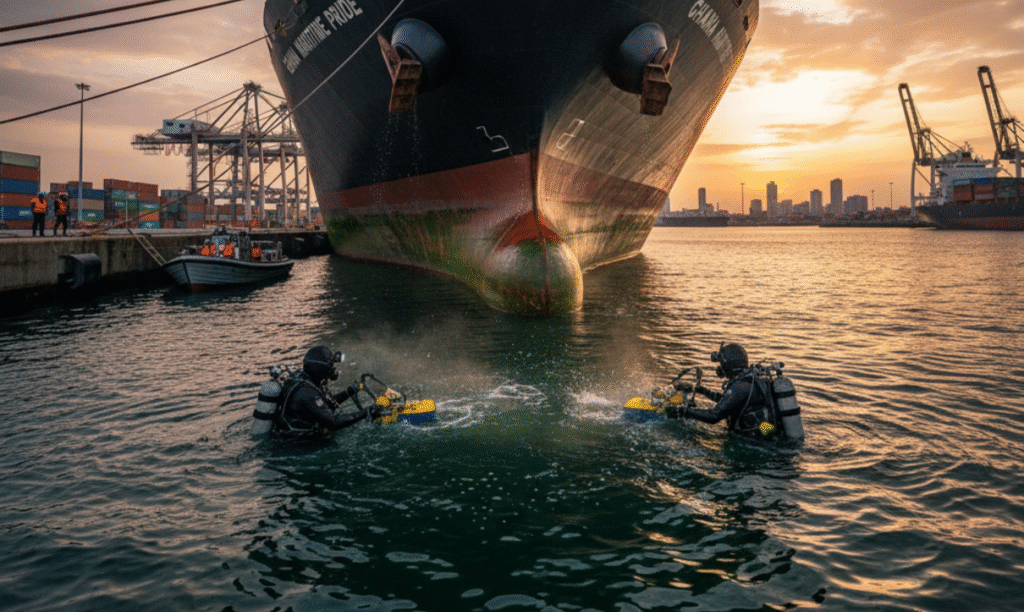
This process involves removing marine growth and debris from the submerged hull using divers or advanced robotic systems while the ship remains afloat. It ensures the hull is smooth to cut resistance in water, improving fuel efficiency, speeding up voyages, and extending hull life. This underwater service includes inspecting the hull’s condition and appendages and providing detailed reports—helping you plan maintenance without surprises.
Why It Matters in Cleveland’s Waters
Cleveland experiences unique fouling risks due to freshwater ecosystems rich in biofouling organisms. Heavy fouling leads to up to 30-40% increased fuel use if untreated. Regular underwater ship hull cleaning in Cleveland not only cuts these unnecessary costs but also helps meet stringent environmental rules to protect the Great Lakes. It also reduces harmful emissions, supporting cleaner shipping practices in the region.
Expert underwater ship hull cleaning in Cleveland
Compliance with Regulatory Standards
Strict adherence to international and local regulations is vital. The International Maritime Organization (IMO) mandates biofouling management to prevent invasive species spread, supported by MARPOL for pollution control. The International Marine Contractors Association (IMCA) provides dive safety standards for operations. Cleveland’s port authorities align with IAPH World Ports guidelines to ensure vessels meet these global and local compliance requirements, helping you avoid fines and detentions.
Cost Benefits of Routine Cleaning
Regular underwater ship hull cleaning in Cleveland leads to immediate fuel savings of 15-25%, directly impacting your bottom line. It also reduces the frequency of expensive and time-consuming dry-docking repairs. Clearing biofouling lessens mechanical stress on engines and propulsion systems, extending their lifespan. This proactive maintenance approach optimizes operational budgets and minimizes unexpected costs.
Safety Protocols in Underwater Ship Hull Cleaning in Cleveland
Safety for divers and crew is non-negotiable. Operations abide by IMCA safety standards, including certified divers, safety equipment, and environmental safeguards. Procedures are carefully coordinated with port control to prevent accidents. Safe practices preserve not only human lives but also vessel stability and integrity.
Environmental Impact and Sustainability
Underwater ship hull cleaning in Cleveland reduces fuel-related emissions, contributing to a greener maritime industry. Advanced cleaning technologies employ filtration systems to capture toxic particles and minimize harm to aquatic life. Ensuring compliance with IMO and MARPOL regulations on waste and invasive species management supports sustainable shipping in Cleveland and beyond.
Innovative Technologies in Use
In Cleveland, cleaning services are increasingly adopting robotic hull cleaning systems that use brushless high-pressure jets combined with filtration technology. These eco-friendly systems reduce hull damage and prevent toxic antifouling paint particles from entering waterways. Remote-operated vehicles (ROVs) enable precise and efficient cleaning in difficult areas, minimizing downtime.
The Role of Documentation and Flag Compliance
Comprehensive documentation of underwater ship hull cleaning in Cleveland complies with flag state requirements and facilitates inspections. Accurate records demonstrate vessel compliance with environmental and safety laws, supporting your legal standing and insurance coverage. Maintaining detailed logs also helps track vessel maintenance history for better operational planning.
Future Trends in Underwater Ship Hull Cleaning in Cleveland and Documentation
Maritime compliance is moving towards digital documentation and blockchain validation, ensuring transparency and reducing paperwork. AI and machine learning technologies promise enhanced hull inspections and cleaning precision. Cleveland operators are beginning to integrate these trends to improve efficiency, environmental stewardship, and compliance.
Marine Supercargo’s Comprehensive Services
Marine Supercargo globally offers underwater hull, tank, and hold cleaning, alongside expert cargo supervision and compliance assistance. Their recent addition of drug & alcohol testing services bolsters crew safety and regulatory adherence. This holistic approach is especially relevant to Cleveland operators seeking complete maritime operational support.
Tips for Choosing Underwater Ship Hull Cleaning Services in Cleveland
Check for certification aligned with IMO, IMCA, and MARPOL standards.
Ensure the use of eco-friendly, non-damaging cleaning technology.
Verify inclusion of hull inspection reports with photo documentation.
Confirm safety measures and diver certification.
Opt for operators experienced in freshwater fouling challenges.
How Often Should You Schedule Underwater Ship Hull Cleaning in Cleveland?
Frequency depends on vessel type, usage, and local water conditions, but generally ranges from every 3 to 6 months for active commercial vessels. Regular scheduling keeps your ship efficient, reduces emergency repairs, and maintains compliance with evolving regulations.
Costs vary based on hull size, fouling severity, accessibility, and technology used. Although underwater ship hull cleaning is a recurring expense, the overall savings in fuel and repair avoidance justify regular investment. Ask for detailed quotes, including inspection and reporting fees.
Understanding Technical Terms
Biofouling: Marine organisms attaching to the vessel’s hull, increasing drag.
Dry-docking: Removing the vessel from water for repair or maintenance.
Remote Operated Vehicle (ROV): A robot used underwater for cleaning/inspection.
Anti-fouling paint: Paint designed to prevent marine organism attachment.
IMO, MARPOL: International bodies regulating maritime safety and environmental protection.
Practical Example: Fuel Savings on a Freight Ship
A Cleveland freight ship reported 20% fuel savings within a month post-underwater ship hull cleaning. This translates to thousands saved monthly, proving maintenance pays for itself. Such examples show the direct impact on operational budgets and environmental improvement.
Underwater Ship Hull Cleaning in Cleveland: Key Facts
Conclusion
Underwater ship hull cleaning in Cleveland is vital for operational efficiency, cost savings, safety, and environmental stewardship. Meeting regulatory compliance preserves your vessel’s legal standing and sustainability. Keeping detailed documentation and leveraging advanced cleaning technologies prepares you for future maritime challenges. For expert compliance and service excellence, CleanShip.co is the trusted partner to count on.
FAQs:
Q1. Why is Flag Documentation essential for ship safety?
Flag documentation certifies a vessel’s compliance with safety and environmental standards, ensuring it operates legally and safely within international and local maritime laws.
Q2. How does documentation relate to maritime law?
Proper documentation is crucial for enforcing laws, resolving legal disputes, and proving compliance with international maritime regulations.
Q3. What is the role of Drug & Alcohol Testing in maritime operations?
Testing ensures crew fitness for duty, promotes safety, reduces accidents, and helps comply with regulatory requirements.
Q4. What benefits does proper documentation bring to crew and vessel management?
It improves operational transparency, supports maintenance planning, ensures safety compliance, and helps with insurance claims.
Q5. What future trends are shaping flag documentation and vessel inspection?
The shift towards digitalization, blockchain for data integrity, AI-driven inspections, and enhanced environmental reporting mark future trends.