Documentation Management: Keeping Your Ship’s Certificates Up-to-Date
In maritime operations, Documentation Management is much more than administrative upkeep—it is the lifeline that keeps a vessel compliant, credible, and ready for global trade. Every ship sails with a library of certificates proving safety, environmental responsibility, and crew competence. Let one expire, and it’s like missing a heartbeat—your ship can’t move until it’s fixed.
This guide simplifies how to manage maritime documents, explains when to renew flag registrations, and shows how structured management keeps ships in full compliance with IMO, IMCA, and MARPOL Convention standards. Smooth sailing starts with well-organized paperwork.
Understanding Documentation Management in Shipping
Documentation Management involves organizing, tracking, and updating a ship’s official certificates—from safety compliance and classification to environmental permits. For shipowners and operators, it ensures proof of every regulatory requirement being met. Proper document control gives ships legal legitimacy and uninterrupted port access.
Essentially, it’s about order in a world of regulation. Each certificate—like the International Load Line or Pollution Prevention Certificate—must remain current to maintain certification integrity. Managing this efficiently reduces stress, prevents last-minute renewals, and reinforces your vessel’s reputation as a law-abiding, high-standard operator across international waters.
Why Proper Documentation Management Matters
Imagine sailing without navigation charts—that’s what poor Documentation Management feels like. When documents lapse, operations stall, and costly port delays follow. For shipowners, the impact can mean fines or even detention under international law. Strong document systems promote transparency and minimize risk.
Keeping certificates current not only proves compliance but also inspires confidence among insurers and port authorities. It’s a roadmap for accountability, ensuring your vessel meets every safety, labor, and environmental regulation. Well-maintained documentation becomes an invisible shield, protecting your business from disruptions and preserving your maritime integrity worldwide.
Key Documents Every Vessel Must Manage
Effective Documentation Management requires tracking crucial certificates that define a vessel’s legal and operational status. These include:
- Certificate of Registry (proof of ownership)
- International Safety Management (ISM) Code certificate
- MARPOL-related pollution prevention documents
- Crew competency and health certificates
- Classification society survey records
Consistent monitoring ensures all these remain active. Missing one creates a domino effect—blocking cargo contracts, delaying schedules, or invalidating insurance coverage. Combining organized planning with periodic audits ensures smoother renewals and aligns the ship with the highest maritime safety standards globally.
When and How to Switch Your Vessel’s Registry
Documentation Management also relates to knowing when to change a vessel’s flag or registry. Shipowners may switch registries for tax advantages, regulatory ease, or better trade access. The process requires careful deregistration from the current state and registration under a new flag—core to what are called flag change procedures.
This move demands updated ownership transparency, technical inspections, and reissuance of key documents. Done strategically, switching registries can enhance commercial opportunities while keeping compliance intact. Proper preparation ensures the transition strengthens, rather than disrupts, a ship’s operational continuity and global recognition.
“Marine cleaning, anytime. Anywhere. 🌊 #GlobalMarine”#shipping #maritime #ship #cruises #sealife #port #shipping #marine #captain #vessel #ships #cargo pic.twitter.com/GgKTqEMETK
— Marine Super Cargo (@Marinsupercargo) October 4, 2025
Steps for Effective Documentation Control
Smart Documentation Management begins with a system—manual or digital—that tracks each certificate’s lifecycle. Follow these steps to stay audit-ready:
- Maintain a digital log of expiry dates and renewal timelines.
- Schedule compliance checks every quarter.
- Link certificate renewals with maintenance schedules.
- Assign a documentation officer to oversee updates.
- Verify all renewals align with flag-state requirements.
This proactive approach transforms documentation chaos into control. A well-maintained system turns what feels like endless paperwork into a strategic asset supporting safe, compliant, and profitable voyages.
Compliance and Environmental Responsibilities
Environmental protection sits at the heart of Documentation Management. Certificates under the MARPOL Convention confirm adherence to pollution prevention norms like oil discharge and ballast water treatment. These records prove a ship’s environmental accountability and readiness for inspection.
Proper management ensures that emission control areas, fuel logs, and waste disposal records meet the IMO’s evolving sustainability goals. By maintaining transparent records, shipowners contribute to ocean preservation, safeguard crew health, and build a positive reputation. Compliance, after all, isn’t just about avoiding fines—it’s about navigating responsibly on shared seas.
Digital Innovations in Documentation Management
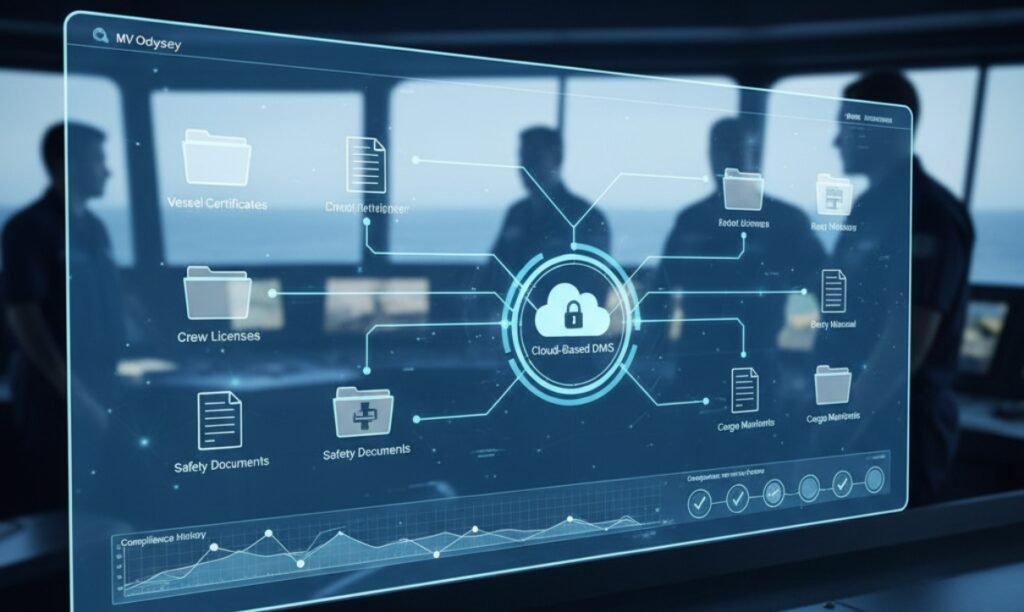
Technology is reshaping maritime compliance. Digital Documentation Management systems now automate renewals, track deadlines, and store records securely in the cloud. Blockchain-based registries are improving traceability and preventing document tampering. Artificial intelligence predicts expiration dates and sends alerts before deadlines are missed.
Software tools integrate documentation with maintenance and inspection workflows. These innovations simplify audits and enable real-time sharing with maritime authorities. Adopting digital solutions helps shipowners replace paperwork headaches with precision, speed, and peace of mind—setting a new standard for operational excellence and maritime governance.
Training and Accountability in Document Handling
Efficient Documentation Management depends on the people managing it. Training crew and administrative staff ensures they understand documentation importance and handling procedures. Every record must be updated, backed up, and easily accessible. Routine workshops help staff recognize certificate priorities, understand legal frameworks, and prepare for inspections.
Accountability builds reliability—each person on board knows their role in maintaining compliance. A culture of recordkeeping discipline gives shipowners the confidence that, regardless of port or inspection team, every certificate stands current and every box remains reliably ticked.
Marine Supercargo: Expanding Maritime Safety Standards
Marine Supercargo has long been recognized for underwater hull, tank, and hold cleaning, as well as professional cargo supervision and compliance solutions. Recently, it has added Drug & Alcohol Testing services—an essential update for global safety alignment. This step supports Documentation Management by ensuring crew compliance with IMO and IMCA standards while reducing risks of accidents and negligence.
These services strengthen corporate responsibility and uphold international maritime ethics. Marine Supercargo’s diverse safety offerings reflect the industry’s evolution toward unified compliance and reliable documentation that keeps fleets secure worldwide.
Future Trends in Documentation Management
The future of Documentation Management is digital, interconnected, and sustainable. AI systems will soon handle auto-renewals, flag updates, and real-time document validations. Smart contracts on blockchain will verify authenticity instantly during port inspections. Integrated cloud ecosystems will enable shared data between authorities and fleet operators, cutting processing times dramatically.
Future advancements will embed sustainability scores and compliance alerts, ensuring regulatory readiness at every level. The coming decade will turn management into predictive governance—ensuring every vessel remains compliant with minimal manual intervention.
Conclusion
Strong Documentation Management ensures your vessel runs smoothly, legally, and sustainably. Organized systems prevent costly detentions, enhance safety, and keep operations fluid. Digital tools, crew training, and proactive audits ensure every certification remains valid and traceable.
With technology shaping the maritime future, it’s time for shipowners to embrace smarter, integrated document control. For end-to-end compliance oversight and operational support, CleanShip.co offers trusted guidance that keeps your vessel compliant, efficient, and seaworthy in an increasingly regulated world.
FAQs:
Q1. Why is proper Documentation Management essential for ships?
It confirms a vessel’s compliance with IMO standards, ensuring your ship remains trade-ready, safe, and aligned with international laws.
Q2. How does documentation relate to maritime law?
Maritime documentation provides proof of legality, ownership, and adherence to conventions such as IMO and the MARPOL Convention.
Q3. What role does Drug & Alcohol Testing play in compliance?
It supports safe vessel operations by verifying crew reliability, reducing risks of errors, and maintaining regulatory and ethical standards.
Q4. How does effective document tracking benefit operations?
It prevents port delays, softens audit pressures, and ensures certifications remain active—keeping shipping contracts and schedules intact.
Q5. What’s the future of maritime documentation management?
Expect AI, blockchain, and cloud advancements to automate renewals and enhance transparency, driving efficient, secure compliance worldwide.