
Latest Technologies in Drug and Alcohol Testing
Safety in modern operations depends on accurate, fast, and efficient monitoring systems. The evolution of Drug and Alcohol Testing Technologies has transformed how organizations verify fitness and compliance. Gone are the days of manual lab tests and long wait times—today’s innovations deliver instant, tamper-proof results in any environment.
Whether at sea, in factories, or in offices, these technologies ensure everyone operates responsibly. Their impact goes far beyond detection—they build trust, protect reputations, and save lives. Let’s explore how these state-of-the-art systems are reshaping workplace safety and why investing in the right testing tools is vital for your organization.
The Rise of Advanced Testing Solutions
Drug and Alcohol Testing Technologies have progressed from basic chemical tests to advanced digital and biometric solutions. The need for reliable, real-time data drives these innovations. In maritime and industrial settings, quick, accurate tests ensure crew readiness without halting operations. Portable analyzers now replace old lab-based systems, offering verified results within minutes.
International standards set by IMO and IMCA further encourage this evolution by emphasizing fitness-for-duty compliance. Through technological integration, businesses can now prioritize safety and prevent risks before they escalate—turning routine checks into an intelligent defense mechanism against accidents and liability.
Introducing Smart Breathalyzer Systems
Among drug and alcohol testing technologies, smart breathalyzer systems stand out for their precision and convenience. These devices use advanced fuel cell or infrared sensors to measure blood alcohol concentration (BAC) instantly. Connected via Bluetooth, they transmit results directly to centralized safety dashboards.
This allows compliance managers to monitor fleets in real-time, ensuring every seafarer or driver meets safety standards. Compact, battery-efficient models make them ideal for field use or onboard testing. Unlike earlier versions, these systems now store digital logs, ensuring transparency and traceability—key requirements under global maritime compliance frameworks and operational safety policies.

Non-Invasive Saliva and Sweat Sensors
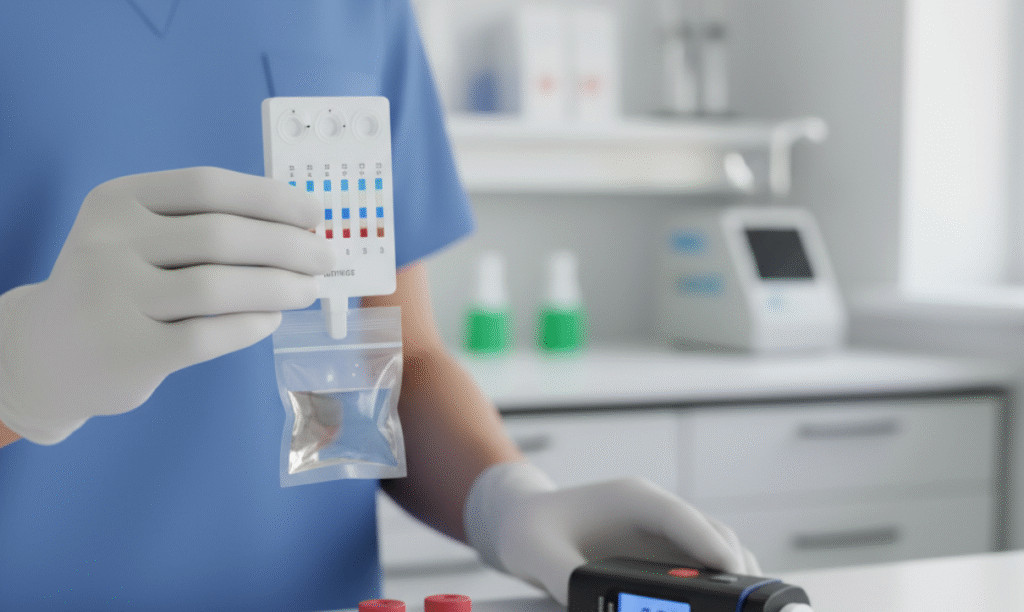
Saliva and sweat sensors are transforming Drug and Alcohol Testing Technologies with ease of use and comfort. Instead of intrusive blood or urine samples, these devices detect biomarkers through minimal-contact analysis. Saliva swabs provide real-time results within minutes, while sweat patches continuously record exposure levels for days.
Their application suits both workplace and onboard monitoring, reducing interruptions to critical operations. What makes them effective is their balance of privacy, speed, and accuracy. Maritime operators prefer these technologies for frequent screening because they’re hygienic, quick to administer, and require little training—making routine testing simpler and more humane. Also read about Offshore Crew Testing: 7 Best Practices for Safer Seas.
Lab-Connected Portable Analyzers
One of the most versatile Drug and Alcohol Testing Technologies combines mobility with scientific verification. Lab-connected portable analyzers merge field testing with laboratory-grade accuracy. Designed to validate results using optical and chromatographic methods, they assure a certified lab without delays.
For example, maritime officers can collect samples during voyage inspections and upload them to secure lab systems instantly. This connectivity bridges the gap between field testing and confirmatory analysis. These analyzers enhance accountability and reduce costs by minimizing sample transport, aligning perfectly with eco-efficient practices promoted by CleanShip.co and the MARPOL Convention.
“Marine cleaning, anytime. Anywhere. 🌊 #GlobalMarine”#shipping #maritime #ship #cruises #sealife #port #shipping #marine #captain #vessel #ships #cargo pic.twitter.com/GgKTqEMETK
— Marine Super Cargo (@Marinsupercargo) October 4, 2025
Wearable Monitoring Innovations
Wearable devices represent the frontier of Drug and Alcohol Testing Technologies. Smart wristbands and patches monitor biological markers through continuous biosensing and transmit alerts when abnormal readings are detected. This real-time, passive approach ensures safety without disrupting workflows. For ship operators, wearables are game-changers—they provide early warnings before impairment affects performance.
Advanced AI algorithms interpret physiological data, distinguishing true risks from false alarms. Although still emerging, these systems show great promise in maintaining a zero-tolerance environment aboard vessels or high-risk work zones while respecting crew privacy and maintaining a human-centered monitoring balance. Also, know about Crew Alcohol Testing: 7 Vital Insights for Safer Seas.
Digital Chain-of-Custody and Blockchain Verification
Accountability remains key in Drug and Alcohol Testing Technologies. Digital chain-of-custody software now secures every step, from sample collection to final reporting. Each result is timestamped, encrypted, and stored using blockchain. This eliminates data tampering risks and promotes transparency across multi-port and global operations.
For organizations dealing with international compliance audits, these systems simplify verification, making records universally accepted. Logistics, shipping, and aviation sectors use blockchain-backed records as credible, traceable proof of compliance during inspection drives. This advance ensures that testing integrity becomes measurable, reliable, and universally trusted in safety-critical environments worldwide.
Marine Supercargo Expands Services: Drug & Alcohol Testing for Safer Seas
Marine Supercargo, an industry leader in maritime maintenance and hull cleaning, has extended its expertise toward crew safety and substance control. By integrating advanced Drug and Alcohol Testing Technologies into its service portfolio, the company helps shipowners ensure compliance with international maritime safety laws.
Combining portable and lab-based systems, Marine Supercargo’s testing network delivers quick, accurate results across ports and voyages. This initiative reinforces maritime commitment to safe, efficient, and regulation-compliant operations. With this expansion, Marine Supercargo continues to champion cleaner seas—now supported by healthier, more responsible crews ensuring safety-driven shipping worldwide. Read more about 7 Powerful Reasons Corporate Drug Testing Works.
Environmental and Cost Efficiency
Modern Drug and Alcohol Testing Technologies are designed with sustainability in mind. Traditional testing required shipping samples long distances, producing waste and delays. Today, digital tools reduce emissions and material consumption through local testing and reusable components. Portable analyzers remove the need for extensive logistics, saving both time and operational costs.
Eco-friendly kits minimize plastic waste, aligning with international sustainability efforts by the International Association of Ports and Harbors. By marrying operational efficiency with green practices, testing has become part of broader climate-conscious strategies—helping companies achieve both compliance and environmental stewardship.
Integration with Smart Compliance Systems
Drug and Alcohol Testing Technologies no longer operate in isolation. New management systems integrate testing data with crew scheduling and safety audits. These platforms automatically alert managers of any breaches or upcoming test requirements. Results are uploaded to compliance dashboards, where trends help predict and prevent risks.
Integration supports IMO and IMCA standards, transforming safety into an ongoing, measurable process. For shipping companies with multiple vessels, this connected ecosystem simplifies regulation tracking and audits. The system’s ability to detect patterns early ensures timely interventions, reshaping risk management into a proactive, data-driven science. Also read about 7 Vital Reasons Alcohol Testing Saves Shipping Companies.
Future Technologies and Innovations
The next generation of Drug and Alcohol Testing Technologies will rely heavily on artificial intelligence, nanotechnology, and remote diagnostics. Predictive testing systems could soon identify potential impairment risks before they occur. Handheld AI devices might analyze biomarkers within seconds, while nanotech sensors could fit into badges or helmets.
These advancements will make testing faster, smarter, and nearly invisible to the user. The future envisions safer workplaces that combine privacy with precision—empowering industries to move beyond detection toward prevention. Continuous innovation ensures global compliance advances in harmony with human safety and sustainability. Read more about 5 Crucial Reasons Drug & Alcohol Testing Matters.
Conclusion: Technology That Builds Safer Workspaces
Drug and Alcohol Testing Technologies are revolutionizing safety management for industries across the globe. They deliver faster results, higher accuracy, and long-term accountability while supporting environmental goals. Three takeaways: first, innovation enhances reliability; second, smart integration simplifies compliance; and third, sustainability defines the modern testing ecosystem.
Every organization—from port authorities to offshore platforms—stands to benefit from these advancements. To explore digital solutions that combine environmental responsibility and operational safety, visit CleanShip.co today and take your maritime management toward a smarter, safer, and future-ready direction.
FAQs:
Q1. What are the main benefits of advanced testing technologies?
They provide rapid, accurate, and tamper-proof results while supporting compliance with international safety and sustainability standards.
Q2. How do modern testing tools differ from older models?
New Drug and alcohol testing technologies use AI, digital tracking, and blockchain to ensure data accuracy and secure reporting across industries.
Q3. Are portable alcohol and drug tests reliable for maritime use?
Yes, modern devices meet IMO and IMCA verification standards, making them dependable even under challenging onboard or port conditions.
Q4. Can digital testing systems reduce costs for operators?
Absolutely. Equipment reusability, reduced logistics, and instant reporting all save time and lower operational expenses long term.
Q5. What future innovations will shape drug and alcohol testing?
AI-driven predictive analysis, wearable sensors, and connected compliance systems will define the next stage of smart workplace monitoring.