Hull Cleaning in Ethiopia: A Complete Insight
Hull cleaning in Ethiopia might sound surprising for a landlocked country, but it plays a vital role in maritime trade connected through the Port of Djibouti. This process focuses on removing marine organisms, sediments, and biofouling from the ship’s hull — the submerged part of the vessel. By doing so, you reduce friction, increase speed, and improve fuel efficiency.
When Ethiopian trade vessels undergo hull cleaning in regional ports, they not only enhance performance but also ensure compliance with international maritime standards. Essentially, hull cleaning in Ethiopia represents efficiency, sustainability, and operational excellence in one package.
Why Hull Cleaning in Ethiopia Is Essential for Trade Efficiency
When ships operate under Ethiopian trade routes, especially through Djibouti, maintaining a clean hull is critical. Marine growth on a ship’s hull increases drag, which forces engines to work harder and burn more fuel. That means higher costs and reduced efficiency. Regular hull cleaning in Ethiopia ensures vessels move smoothly, conserving energy and reducing emissions.
It’s a direct way to keep trade vessels cost-effective, punctual, and environmentally responsible. In a competitive maritime environment, efficiency is power—and hull cleaning in Ethiopia gives you that edge by minimizing waste and maximizing performance.
Understanding How Hull Cleaning Works
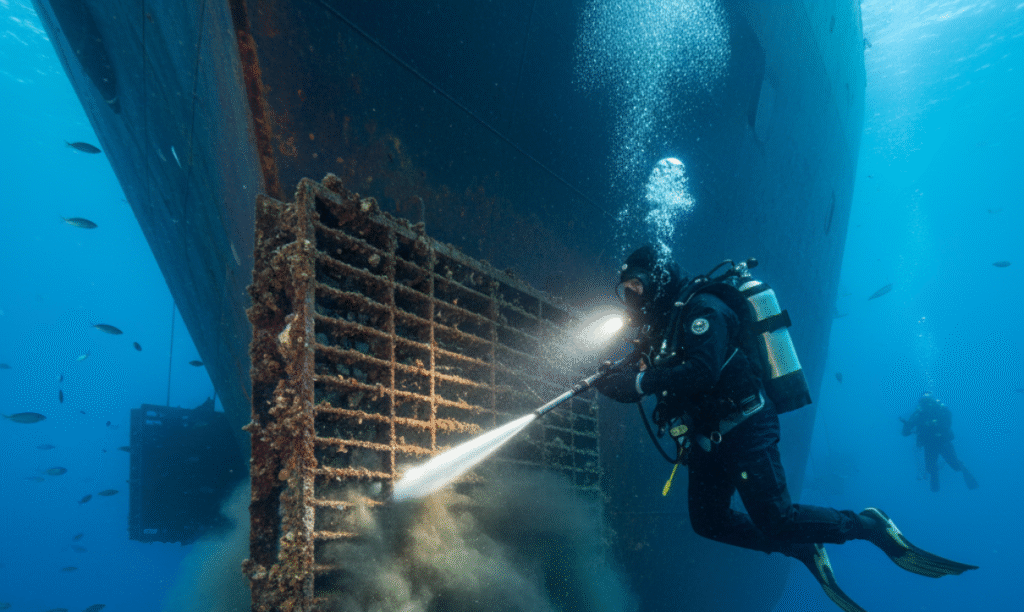
Hull cleaning in Ethiopia or its regional hubs follows a systematic process to protect both the vessel and the ocean. It begins with underwater inspection using high-definition cameras and sensors to assess fouling levels. Depending on the condition, divers or remotely operated vehicles (ROVs) use specialized tools—like rotating brushes, scrapers, or low-pressure jets—to remove biofouling.
The process also includes waste containment systems that prevent debris from spreading into marine waters. Once cleaning is complete, inspection reports ensure that the ship meets international standards set by organizations like IMO and IMCA.
Environmental Benefits of Hull Cleaning in Ethiopia
Hull cleaning in Ethiopia contributes significantly to marine environmental protection. Biofouling can transport invasive species between ports, disrupting local ecosystems. Regular hull cleaning prevents this, supporting sustainable maritime operations. Moreover, by reducing drag, vessels consume less fuel, leading to lower greenhouse gas emissions.
It’s a small step with a big ecological impact—protecting biodiversity and aligning with the MARPOL Convention’s pollution control goals. However, careless cleaning can harm marine life, which is why responsible methods and eco-friendly tools are emphasized in every hull cleaning operation in Ethiopia.
“Marine cleaning, anytime. Anywhere. 🌊 #GlobalMarine”#shipping #maritime #ship #cruises #sealife #port #shipping #marine #captain #vessel #ships #cargo pic.twitter.com/GgKTqEMETK
— Marine Super Cargo (@Marinsupercargo) October 4, 2025
Cost-Saving Advantages of Hull Cleaning in Ethiopia
Fuel is one of the largest operational expenses for any vessel. Even a thin layer of slime on the hull can increase fuel consumption by 10–15%. Hull cleaning in Ethiopia directly addresses this issue by keeping the hull smooth and hydrodynamic. Over time, this translates to major savings—both in fuel costs and engine maintenance.
You also reduce unscheduled downtime since clean ships face fewer mechanical issues. Whether managing small vessels or large cargo carriers, regular hull cleaning ensures maximum returns with minimum waste. Efficiency, in this case, truly equals profitability. Also read about underwater ship hull cleaning in Moroni.
Regulatory Compliance and Global Standards
Following international regulations is not optional in modern shipping. Hull cleaning in Ethiopia complies with standards set by the International Maritime Organization (IMO), the International Marine Contractors Association (IMCA), and the MARPOL Convention. These regulations aim to control pollution and ensure waste management from cleaning operations.
Non-compliance can result in heavy penalties or operational delays. By following proper protocols, ship operators demonstrate responsibility and professionalism. For additional details, visit IMO, IMCA, and MARPOL Convention.
Technological Innovations in Hull Cleaning
Technology has transformed hull cleaning in Ethiopia and its associated ports. Modern methods now include underwater drones and robotic cleaners that use cameras and artificial intelligence to detect fouling. Some systems employ soft brushes that prevent paint damage, while others use water jets that clean precisely without waste.
Predictive software helps operators schedule cleaning before performance drops. These innovations are shaping the future—making hull cleaning faster, safer, and more environmentally friendly. The collaboration between technology and marine science is redefining what hull cleaning in Ethiopia looks like. Also, know about underwater ship hull cleaning in Mutsamudu.
Challenges in Implementing Hull Cleaning in Ethiopia
While hull cleaning in Ethiopia offers clear benefits, several challenges persist. Since Ethiopia is landlocked, ships serving its trade routes rely on neighboring ports like Djibouti or Berbera for maintenance. Coordinating services across borders increases logistics costs and time. Additionally, a lack of specialized equipment and trained divers in nearby ports can affect cleaning quality.
Environmental compliance and waste management also remain pressing issues. However, as Ethiopia expands its maritime influence through partnerships and infrastructure investments, these challenges are gradually being addressed to ensure smoother hull cleaning operations. Read more about Underwater ship hull cleaning in Congo.
Marine Supercargo Expands Services: Drug & Alcohol Testing for Safer Seas
Marine Supercargo, a global name in marine services and hull cleaning in Ethiopia, has recently expanded its portfolio to include drug & alcohol testing. This move highlights a growing focus on safety, compliance, and crew wellbeing. These professional testing services help ship owners and managers detect and prevent substance use, ensuring that crews remain alert, responsible, and compliant with international maritime safety standards.
Such measures reduce the risk of accidents, enhance operational reliability, and fulfill inspection requirements by organizations like IMO. By integrating testing with hull maintenance, Marine Supercargo supports safer, more efficient maritime operations worldwide. Learn more about Underwater ship hull cleaning in Djibouti.
The Future of Hull Cleaning in Ethiopia
The future of hull cleaning in Ethiopia looks promising, driven by innovation and environmental responsibility. With advancements in robotics, eco-friendly coatings, and data analytics, the next generation of cleaning will be faster, cleaner, and smarter. The government’s continued collaboration with regional ports will also enhance service accessibility.
As sustainability becomes a global priority, Ethiopia’s trade vessels will benefit from technologies that balance cost efficiency with ecological care. Companies like CleanShip.co and global bodies such as IAPH are playing key roles in shaping this progressive maritime future. Learn about Underwater ship hull cleaning in Egypt.

Conclusion: 3 Key Takeaways and Action Steps
Hull cleaning in Ethiopia represents the intersection of efficiency, safety, and sustainability. First, it reduces fuel costs and enhances vessel performance. Second, it ensures compliance with IMO and MARPOL standards. Third, it supports cleaner oceans by preventing biofouling and invasive species spread. To achieve all these benefits, partner with trusted marine service providers like CleanShip.co. Their expertise ensures your ship stays compliant, efficient, and environmentally responsible. In the evolving maritime landscape, investing in hull cleaning in Ethiopia isn’t just maintenance—it’s smart, strategic progress.
FAQs:
Q1. What does hull cleaning in Ethiopia involve?
Hull cleaning in Ethiopia involves removing marine growth and sediments from ship hulls to improve performance, reduce fuel consumption, and maintain compliance.
Q2. Why is hull cleaning important for Ethiopian trade?
It helps maintain vessel efficiency on trade routes through Djibouti, thereby reducing costs and ensuring smooth import and export operations.
Q3. How often should hull cleaning in Ethiopia be done?
Typically, vessels undergo cleaning every 3–6 months, depending on operating conditions and the intensity of biofouling.
Q4. What is Drug & Alcohol Testing in marine operations?
It’s a safety measure to ensure crew members are sober and fit for duty, reducing accidents and maintaining regulatory compliance.
Q5. How do hull cleaning and crew testing work together?
Together, they enhance vessel safety and efficiency—clean ships move better, and alert crews ensure safer, more reliable voyages.