

Have you ever wondered why some ships seem to glide effortlessly into Luanda’s port while others appear to struggle with every maneuver? The secret often lies below the waterline, where marine growth quietly builds up on a vessel’s hull. This “invisible drag” can eat into your profits and impact both compliance and environmental responsibility. That’s why underwater hull cleaning in Luanda is emerging as one of the smartest practices for ship owners, operators, and managers operating in Angola’s busiest maritime hub.
This comprehensive, SEO-optimized guide covers the technical process, compliance requirements, cost-saving potential, and future innovations you need to understand about underwater hull cleaning in Luanda. Ready to optimize your fleet and support cleaner oceans? Let’s dive in.
Why Underwater Hull Cleaning in Luanda Matters
Luanda, handling over 70% of Angola’s import and export cargo, is a strategic port for international trade. The region’s warm Atlantic waters provide perfect conditions for marine organisms to attach to ship hulls, quickly escalating operating costs and regulatory risks if left unaddressed. Scheduling underwater hull cleaning in Luanda offers a tangible way to boost vessel speed, conserve fuel, protect eco-systems, and meet the growing expectations of authorities and charterers alike.
Understanding Hull Fouling: The Unseen Challenge
Think of hull fouling as your vessel wearing a heavy coat of mud underwater. Algae, barnacles, and tiny sea creatures, known collectively as biofouling, create drag that makes every mile harder—forcing engines to work overtime.
Types of Fouling:
- Soft fouling: slime and algae that form thin, slippery layers.
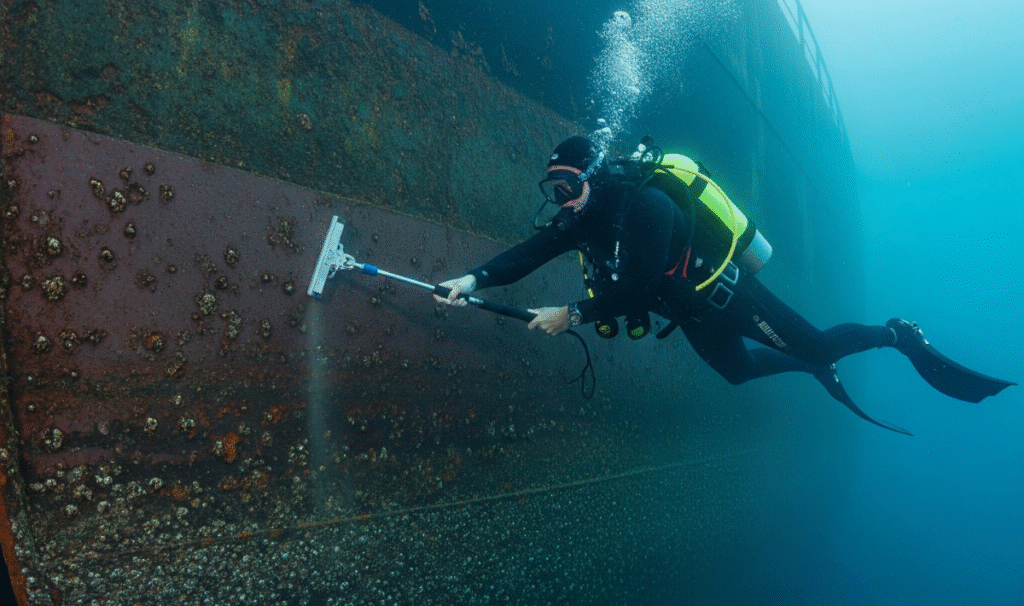
- Hard fouling: barnacles, mussels, and shells that bond firmly to hull surfaces.
Without underwater hull cleaning in Luanda, fouling can increase fuel consumption by 20–30%—equivalent to hauling an anchor you never needed.
The Technical Process: How Underwater Hull Cleaning Works
Inspection & Planning
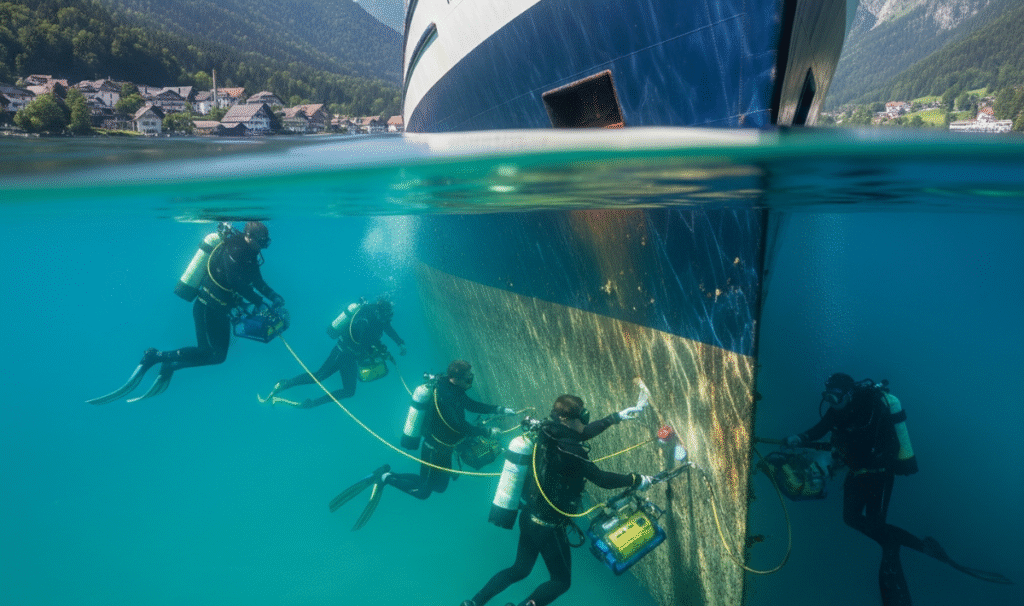
Every effective cleaning starts with a survey. Divers or remotely operated vehicles (ROVs) inspect the hull, assessing biofouling levels and coating conditions to plan the safest and most effective approach.
Cleaning Methods
- Rotary Brushes/Mechanical Scrapers: Remove both soft and hard fouling.
- High-Pressure Jets/Robotic Cleaners: Deliver precise cleaning while protecting delicate coatings.
- Waste Capture Systems: In line with IMO’s 2023 Biofouling Guidelines, top providers in Luanda employ containment systems to prevent dislodged debris from harming the marine environment.
Post-Cleaning Review
A final inspection confirms that all fouling is removed and ship coatings remain undamaged before the job is certified complete.
National-level insights on pricing are available in underwater ship hull cleaning in Argentina.
Compliance Factors: Meeting International and Local Standards
With environmental rules tightening every year, underwater hull cleaning in Luanda is now as much about compliance as it is about cost savings. Authorities expect operators to:
- Minimize transfer of invasive aquatic species per IMO Biofouling Guidelines.
- Document both pre- and post-cleaning inspections for audits.
- Use only certified cleaning companies that deploy safe, environmentally sound methods aligned with MARPOL and IMCA standards.
Luanda port’s management also monitors maintenance practices as part of its wider efforts to protect public service quality and the local marine ecosystem.
Environmental Benefits: Cleaner Ships, Cleaner Seas
Regular underwater hull cleaning in Luanda isn’t just about keeping your vessel fast; it’s one of the most direct ways shipping can reduce its environmental impact:
- Lower emissions: Removing biofouling dramatically reduces the power needed for propulsion, lowering CO₂ and other greenhouse gas emissions.
- Protects biodiversity: By removing foreign organisms before departure, operators help prevent the spread of invasive species to Angola’s rich marine habitats.
- Reduces chemical reliance: Clean hulls need fewer toxic anti-fouling paints and less frequent recoating, supporting eco-friendly port operations.
Cost-Saving Power of a Clean Hull
For managers watching the bottom line, the numbers are convincing. Fuel is typically a ship’s largest operational expense, and fouling can boost consumption by up to 30%. Regular underwater hull cleaning in Luanda leads to:
- Lower fuel bills per voyage.
- Fewer unexpected repairs and maintenance issues.
- Protects expensive hull and propeller coatings from excessive wear.
- Reduces the risk of costly fines or port delays due to non-compliance.
The ROI is measured not just in direct savings but in a smoother, more reliable operating schedule.
Innovations and Technology: The Future of Hull Cleaning in Luanda
Maritime maintenance is embracing digital transformation, and underwater hull cleaning is no exception in Luanda. Companies now leverage:
- ROV and robotic systems: Allowing safe, efficient, and data-rich cleaning—even while ships are in service.
- AI-driven monitoring: Smart sensors help operators schedule cleanings only when needed, maximizing hull performance.
- Environmentally-friendly brushes: These new pads and tools clean thoroughly while protecting sensitive coatings.
As regulations evolve and automation advances, expect underwater hull cleaning in Luanda to become even more precise, sustainable, and cost-effective in the coming years.
Risks and Best Practices: Staying Safe and Effective
Improper cleaning can damage costly protective coatings or release biofouling waste into sensitive marine habitats. The best way to manage these risks is to:
- Hire certified professionals—check for credentials and a proven track record.
- Ensure operators use the latest waste capture and cleaning technologies.
- Require detailed cleaning documentation and compliance reports for every job.
Following these guidelines guarantees that underwater hull cleaning in Luanda delivers value without unintended consequences.
Practical Steps for Ship Operators in Luanda
Want to optimize your fleet for efficiency, safety, and compliance? Here are smart steps to take:
- Establish a regular hull cleaning schedule tied to actual vessel performance data.
- Partner with local, certified cleaning providers who follow IMO, MARPOL, and IMCA standards.
- Maintain logs for each vessel—documenting cleaning dates, fouling severity, and inspection findings.
- Combine hull cleaning with propeller maintenance for maximum fuel savings and thrust.
The Future Outlook: Why Underwater Hull Cleaning Will Matter Even More
With Luanda’s port traffic set to grow, and sustainability targets tightening globally, underwater hull cleaning in Luanda will soon move from recommended best practice to a mission-critical requirement. Automated robots, smart analytics, and stricter port regulations will ensure clean hulls become the expected norm—protecting operator margins and the planet.
Conclusion
Underwater hull cleaning in Luanda is more than a maintenance task—it’s a vital strategy for safe, profitable, and sustainable shipping. By keeping hulls smooth and biofouling-free, operators gain on every front: cutting costs, strengthening compliance, reducing environmental impacts, and ensuring their vessels deliver consistent performance in Angola’s most important port.
If you want your ships to move like athletes—not anchors—start investing in underwater hull cleaning in Luanda today with trusted experts like CleanShip.co.
You may also be interested in underwater hull cleaning in Albania.
FAQ:
Q1. How often should underwater hull cleaning in Luanda be performed?
Q2. Is underwater hull cleaning in Luanda mandatory?
While not always a legal requirement, it is essential for meeting MARPOL, IMO, and port authority standards, making it functionally necessary for compliance.
Q3. Can underwater hull cleaning in Luanda damage vessel coatings?
Q4. What’s the biggest business benefit of underwater hull cleaning in Luanda?
Significant reductions in fuel consumption and emissions, leading to direct cost savings and improved regulatory compliance.