

If you’re in the shipping industry, you already know how vital it is to keep operations smooth and efficient. But did you know that one of the simplest yet most powerful ways to achieve this is by keeping your ship’s hull clean? Imagine driving your car with mud caked all over the tires — you’d burn more fuel, move more slowly, and risk damaging the vehicle. The same principle applies to ships. This is why underwater hull cleaning in Rio Haina has become not just a maintenance task, but a smart strategy for cost savings, compliance, and environmental protection.
Let’s dive deep into why hull cleaning matters, how it’s done in Rio Haina, what rules you need to follow, and where the future of this service is headed.
Why Hull Cleaning is Essential in Modern Shipping
The hull of your vessel is its highway through the sea. But with every voyage, marine growth like barnacles, algae, and biofilms attaches themselves to the underwater surface. This layer of stubborn hitchhikers increases drag, slowing your ship down and forcing engines to burn more fuel.
Choosing underwater hull cleaning in Rio Haina is like giving your vessel a fresh set of well-oiled wheels. Hulls free from marine buildup mean:
- Better fuel efficiency
- Faster turnaround times
- Lower greenhouse gas emissions
- Reduced maintenance costs
It’s not just about making ships “look” clean; it’s about boosting their overall performance.
Rio Haina: A Strategic Shipping Hub
Located in the Dominican Republic, Rio Haina is a major port serving both commercial shipping and containers. Due to high traffic, vessels often stop for cargo and refueling, making it an ideal place for maintenance services.
For ships operating in the Caribbean or transiting through, underwater hull cleaning in Rio Haina provides a convenient opportunity to improve efficiency without adding delays. With professional divers and specialized equipment available, Rio Haina’s infrastructure makes it a reliable stop for essential hull upkeep.
The Science of Biofouling
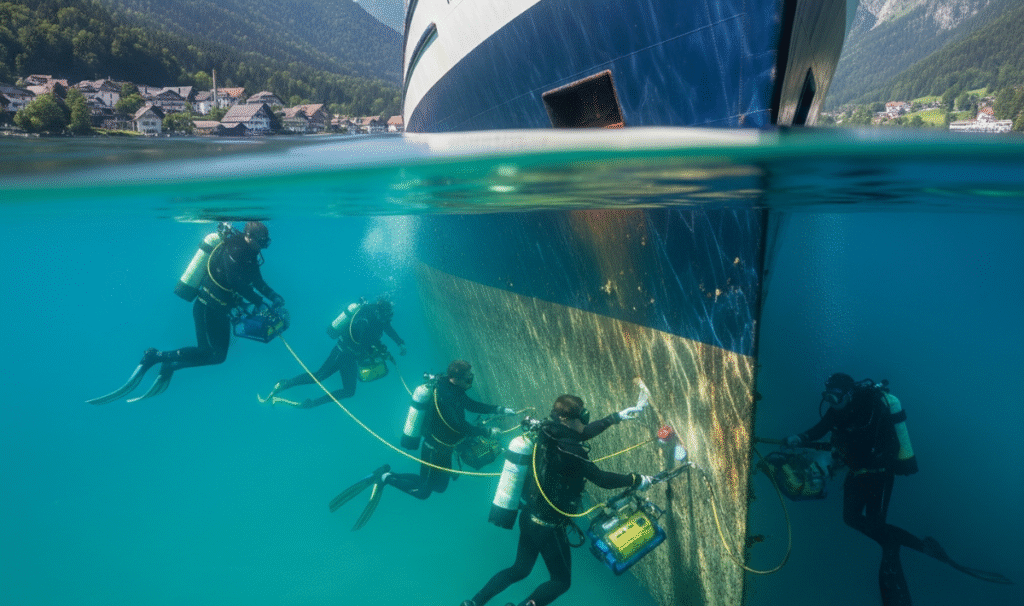
Have you ever noticed how moss grows on the shaded side of a house? Biofouling works similarly underwater. Marine organisms find the hull surface and turn it into their new home:
- Barnacles create hard, uneven, crusty spots.
- Algae spread out like green carpets, adding layers of resistance.
- Slime biofilms prepare the surface for even more organisms to attach.
Ignoring this buildup means forcing your vessel to drag through the water as if it were hauling an invisible anchor. Underwater hull cleaning in Rio Haina interrupts this process, giving ships the smooth glide they were designed for.
Compliance with International Maritime Standards
Beyond efficiency, international compliance also drives the demand for hull cleaning. The International Maritime Organization (IMO) and global conventions like MARPOL mandate reducing harmful emissions and preventing the transfer of invasive species.
Key compliance aspects linked with underwater hull cleaning in Rio Haina include:
- IMO Biofouling Guidelines: Encouraging vessels to maintain clean hulls to avoid ecological risks.
- MARPOL Annex VI: Reducing air pollution by cutting unnecessary fuel consumption.
- IMCA Safety Codes: Ensuring diver safety in underwater operations.
Maintaining a clean hull isn’t just “good practice” — it’s part of being compliant with the international standards that govern all major shipping activities.
Environmental Impact of Hull Cleaning
The Caribbean Sea is rich in biodiversity, making environmental protection an essential focus during maintenance operations. Biofouling doesn’t just increase your fuel bills; it can spread invasive organisms to new ecosystems, causing long-term damage.
When properly managed, underwater hull cleaning in Rio Haina supports eco-protection by:
- Cutting emissions through reduced fuel consumption
- Lowering risks of invasive species transfer
- Prolonging the lifespan of antifouling coatings
- Helping preserve local marine biodiversity
Responsible cleaning practices, like debris collection systems, ensure that marine environments are not unintentionally harmed.
Cost Savings That Can’t Be Ignored
If you’re a ship owner, you already track one of your biggest expenses — fuel. Studies show that fouled hulls can push fuel consumption up by 15–40%. That translates to thousands of dollars lost every single voyage.
With underwater hull cleaning in Rio Haina, owners save money by:
- Reducing resistance to improve fuel efficiency
- Decreasing dry dock and heavy maintenance needs
- Avoiding penalties linked with emissions regulations
- Extending the life of expensive coatings
Think of hull cleaning as preventative medicine. A small investment today saves you from massive expenses tomorrow.
The Hull Cleaning Process in Rio Haina
The cleaning process in Rio Haina is systematic, combining technology and diver expertise. Here’s what it typically includes:
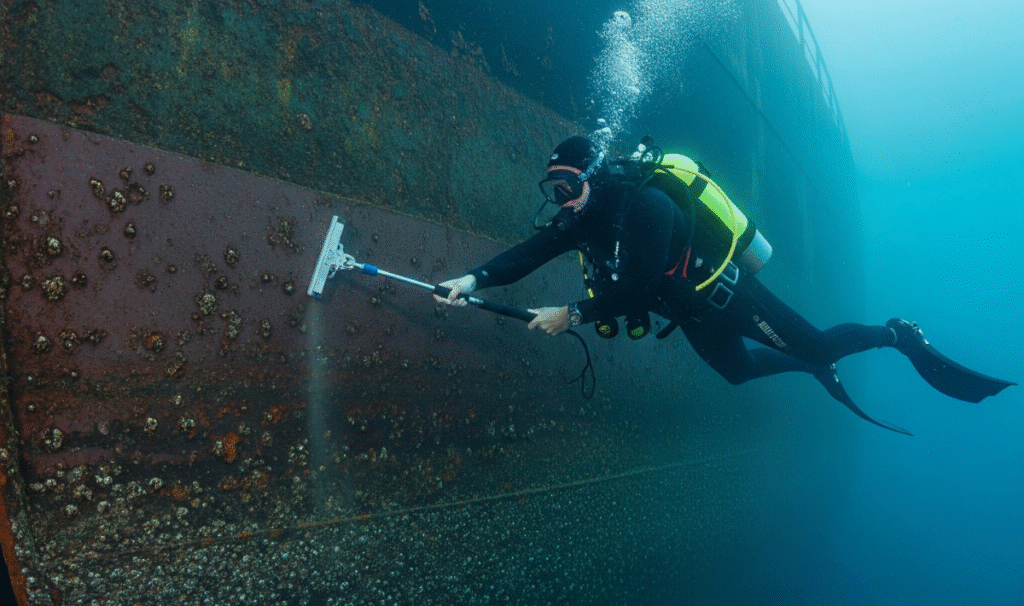
- Pre-cleaning survey: Divers or remotely operated vehicles (ROVs) inspect the hull with high-resolution cameras.
- Mechanical brushing: Specialized brushes remove barnacles and marine growth without compromising protective coatings.
- Propeller polishing: Ensures smoother rotations and reduced cavitation.
- Post-clean inspection: Comprehensive reporting, often with video evidence, for your records and compliance checks.
By following strict guidelines, underwater hull cleaning in Rio Haina guarantees that cleaning is both thorough and safe.
Safety Protocols and Standards
Divers working on hull cleaning face challenging underwater conditions. That’s why safety standards based on IMCA regulations guide every operation.
These protocols cover:
- Diver health and equipment checks
- Use of surface communication systems
- Emergency response planning
- Compliance with oxygen supply and decompression standards
Following these ensures that underwater hull cleaning in Rio Haina remains safe, efficient, and environmentally sound.
Technological Innovations Shaping the Future
The future of hull cleaning is shifting from manual to machine-assisted. Emerging technologies are making processes more sustainable, accurate, and efficient.
Some trends making their way into underwater hull cleaning in Rio Haina include:
- Robotic cleaners equipped with sensors and brushes
- Waste-capture systems that prevent debris from dispersing
- AI-driven inspections that track coating life and fouling rates
- Digital reporting for quick compliance updates
The industry is moving towards eco-friendly, automated solutions that will redefine how hull maintenance is performed globally.
Choosing the Right Service in Rio Haina
Not every service provider is the same, and choosing wisely matters. To get the best underwater hull cleaning in Rio Haina, shipowners should look for:
- Certified divers following IMCA and IMO guidelines
- Experience with vessels similar to yours
- Use of eco-conscious cleaning technologies
- Transparent inspection and reporting systems
Getting the right team ensures efficiency, safety, compliance, and long-term operational savings.
Conclusion
When it comes to maritime operations, underwater hull cleaning in Rio Haina is more than a routine service — it’s a critical part of sustainable and efficient shipping. From improving fuel efficiency and meeting international regulations to protecting sensitive marine ecosystems, hull cleaning delivers value at multiple levels.
If you’re operating in the Caribbean or passing through Rio Haina, scheduling hull cleaning can be one of the smartest decisions you make for your ship’s performance. A clean hull is a profitable hull — and in shipping, that difference is measured in both dollars and compliance records.
Similar market advantages are discussed in underwater hull cleaning in India.
FAQ:
Q1. Why should I consider underwater hull cleaning in Rio Haina instead of waiting for a dry dock?
Because Rio Haina provides convenient in-port services, enabling ships to save fuel and comply with standards without interrupting schedules.
Q2. Does hull cleaning really save that much fuel?
Yes. A fouled hull can increase consumption by up to 40%. Cleaning dramatically improves efficiency and cuts costs.
Q3. How often should I schedule cleaning in Rio Haina?
It depends on coating type and trade routes, but most ships benefit from hull cleaning every 3–6 months.
Q4. Is underwater hull cleaning safe for marine environments?
When done using approved techniques and debris-collection systems, it reduces ecological risks by preventing invasive species spread.
Q5. Are robotic systems replacing divers in Rio Haina?
Robotics are growing in use, but divers still play a critical role. Many providers now combine both approaches for the best outcome.