Workplace Alcohol Testing
In any organization, safety and trust form the foundation of success. When alcohol consumption enters the equation, both productivity and morale can be severely impacted. Workplace Alcohol Testing provides a reliable way to ensure safety, accountability, and fairness across industries. Whether it’s a large shipping firm, an industrial plant, or an office operation, alcohol testing policies reduce risks that could lead to costly mistakes or injuries.
With proper systems, employers not only stay compliant with national and international regulations but also foster a stronger work culture of responsibility. A tested, trusted workforce is always a safer, more efficient one.
The Importance of Workplace Alcohol Testing
Accidents caused by alcohol impairment can have devastating impacts in any work setting. Workplace Alcohol Testing helps prevent potential hazards by ensuring employees are fit for duty. It’s especially essential in safety-sensitive sectors like shipping, construction, and transportation, where even minor coordination errors can cause serious harm.
By maintaining clear testing guidelines, companies create awareness of accountability while safeguarding employee well-being. This proactive step demonstrates care for both workers and company assets. In industries operating under international frameworks, such as IMO, testing is integral to maintaining compliance and a structured culture of safety.
Legal and Compliance Frameworks
Today, laws governing alcohol use in the workplace are becoming stricter. Workplace Alcohol Testing supports legal compliance under occupational safety mandates and international maritime conventions like the MARPOL Convention. These frameworks require companies to maintain zero-tolerance policies in safety-critical roles.
Regular testing ensures readiness during surprise inspections or audits, protecting companies from lawsuits and fines. Adopting global best practices also builds confidence among clients, insurers, and partners. It proves a commitment to maintaining integrity, minimizing accidents, and ensuring safe, ethical operations—values that align with fast-growing sustainability and safety benchmarks worldwide.
When and How Testing Is Conducted
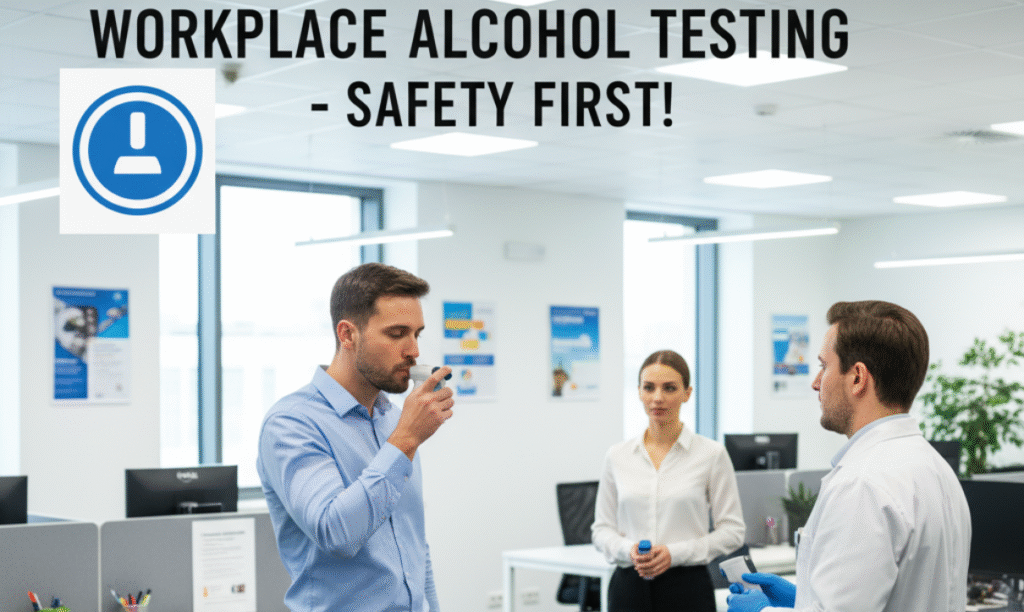
Workplace Alcohol Testing is implemented under several conditions, each serving a specific purpose. Pre-employment tests ensure candidates meet sobriety standards from the start. Random testing maintains integrity during employment, discouraging substance misuse. Post-incident testing helps identify potential causes following accidents, while for-cause testing is carried out when impairment is suspected.
Testing can be done using breath analysis, saliva screening, or advanced blood sample analysis, depending on industry requirements. Combining these testing types creates a balanced and consistent approach to safety management without compromising employee rights or privacy. Also read about Offshore Crew Testing: 7 Best Practices for Safer Seas.
Testing Methods Explained
Technology has made Workplace Alcohol Testing faster and more reliable than ever. The most common tools include portable breathalyzers for instant alcohol detection, saliva-based screening kits for quick field checks, and lab-based tests for in-depth accuracy. Digitized systems now log results within seconds, providing auditable records for compliance needs.
In industrial and maritime settings, roadside-style devices are often installed onboard or in facility checkpoints for random testing. These methods are non-invasive, quick, and standardized across global markets, helping companies operate with confidence, consistency, and transparency at every turn.
Building a Culture of Accountability
Alcohol policies are not just about control—they’re about culture. Workplace Alcohol Testing creates fairness by setting clear expectations for all staff members. When employees know that testing is routine and impartial, responsibility becomes second nature. Employers should back such systems with awareness training that reinforces safe behavior and educates crews about the consequences of impairment.
Transparency in policy implementation creates trust and reduces friction. Over time, this approach becomes a natural part of the organization’s social fabric, encouraging self-discipline and collective accountability.
Financial Benefits for Employers
The financial impact of alcohol-related accidents can be staggering, from fines and medical expenses to productivity losses and reputational damage. Workplace Alcohol Testing provides measurable savings by preventing incidents before they occur. Fewer accidents mean lower insurance premiums and reduced absenteeism.
In shipping and industrial operations, consistent testing improves operational uptime while maintaining the company’s compliance status. Clean records also strengthen client relationships. For long-term gains, employers investing in preventive testing recoup costs many times over in the form of improved performance, reduced errors, and safer working environments. Also, know about Crew Alcohol Testing: 7 Vital Insights for Safer Seas.
Safety Standards and Best Practices
Safety underpins every effective Workplace Alcohol Testing program. Procedures are governed by international safety authorities like IMCA to ensure fair administration and accurate results. Employers should establish backup plans, such as multiple testing methods and calibrated devices for validation. Training supervisors in recognizing impairment symptoms adds an extra layer of accountability.
Periodic program reviews and transparent recordkeeping ensure reliability. Companies that embed these standards earn reputations as trustworthy operators, both within their industries and among regulating authorities that value compliance and thoroughness above all else.
Marine Supercargo Expands Services: Drug & Alcohol Testing for Safer Seas
Marine Supercargo has broadened its service portfolio by introducing professional Drug and Alcohol Testing solutions to promote safety at sea. Globally known for marine cleaning expertise, the company now offers testing programs that align with international frameworks like IMO and MARPOL. These services help ship owners, operators, and managers ensure crew fitness while preventing safety breaches caused by impairment.
The program integrates seamlessly into operational processes, allowing real-time testing and transparent reporting. Partnering with Marine Supercargo’s testing services demonstrates a commitment to responsible, compliant, and efficient maritime operations—further reinforcing global safety standards across all vessel types and organizations. Read more about 7 Powerful Reasons Corporate Drug Testing Works
Ethical and Privacy Considerations
Workplace Alcohol Testing must balance safety with worker dignity. While compliance is necessary, ethical testing procedures ensure privacy and respect. Employees should be informed about policy details, testing frequency, and their right to confidentiality. All test results must remain secure and accessible only to authorized personnel.
Support systems such as counseling or rehabilitation should accompany testing frameworks for those struggling with dependency issues. When companies combine vigilance with compassion, they create not just compliance-driven workforces but ethical environments that value transparency and human well-being equally.
“Marine cleaning, anytime. Anywhere. 🌊 #GlobalMarine”#shipping #maritime #ship #cruises #sealife #port #shipping #marine #captain #vessel #ships #cargo pic.twitter.com/GgKTqEMETK
— Marine Super Cargo (@Marinsupercargo) October 4, 2025
Future Innovations in Alcohol Testing
Technology continues to shape the future of Workplace Alcohol Testing. AI-enabled sensors, wearable alcohol monitors, and biometric verification are gaining traction. Emerging blockchain platforms offer data security, ensuring records remain unaltered and verified. Predictive analytics can now detect patterns of absenteeism or fatigue associated with potential misuse, offering early intervention tools for management.
Portable testing devices are becoming smaller, faster, and more accurate—ideal for offshore and remote worksites. As the global workforce evolves, embracing such innovations will redefine the boundaries of workplace safety and compliance. Read more about 5 Crucial Reasons Drug & Alcohol Testing Matters.
Training and Education
Consistent training plays a crucial role in successful Workplace Alcohol Testing programs. Supervisors and employees alike should understand the procedures, expectations, and implications of test results. Training sessions clarify legal responsibilities and foster collective awareness. Educational programs promoting wellness and prevention empower workers to make responsible choices.
By aligning testing with training, organizations transform reactive policies into proactive cultural initiatives. The key is sustainability—testing isn’t just about enforcement; it’s about long-term education that ensures safer, smarter, and stronger workplaces across industries.

Documentation and Record Management
Accurate recordkeeping ensures compliance integrity. Workplace Alcohol Testing programs must include thorough documentation covering test protocols, results, certifications, and follow-up actions. These records serve as proof during audits or regulatory inspections. Modern cloud-based systems simplify tracking and allow instant access for authorized personnel.
Maintaining organized documentation demonstrates transparency and preparedness, strengthening a company’s legal defense in case of disputes. Consistent reporting also supports internal performance reviews, turning compliance into an opportunity for continuous improvement rather than a mere obligation. Also read about 7 Vital Reasons Alcohol Testing Saves Shipping Companies.
Conclusion
Workplace Alcohol Testing is more than a compliance measure—it’s a strategic investment in people, productivity, and safety. It protects teams from preventable incidents, enhances company reputation, and aligns with international safety objectives. Technology, ethics, and training together create transparent testing programs that sustain long-term success.
For businesses committed to optimizing safety and compliance, partnering with platforms like CleanShip.co empowers organizations to set higher standards. From the deck to the office, every worker deserves a clean, secure, and responsible environment that supports both safety and success.
FAQs:
Q1. Why is Workplace Alcohol Testing necessary?
It prevents impairment-related accidents, promotes compliance, and ensures employees are sober, alert, and fully capable of performing their duties safely.
Q2. Which industries require alcohol testing the most?
Sectors like shipping, construction, aviation, and manufacturing enforce testing due to strict safety laws and risk mitigation requirements.
Q3. How do companies ensure privacy in testing?
Testing programs protect confidentiality through secure data management systems, limited access, and anonymous reporting structures.
Q4. How does Marine Supercargo contribute to employee safety?
By offering specialized Drug and Alcohol Testing, Marine Supercargo helps businesses stay compliant while maintaining safe, exemplary crews worldwide.
Q5. What new technologies improve testing accuracy?
AI-driven detectors, portable testing devices, and blockchain-secured data systems increase accuracy, speed, and traceability in industrial testing programs.