Underwater Hull Cleaning in Charleston: Essential Guide for Shipowners
Think of your ship’s hull as a pair of running shoes; over time, mud and grime slow your stride. Likewise, underwater hull cleaning in Charleston removes marine fouling that drags your vessel down, harming fuel efficiency and speed. With Charleston’s warm, biologically rich waters, regular hull cleaning isn’t just maintenance—it’s survival. This guide explains why cleaning your ship’s underwater surface is a game-changer, boosting performance, compliance, safety, and environmental responsibility.
Importance of Underwater Hull Cleaning in Charleston – Why Every Ship Needs It Regularly
Underwater hull cleaning in Charleston tackles biofouling—accumulations of barnacles, algae, and other organisms—that cling to the hull. This buildup increases drag and fuel consumption, akin to running against a strong current. Regular cleaning protects your vessel’s structure from corrosion and damage, most critical in Charleston’s warm waters where fouling thrives rapidly. Consistent hull care ensures your ship performs optimally while passing strict port and environmental inspections.
Benefits of Regular Underwater Hull Cleaning in Charleston – Fuel Efficiency, Speed, Reduced Maintenance
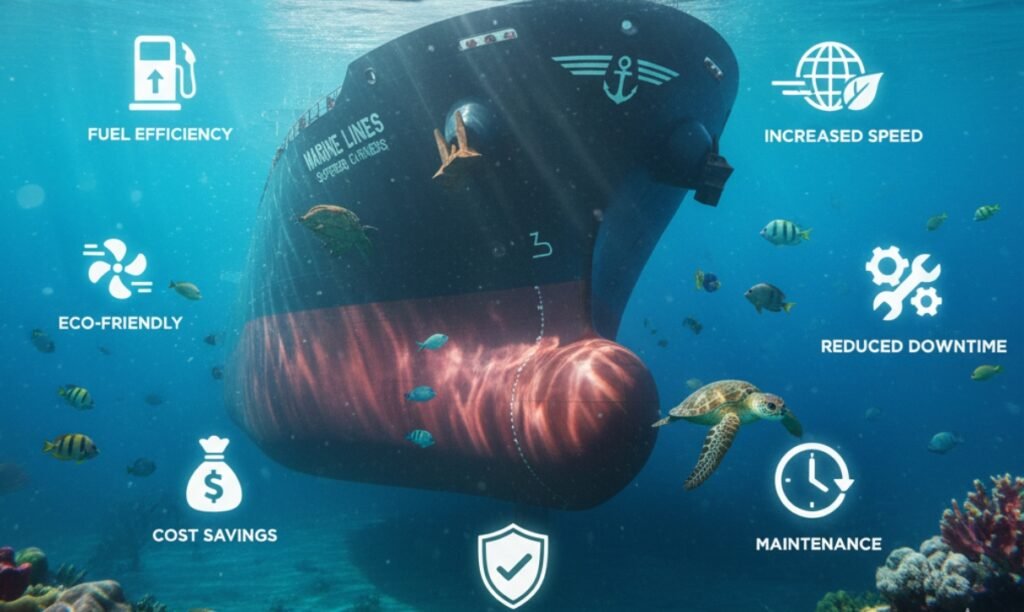
Think of a clean hull like waxing a surfboard—it glides smoother and faster. Removing biofouling reduces water resistance, significantly cutting fuel costs and decreasing carbon emissions. Regular cleaning also extends antifouling paint life and lowers dry-docking needs, which are costly and time-consuming. For Charleston vessels navigating busy shipping lanes, these benefits translate into timely arrivals and better economic returns.
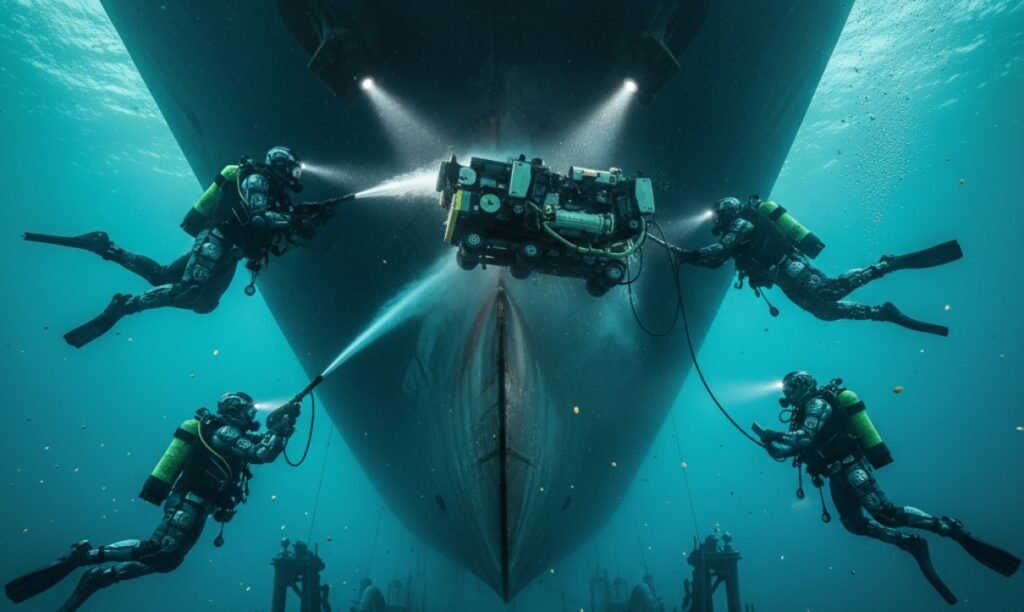
Underwater hull cleaning in Charleston Harbor
Environmental Advantages of Eco-Friendly Cleaning – MARPOL and Local Compliance
Eco-friendly underwater hull cleaning in Charleston avoids toxic runoff and invasive species spread, aligning with MARPOL regulations and Charleston’s environmental standards. By using safe cleaning technologies, you protect delicate marine life and preserve the harbor’s natural balance. Complying with these regulations removes legal risks and supports your company’s reputation as a responsible maritime operator.
Cost Savings Through Underwater Hull Cleaning in Charleston – Reduced Fuel and Dry-Docking Costs
The savings from underwater hull cleaning in Charleston go beyond immediate fuel reduction. Removing fouling delays the need for frequent dry-docking and repairs, which can disrupt schedules and inflate budgets. In Charleston, where operational time is money, these savings make hull cleaning a financially smart part of your ship maintenance routine. Also read about 7 Powerful Benefits of Underwater Hull Cleaning in Boston.
Hull Biofouling Prevention Techniques – Anti-Fouling Coatings and Best Practices
Using specialized anti-fouling coatings forms a lasting barrier against marine growth. Best practices include prompt cleaning schedules and hull inspections to preserve coating effectiveness. Such proactive maintenance ensures your hull remains smooth and resistant to fouling, especially important in Charleston’s marine environment.
Robotic Hull Cleaning Innovations – Using ROVs and Automated Cleaning Systems
Automation is transforming underwater hull cleaning in Charleston. ROVs (Remotely Operated Vehicles) and robotic cleaners remove fouling efficiently while enhancing diver safety. These innovations reduce cleaning time, enable frequent maintenance, and minimize hull damage, offering Charleston ship owners a scalable, high-tech solution.
Manual vs Mechanical Cleaning – Pros, Cons, and Safety Considerations
Manual cleaning, done by professional divers, offers precise control but carries risks like underwater currents and hazards. Mechanical cleaning uses water jets and brushes, providing consistent results with less risk but may lack fine detail. Combining these approaches balances safety with thoroughness, tailored to vessel size and cleaning complexity in Charleston.
Inspection and Maintenance Integration – Combining Cleaning with Surveys
Integrating underwater cleaning with hull inspections optimizes maintenance by spotting corrosion or damage early. This dual approach saves time and money by addressing issues before they escalate, ensuring vessels meet Charleston’s stringent inspection standards and remain seaworthy. Learn more about the Top 7 Benefits of Underwater Ship Hull Cleaning in Jersey.
Scheduling Hull Cleaning – Frequency Based on Vessel Type and Waters
Hull cleaning frequency depends on vessel types and waters. Commercial ships in Charleston often require monthly cleaning, while leisure crafts might need quarterly services. Idle ships accumulate fouling faster, demanding tighter schedules to maintain performance and compliance.
Underwater Hull Cleaning in Charleston Regulations – IMO, MARPOL, and Local Port Rules
Charleston abides by IMO and MARPOL standards governing underwater cleaning methods to prevent pollution and protect marine ecosystems. Local port authorities enforce additional rules on invasive species management. Awareness and adherence to these regulations are vital to avoid penalties and operational delays.
Crew Safety During Cleaning Operations – Diver Protocols and Risk Management
Safety protocols for divers include equipment checks, communication systems, and emergency procedures to mitigate risks from underwater hazards and vessel traffic. Ensuring crew well-being is non-negotiable in Charleston’s busy waterways, reflecting adherence to international maritime safety conventions.
Hull Cleaning in Cold vs Warm Waters – Regional Differences and Challenges
Warm Charleston waters promote rapid biofouling, necessitating frequent hull cleaning. In contrast, colder waters see slower fouling but face challenges like ice and reduced visibility that complicate cleaning. Understanding these differences guides effective regional maintenance strategies. Read more about 7 Powerful Benefits of Underwater Hull Cleaning in Philadelphia.
Technology in Hull Cleaning – Sensors, AI, and Real-Time Monitoring
Emerging technologies such as underwater sensors and AI-powered monitoring systems revolutionize hull maintenance. These tools detect fouling early, guide cleaning schedules, and optimize hull performance, ensuring your Charleston vessel remains in peak condition with minimal downtime.
Documentation and Compliance Support – Linking Cleaning with Flag Documentation
Proper documentation of cleaning activities supports flag state inspections and certification renewals. Maintaining detailed logs aligns with IMO and local Charleston port requirements, avoiding compliance breaches and facilitating smooth operational approvals.
Fuel Efficiency Case Studies – Real-World Examples of Savings Post-Cleaning
Studies demonstrate ships can cut fuel consumption by up to 15% following underwater hull cleaning. These savings equate to thousands in operational costs and reduced emissions, proving the tangible value of regular cleaning for Charleston fleet managers.
Port-Specific Cleaning Guidelines – Rules in New Plymouth, Tacoma, Columbus, etc.
Ports globally have tailored rules for hull cleaning reflecting local environmental priorities. Charleston emphasizes eco-compliance, invasive species control, and diver safety, aligning with international best practices to protect its unique marine ecosystem.
Drug & Alcohol Testing for Crews – Ensuring Safety During Hull Operations
Mandatory drug and alcohol testing protocols in Charleston ensure crew fitness and reduce accident risks during complex underwater operations. This practice complies with maritime labor standards and promotes a culture of safety. Also read about Crew Alcohol and Drug Testing: 7 Safety Essentials.
Future Trends in Hull Cleaning – Smart Cleaning, Eco-Innovation, and Predictive Maintenance
The future promises AI-driven predictive maintenance, eco-friendly cleaning materials, and autonomous underwater robots. These innovations will boost efficiency, reduce environmental impacts, and enhance regulatory compliance for Charleston ships.
Special Section: Marine Supercargo Services
Marine Supercargo offers global underwater hull, tank, and hold cleaning alongside expert cargo supervision and compliance support. Recently, it expanded services to include professional drug and alcohol testing, enhancing crew safety and regulatory compliance. These offerings align with standards from IMCA, IMO, and MARPOL, providing comprehensive maritime operational support.
Professional underwater hull cleaning in Charleston for vessels
Conclusion
Underwater hull cleaning in Charleston is essential for maximizing vessel performance, cost savings, environmental stewardship, and regulatory compliance. Regular cleaning keeps ships fast and fuel-efficient, reduces maintenance costs, and protects fragile marine ecosystems. Embracing advanced technologies and maintaining proper documentation further fortifies your operational excellence. For expert maritime services and assured compliance, CleanShip.co remains your trusted partner.
FAQs:
Q1. What is the role of underwater hull cleaning in Charleston?
Underwater hull cleaning in Charleston helps reduce fuel consumption and prolongs vessel life by removing biofouling, enhancing speed, and compliance with local environmental regulations.
Q2. Why is flag documentation important for ship safety and compliance?
Flag documentation verifies compliance with international maritime safety, environmental standards, and port regulations, ensuring lawful operation and smoother inspections.
Q3. How does vessel documentation relate to maritime law?
It formalizes adherence to international conventions like IMO and MARPOL, guaranteeing your vessel meets legal obligations for safe and environmentally responsible navigation.
Q4. What is the importance of drug and alcohol testing in maritime operations?
Testing ensures the crew is fit for duty, reducing accidents during hazardous operations such as underwater hull cleaning while meeting labor and safety regulations.
Q5. How does proper documentation benefit crew and vessel management?
Accurate records improve safety oversight, facilitate inspections, streamline certification processes, and enhance operational efficiency for vessels and crews.