Strategic Suez Transit Tank Scheduling Fundamentals
Effective represents a critical component of voyage planning for tanker operators navigating between European and Asian markets. Marine Super Cargo specializes in coordinating tank cleaning operations with canal transit schedules, ensuring vessels maintain compliance while maximizing operational efficiency throughout the waterway passage.
Proper Suez transit tank scheduling balances multiple competing priorities—meeting MARPOL requirements, satisfying Suez Canal Authority inspection standards, preparing tanks for next cargo operations, and minimizing voyage delays. This complex coordination demands experienced planning and reliable service providers.
Pre-Transit Planning Timeline
Successful Suez transit tank scheduling starts 7-14 days before estimated canal arrival. Vessel operators should confirm cargo discharge completion dates, calculate steaming time to Suez approaches, and coordinate preliminary cleaning requirements with Marine Super Cargo operations personnel.
Initial Suez transit tank scheduling communications should specify vessel particulars, tank configurations requiring attention, previous cargo details, and next cargo specifications. This information enables accurate service quotations and proper resource allocation for your arrival.
The International Maritime Organization (IMO) recommends maintaining flexibility in , accounting for potential weather delays, discharge operation extensions, or unexpected equipment issues affecting vessel arrival timing.
Anchorage Period Optimization
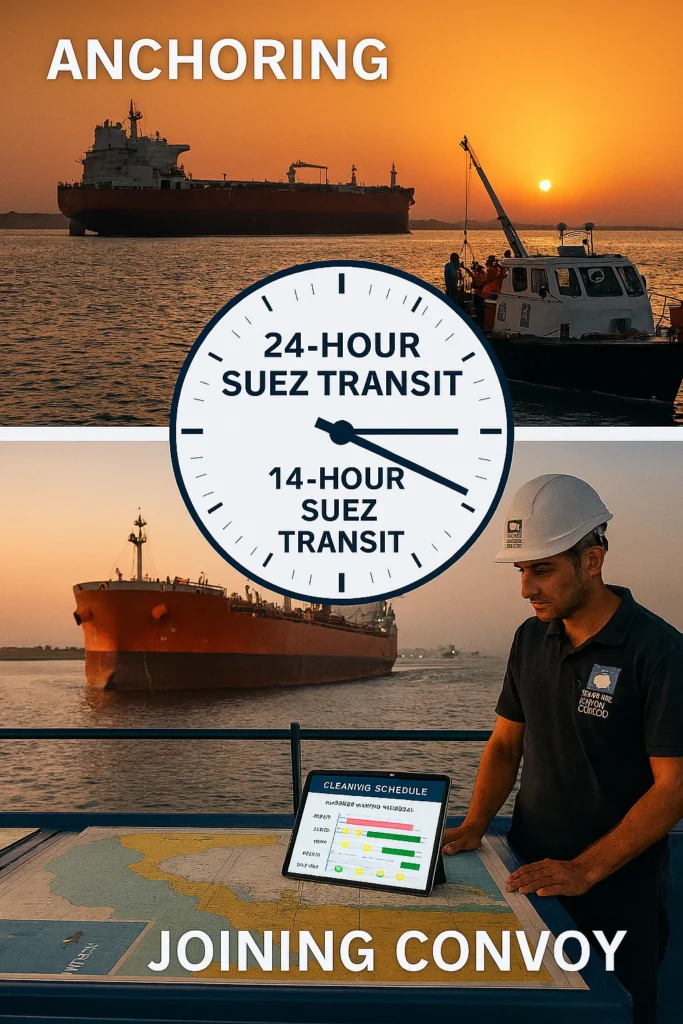
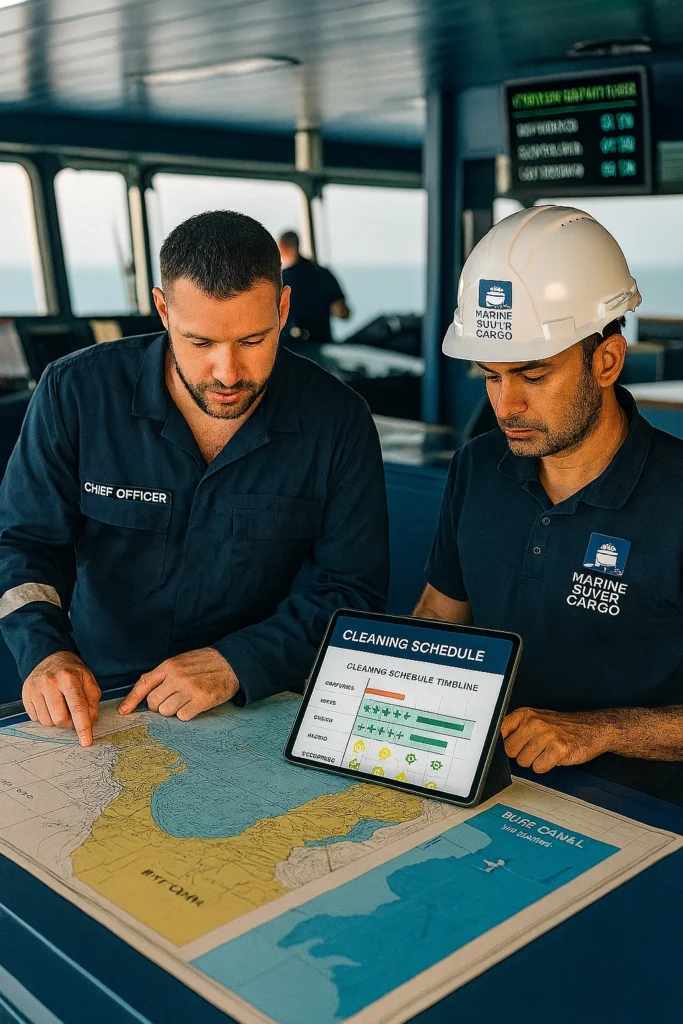
Most vessels experience 8-16 hour anchorage periods awaiting convoy assignments. Effective leverages these waiting hours for productive cleaning operations rather than viewing them as unproductive downtime.
Marine Super Cargo coordinates convoy waiting period services that complete tank cleaning during anchorage hours. Our expertise ensures operations finish with adequate margins before convoy departure times.
Vessels should communicate arrival updates 48-72 hours before reaching anchorage positions. These notifications allow Marine Super Cargo to position equipment and personnel for immediate deployment upon your vessel’s anchorage arrival, maximizing available Suez transit tank scheduling windows.
Convoy Schedule Coordination
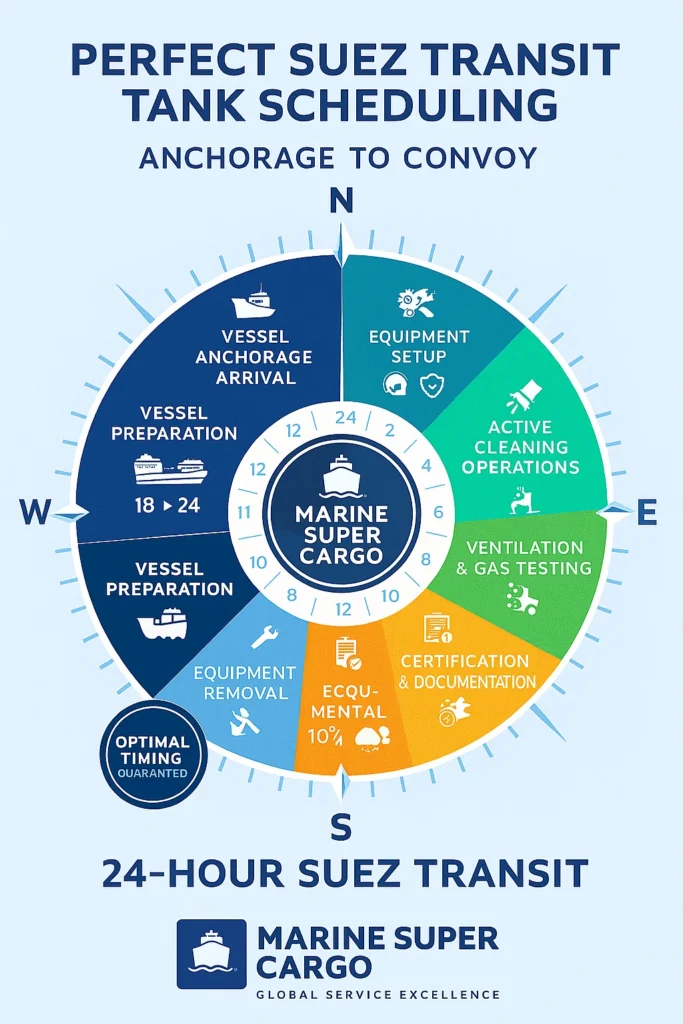
Northbound and southbound Suez Canal convoys operate on established schedules affecting Suez transit tank scheduling decisions. Understanding these patterns helps optimize cleaning operation timing relative to convoy departure windows.
Marine Super Cargo maintains real-time convoy schedule information, coordinating to ensure cleaning completion well before vessels must join assigned convoys. Our operations teams work backward from convoy times, calculating required cleaning durations and buffer periods.
Vessels assigned to early morning convoys benefit from overnight Suez transit tank scheduling, with operations conducted during darkness hours completing before dawn convoy assembly. This approach maximizes sleep periods for vessel crews while ensuring tank readiness.
Post-Discharge Cleaning Coordination
Optimal Suez transit tank scheduling often incorporates cleaning operations immediately following cargo discharge at ports preceding canal transit. Vessels discharging at Mediterranean terminals can schedule cleaning during port stay, arriving at Suez with tanks already meeting MARPOL Annex I and Annex II standards.
Marine Super Cargo coordinates with discharge port agents to provide seamless cleaning services during cargo operations. This Suez transit tank scheduling approach eliminates anchorage cleaning requirements, allowing vessels to join convoys immediately upon canal approach.
Pre-transit cleaning proves particularly valuable for vessels facing tight loading schedules at Asian terminals. that completes cleaning before canal approach ensures tanks remain ready for immediate cargo operations upon Red Sea or Arabian Gulf arrival.
Next Cargo Preparation Integration
Effective considers requirements for subsequent cargo loading. Chemical tankers particularly benefit from coordinating cleaning specifications with next cargo compatibility requirements during canal approach periods.
Marine Super Cargo reviews upcoming cargo specifications during consultations. Our teams apply appropriate cleaning methodologies ensuring tanks meet charterer requirements without necessitating duplicate cleaning at loading terminals.
Vessels should provide loading terminal details, cargo specifications, and charterer requirements during initial Suez transit tank scheduling discussions. This information enables Marine Super Cargo to deliver cleaning services satisfying all downstream operational requirements.
Weather and Seasonal Considerations
Seasonal weather patterns influence decisions. Summer heat affects tank ventilation periods, requiring extended purging times after washing operations. Winter conditions occasionally bring strong winds affecting anchorage operations and cleaning procedure timing.
Marine Super Cargo incorporates seasonal factors into recommendations. Our experience across all weather conditions ensures realistic timeline estimates accounting for environmental variables affecting cleaning efficiency.
Documentation Timeline Management
Suez transit tank scheduling must account for certification and documentation requirements. Gas-free certificates, tank inspection reports, and logbook entries require preparation time within overall scheduling frameworks.
Marine Super Cargo coordinates documentation production with physical cleaning operations. Our ensures all certificates receive proper preparation, signatures, and official stamps before SCA inspection teams board your vessel.
Contingency Planning Elements
Prudent incorporates contingency buffers for unexpected complications. Equipment failures, adverse weather, or inspection concerns may extend cleaning durations beyond initial estimates.
Marine Super Cargo recommends building 2-4 hour buffers into frameworks. These margins accommodate unforeseen issues without compromising convoy departure deadlines or creating voyage delays.
Communication Protocol Establishment
Successful demands clear communication channels between vessel operators, Marine Super Cargo operations teams, and vessel masters. Establishing reporting protocols ensures all parties remain informed about schedule adjustments affecting cleaning operations.
Vessels should designate specific personnel responsible for coordination. Single-point contacts streamline communications, preventing confusion and ensuring consistent information flow throughout planning and execution phases.
Cost Optimization Through Scheduling
Strategic reduces operational expenses by utilizing anchorage periods rather than expensive berth time for cleaning activities. Marine Super Cargo helps operators identify cost-effective scheduling approaches that minimize overall voyage expenses.
Advance booking provides pricing advantages in . Vessels committing to services 3-5 days before arrival receive preferential rates compared to last-minute urgent requests requiring premium emergency mobilization.
Frequently Asked Questions
Q1: When should vessels first contact Marine Super Cargo about Suez transit cleaning?
Initial contact should occur 7-14 days before estimated canal arrival, with firm booking confirmations 48-72 hours before reaching anchorage positions.
Q2: Can cleaning schedules accommodate unexpected convoy time changes?
Yes, Marine Super Cargo maintains flexible scheduling capabilities, adjusting operations timing when SCA modifies convoy departure schedules affecting cleaning windows.
Q3: How long before convoy departure should tank cleaning complete?
Operations should finish minimum 2-3 hours before convoy assembly, providing buffers for documentation, equipment demobilization, and final vessel preparations.
Q4: Does scheduling differ for northbound versus southbound transits?
Basic principles remain consistent, though southbound vessels often face longer anchorage periods providing more generous cleaning operation windows.
Q5: What information helps Marine Super Cargo optimize Suez transit scheduling?
Provide vessel particulars, tank quantities, previous/next cargo details, estimated arrival time, and any charterer-specific requirements during initial scheduling discussions.