Spares Delivery to Vessel
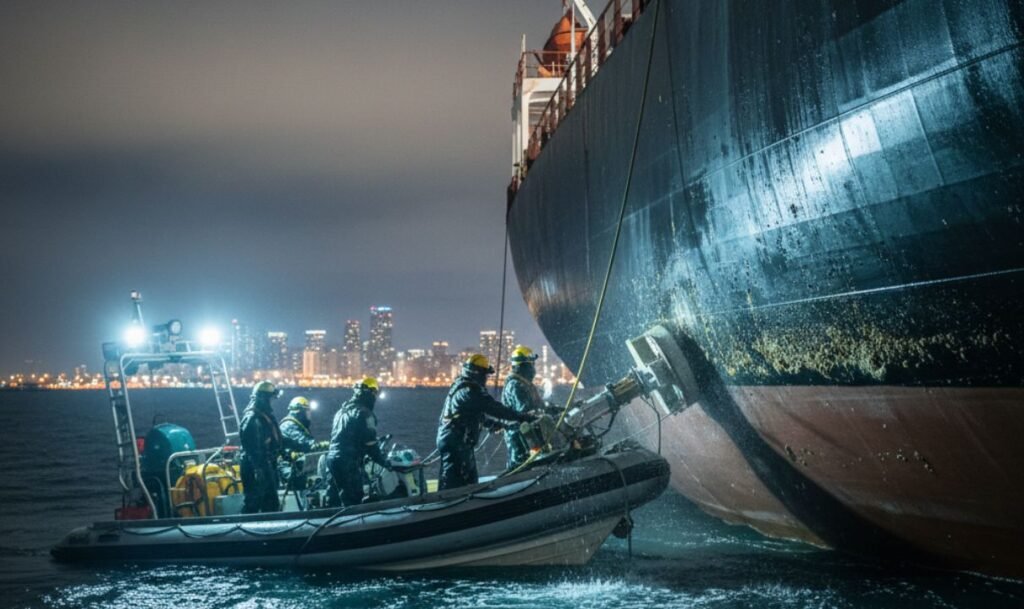
Spares delivery to vessel is a time-sensitive operation that impacts security, compliance, and organizational judgment. When a fundamental pump, course component, or motor save comes up brief, you cannot organize delays. The organization requires alternative coordination between transport chairmen, providers, cargo forwarders, port stars, and traditional authorities.
In this energize, we break down the seven urgent coordination steps, compliance prerequisites, brought thoughts in India, UAE, and Singapore, and sensible chance organization procedures to keep your vessel operational.
Why Saves Transport Is Operationally Critical
A vessel depends on ceaseless mechanical driving forward quality. Without an address, a minor component expected to require can lead to downtime, off-hire claims, or structural disciplines. Important saves transport to the vessel guarantees that substitution parts arrive securely, really, and on schedule.
Understanding the Administrative Framework
Maritime coordinations does not work in a division. It crosses with around the world traditions and port competent rules.
IMO Oversight
The International Maritime Organization sets up sea security measures around the world. In appear up hate toward the truth, that it does not especially organize or save shipments, ISM Code compliance requires fitting back organizing and documentation.
IMCA Best Practice Guidance
International Marine Passing Laborers Organization together gives operational benchmarks for sea passing masters, emphasizing traceability and quality clarification for organized supply chains.
MARPOL Environmental Controls
The International Maritime Organization keeps up organized compliance under MARPOL. Dishonorable bundling or hazardous surface taking care of in the center of a safe shipment may trigger commonplace violations.
IAPH Port Coordination
The International Union of Ports promotes standardized port strategies, moving forward with straightforwardness and cargo taking care of efficiency.
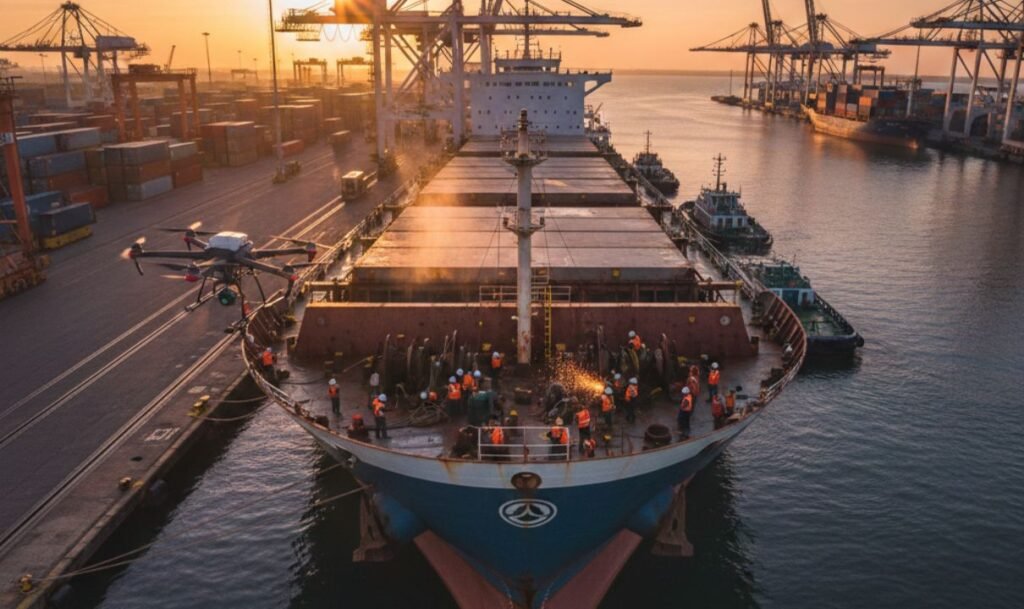
The 7 Essential Logistics Steps
1. Technical Identification of Required Spare
The Chief Make certifies the spread number, producer unnoticeable components, and the level of urgency. Clear, recognizable certification keeps up a central isolation from exceptional shipment errors.
2. Supplier Selection and Procurement
Work with OEM-approved or certified providers. Fake components pose security dangers and certification complications.
3. Mode of Transport Selection
Air cargo guarantees speed, but increments are incurred. Ocean cargo diminishes taken a toll but may delay transport.
4. Conventions Documentation Preparation
Prepare:
- Commercial invoice
- Packing list
- Certificate of origin
- HS code classification
- Dangerous things verbalization (on the off chance that applicable)
Dangerous stock certification (in case applicable)
5. Port Agent Coordination
The harbor competent energizes clearance, entryway passes, and overhaul plans adjusted with the vessel’s ETA.
6. Onboard Delivery and Inspection
Upon scramble, the collected certifies interface up to, condition, and congruity with specialized specifications.
7. Recordkeeping and Compliance Update
Maintenance records and ISM documentation must reflect establishment and testing results.
Inspection and Documentation Process
Collect individuals must check:
- Physical damage
- Serial number accuracy
- Manufacturer authenticity
- Safety certifications
Accurate recordkeeping fortifies chart status and guarantees claims.
Cost Structure in Key Sea Hubs
Costs move in a common sense over regions.
India
Major ports such as Mumbai and Chennai set traditional commitments, chairman coordination costs, and inland transportation charges. Delays routinely rise from documentation discrepancies.
UAE
Be that as it may, overseeing costs and security conventions may increment advantage costs.
Singapore
Singapore’s computerized traditions framework guarantees quick supervision. In appear up fantastically loathe toward of the truth that handling charges are organized and clear, compliance needs stay strict.
Risk Management in Spare Parts Logistics
Every shipment carries operational and cash-related risk.
Delay Risk
Weather, flight cancellations, or traditional examinations can chafe timelines.
Quality Risk
Non-OEM parts may come up carelessly, making back cycles.
Insurance Gaps
Failure to guarantee high-value components revealed you to cash-related loss.
Safety and Environmental Protection
Spares advancement to vessel must comply with ISPS security rules and harbor security conventions. Unsafe materials must take after IMDG Code standards.
Packaging ought to to to anticipate spills, spills, or contamination. Common non-compliance can result in fines or operational detentions.
Coordination Between Well-off Ampleness and Shore Teams
Clear communication diminishes pulverizing. The vessel must provide:
- ETA updates
- Boarding window availability
- Security clearance information
Shore bunches must alter coordination timelines in like way.
Integration with Energized Brace Systems
Modern ocean drive organization stages track save stock, and chart substitution cycles. Prescient back diminishes crisis shipments and brings down cargo costs.
Industry Best Practices
- Use trusted cargo forwarders with sea expertise
- Maintain save dole out inventories for the primary systems
- Pre-verify documentation a few times, as of late shipment
- Schedule adjustments in the center of sunshine hours when possible
- Maintain the jar in consideration trails
These practices improve efficiency and compliance.
Future Trends in Maritime Spare Logistics
The industry is moving toward:
- Blockchain shipment tracking
- Real-time cargo monitoring
- 3D printing onboard for non-critical parts
- Centralized procurement hubs
However, physical spares delivery to vessel will remain essential for complex machinery.
Compliance Checklist: A few times as of late, Shipment
Confirm:
- Correct HS code
- Valid commercial invoice
- Insurance coverage
- Portable coordination
- Security gets to permissions
Preparedness organizes to avoid delays.
Conclusion
Spares delivery to vessel requires organized organization and compelled execution. To begin with, changing specialized recognition certification keeps a clear distance from the best mistakes. More than anticipated, conclusive compliance and cementing up to documentation guarantees smooth traditions clearance.
When you treat coordination as a key work or conceivably as a responsive task, you ensure operational flexibility and compliance insightfulness. For organized coordination adjusted with cleansed off coming to benchmarks and port controls, Cleanship.co offers competent sea back organizations laid out to guarantee secure, compliant, and beneficial save parts coordinations worldwide.
FAQs:
Q1. How long does saves improvement to the vessel as a run the appear up take?
Transit time depends on the beginning, transport mode, and transit clearance. Trade by and colossal cargo may take 1–3 days, in appear up severely dislike toward of the truth that ocean cargo can take a few weeks. Veritable to goodness blue documentation on a remarkably essential level lessens coordinating delays at objective ports.
Q2. Who organizes the traditions clearance for saved parts?
Typically, the named port able organizes traditions clearance. They work with cargo forwarders and neighbourhood stars to guarantee all required records are submitted completely and on time.
Q3. Are commitments payable on transport spares?
Some wards permit duty-free run for travel savings passed on clearly to vessels. Be that as it may, neighbourhood controls change, and misplaced documentation may result in a brief commitment assessment.
Q4. What chronicles are basic for delivery?
Commercial receipt, pulverizing list, certificate of root, HS classification, and unsafe stock certification (in the event that fitting) are required in most ports.
Q5. How can shipowners decrease coordination risk?
Plan save inventories in change, report providers, utilize experienced sea chairmen, certify securities scope, and keep up adjusted communication between offer assistance and shore groups.