
Ship Hull Cleaning in Gabon: The Ultimate Guide
Ship Hull Cleaning in Gabon has become essential for efficient maritime operations. A clean hull reduces drag, improves fuel efficiency, and ensures vessels meet international environmental regulations. For ship owners and operators navigating the busy ports of Gabon, regular hull maintenance can prevent costly repairs and downtime.
Beyond operational efficiency, it contributes to a greener maritime industry by reducing carbon emissions. In this guide, we explore everything from technical cleaning methods to compliance, cost-saving benefits, and future trends, giving you practical insights for maintaining your fleet effectively while safeguarding the marine ecosystem.
Understanding Hull Fouling and Its Impact
Hull fouling occurs when marine organisms like algae, barnacles, and mussels attach to a ship’s hull. This biological buildup increases water resistance, slowing vessels and raising fuel consumption. In Gabon, where tropical waters accelerate fouling, neglecting hull cleaning can result in substantial economic losses.
Regular cleaning prevents damage to anti-fouling coatings and ensures compliance with MARPOL environmental regulations. By understanding the science behind fouling, ship operators can make informed decisions about maintenance schedules, cleaning methods, and the technologies that best protect their fleet while reducing environmental impact.
Key Benefits of Ship Hull Cleaning in Gabon
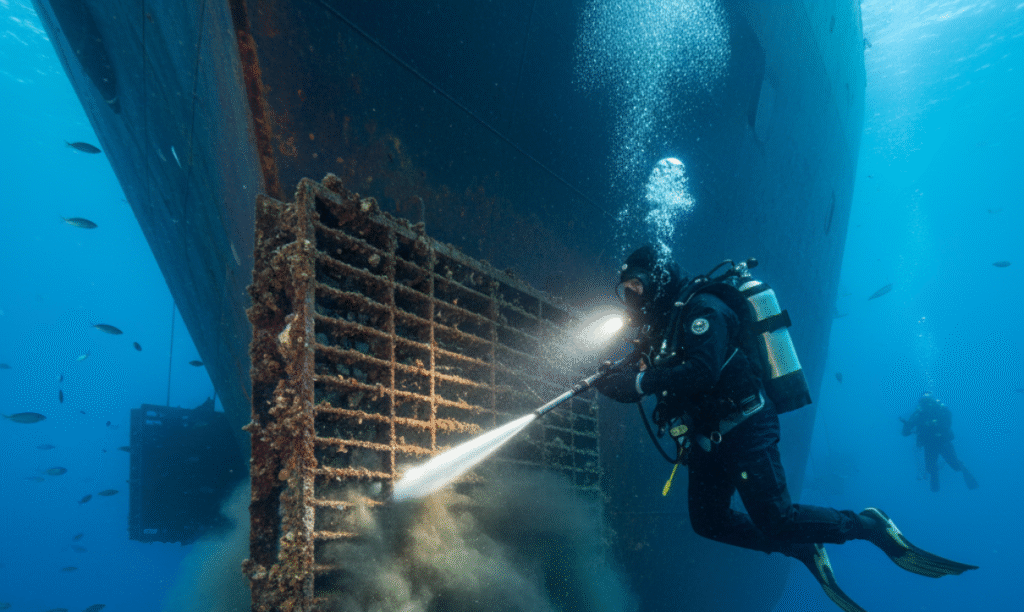
Regular Ship Hull Cleaning in Gabon provides multiple operational advantages. Firstly, it boosts fuel efficiency by minimizing drag, lowering operational costs. Secondly, it extends hull life and preserves anti-fouling coatings, preventing structural damage. Thirdly, compliance with international maritime regulations like MARPOL avoids fines and legal issues. Clean hulls also improve vessel speed and maneuverability, essential for port operations.
Finally, environmentally conscious operators reduce marine pollution and carbon emissions. These combined benefits enhance profitability while supporting sustainable shipping practices, making hull cleaning a crucial part of vessel management in Gabon. Also read about underwater ship hull cleaning in Moroni.
Methods of Ship Hull Cleaning: Choosing the Right Approach
Several methods exist for Ship Hull Cleaning in Gabon, each with unique advantages. Traditional dry-docking allows thorough cleaning and inspection, but can be costly and time-consuming. Diver-based cleaning offers flexibility for in-water maintenance, saving downtime. Robotic cleaning systems use automated brushes or suction to remove fouling efficiently.
Eco-friendly methods, like ultrasonic antifouling systems, prevent regrowth without harsh chemicals. Selecting the right approach depends on vessel size, operational schedule, and regulatory compliance. By understanding available options, ship operators can balance efficiency, cost, and environmental responsibility. Also, know about underwater ship hull cleaning in Mutsamudu.
Environmental Compliance and Regulatory Considerations
Ship Hull Cleaning in Gabon must align with international and local maritime regulations. MARPOL governs pollution prevention, while the International Maritime Organization (IMO) sets standards for environmentally responsible operations. Improper cleaning can release invasive species or toxic materials into local waters, risking fines and reputational damage.
Compliance ensures safe waste disposal and preserves marine biodiversity. Authorities such as IAPH and local Gabonese port regulations guide acceptable cleaning practices. Adhering to these rules not only protects the environment but also secures your vessel’s operational certification and avoids costly legal entanglements.
Cost-Saving Impacts of Regular Hull Cleaning
Investing in regular Ship Hull Cleaning in Gabon leads to measurable cost savings. Clean hulls reduce fuel consumption, often by up to 15%, and lower greenhouse gas emissions. They prevent corrosion and structural damage, decreasing repair costs over time. Improved vessel speed and efficiency also enhance turnaround times, increasing profitability.
By avoiding expensive dry-dockings and regulatory fines, operators protect their bottom line. Moreover, predictable maintenance schedules streamline budgeting and operational planning. These financial advantages highlight why hull cleaning is not just a maintenance activity but a strategic investment for long-term maritime success. Read more about Underwater ship hull cleaning in Congo.
Innovations in Hull Cleaning Technology
Hull cleaning technology is rapidly evolving. Modern methods include automated robotic cleaners, ultrasonic anti-fouling systems, and environmentally friendly coatings. These innovations reduce labor costs, minimize downtime, and enhance cleaning precision. Remote monitoring systems track hull condition, allowing proactive maintenance planning.
In Gabon, adopting these technologies ensures compliance and environmental protection. Ship owners benefit from reduced fuel usage and improved operational efficiency. Staying informed about technological trends allows maritime operators to implement cutting-edge solutions, giving their fleet a competitive edge while meeting regulatory and ecological standards. Learn more about Underwater ship hull cleaning in Djibouti.
Safety Measures During In-Water Cleaning
In-water Ship Hull Cleaning in Gabon requires strict safety protocols. Divers must wear protective gear, follow operational guidelines, and use equipment suited for underwater work. Risk assessments prevent accidents during hull inspections or cleaning procedures. Automated robotic systems further enhance safety by reducing human exposure to hazardous conditions.
Safe cleaning practices also ensure no hull damage occurs and regulatory compliance is maintained. Implementing rigorous safety measures protects crew health, safeguards vessels, and reinforces operational integrity, making hull cleaning both effective and responsible. Learn about Underwater ship hull cleaning in Egypt.
Marine Supercargo Expands Services: Drug & Alcohol Testing for Safer Seas
Marine Supercargo, renowned for its global marine cleaning platform, now offers professional drug & alcohol testing services. This new offering helps ship owners, operators, and managers ensure crew safety, comply with international maritime regulations, and maintain operational efficiency. Testing programs include pre-employment screenings, random checks, and post-incident evaluations.
By integrating these services with hull cleaning schedules, operators can manage both vessel and crew performance seamlessly. This proactive approach minimizes risks, improves onboard safety culture, and ensures compliance with IMO and other maritime standards, fostering safer seas for all maritime stakeholders.
“Marine cleaning, anytime. Anywhere. 🌊 #GlobalMarine”#shipping #maritime #ship #cruises #sealife #port #shipping #marine #captain #vessel #ships #cargo pic.twitter.com/GgKTqEMETK
— Marine Super Cargo (@Marinsupercargo) October 4, 2025
Choosing Reliable Service Providers in Gabon
Selecting a trustworthy Ship Hull Cleaning in Gabon provider is critical. Look for companies with IMCA accreditation, experienced personnel, and adherence to environmental regulations. Platforms like CleanShip.co offer verified services, transparent pricing, and operational support. Checking reviews, certifications, and safety records ensures high-quality outcomes.
Reliable providers not only clean efficiently but also advise on maintenance schedules, regulatory compliance, and sustainable practices. Partnering with a dependable company reduces risks, maximizes cost savings, and maintains your fleet’s long-term performance, ensuring your vessels operate smoothly in Gabon’s busy maritime environment.
Future Trends in Ship Hull Maintenance
The future of Ship Hull Cleaning in Gabon emphasizes sustainability, automation, and proactive maintenance. Eco-friendly coatings and robotic systems reduce environmental impact. Predictive analytics and AI help anticipate fouling patterns, optimizing cleaning schedules. Regulatory pressure and fuel cost concerns will continue driving innovation.
Integration of crew safety programs, like drug and alcohol testing, alongside cleaning operations, represents a holistic approach to maritime management. Ship owners and operators who embrace these trends will enjoy improved efficiency, compliance, and profitability while contributing to a greener, safer shipping industry.

Conclusion
Ship Hull Cleaning in Gabon offers significant operational, environmental, and financial benefits. Regular maintenance boosts fuel efficiency, ensures regulatory compliance, and protects vessel integrity. Technological innovations like robotic cleaners and eco-friendly coatings are shaping the future of maritime maintenance.
Integrating crew safety measures, including drug and alcohol testing, further enhances operational reliability. By partnering with trusted providers such as CleanShip.co, ship owners can achieve safer, greener, and more profitable maritime operations. Take action today to safeguard your fleet and elevate your shipping standards through strategic hull cleaning.
FAQs:
Q1. Why is Ship Hull Cleaning in Gabon important for fuel efficiency?
Regular cleaning reduces hull drag caused by fouling, allowing ships to consume less fuel, improve speed, and lower operational costs while also reducing greenhouse gas emissions.
Q2. How often should vessels undergo hull cleaning in Gabon?
Frequency depends on water conditions, vessel type, and antifouling coatings. In tropical waters like Gabon, cleaning every 3–6 months is often recommended to prevent fouling and maintain efficiency.
Q3. What safety precautions are required for in-water hull cleaning?
Divers must wear protective gear, use proper tools, follow risk assessments, and adhere to regulatory guidelines. Robotic systems can also reduce human exposure to hazards.
Q4. How does drug and alcohol testing improve maritime safety?
Testing ensures crew members operate vessels safely, reduces the risk of accidents, maintains compliance with IMO regulations, and promotes a responsible onboard culture.
Q5. Are eco-friendly hull cleaning methods effective in Gabon?
Yes, modern eco-friendly methods, including robotic cleaning and ultrasonic systems, effectively remove fouling while minimizing chemical use and protecting marine biodiversity.