

Ship Agent Responsibilities
Ship agent responsibilities outline the operational spine of the world ocean trade. Each time a vessel calls at port, a transport pro acts as the adjacent specialist of the shipowner or charterer, ensuring compliance, coordination, and commercial viability. Without the fitting execution of alacrity administrator commitments, delays, disciplines, and operational perils quickly escalate.
In this nitty-gritty coordinate, we break down the seven essential commitments that characterize capable office organizations and how they particularly influence vessel execution, regulatory compliance, and governance.
1. Pre-Arrival Planning and Port Coordination
Effective pre-arrival planning diminishes port time and prevents costly stuns. Alacrity administrators surrender improvement takes note, encourage billet task, assert pilotage plans, and alter drag offer assistance requirements.
You benefit from exact assessed time of entry redesigns, port clearance accessibility, and real-time communication between vessel, terminal, and port personnel. In high-traffic ports like Mumbai, Jebel Ali, or Singapore, early coordination expects demurrage introduction and clog delays.
2. Regulatory Compliance and Flag State Formalities
Compliance is not optional. Celerity administrator obligations join directing statutory prerequisites balanced with the International Maritime Organization (IMO), as well as the neighbourhood port state regulations.
Agents organize documentation under:
- International Marine Brief specialists Alliance (IMCA) rules apply to ocean operations
- International Association of Ports and Ports (IAPH) standards
- International Convention for the Evasion of Defilement from Ships (MARPOL) characteristic compliance
They organize clearance, development planning, disconnect survey, and port state control documentation to ensure a legitimate area and departure.

3. Documentation and Clearance Management
A vessel makes a basic volume of printed fabric. The administrator manages:
- Cargo manifests
- Bills of lading coordination
- Crew records and declarations
- Dangerous items documentation
- Port entry and take-off clearances
Errors in documentation trigger fines or cruising delays. Experienced administrators conduct pre-verification checks to dodge irregularities a few time as of late submission.
4. Berthing and Operational Supervision
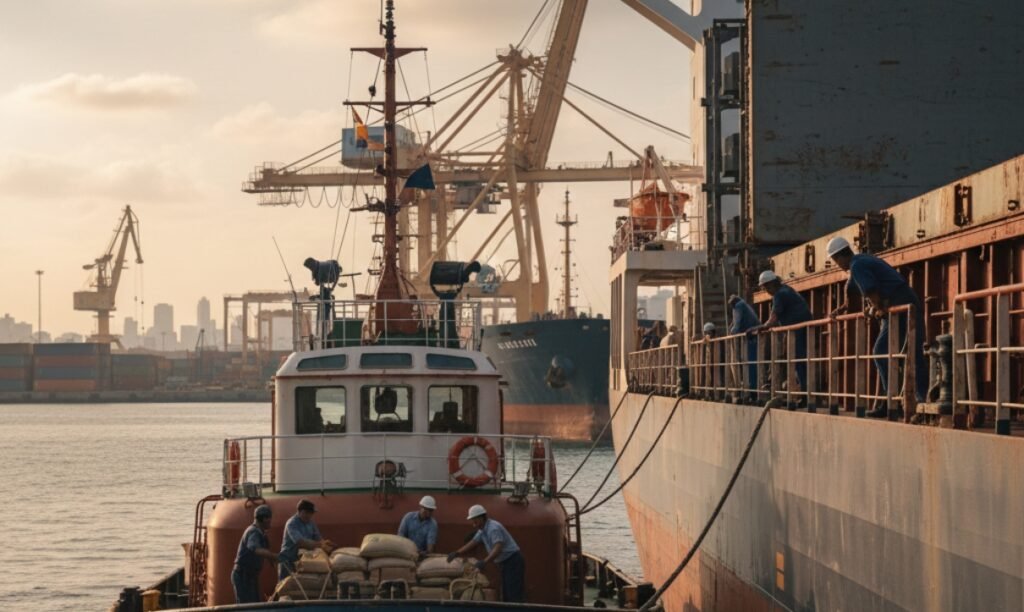
Ship master commitments open up to billet supervision. Administrators encourage stevedores, terminal directors, and surveyors.
During cargo operations, masters screen proficiency, assert draft readings, and coordinate secure stacking or discharge. In bulk cargo ports over India or the UAE, in fact, minor miscommunication can delay operations by hours, influencing the structure party’s performance.
5. Financial Management and Disbursement Accounts
Port calls incorporate diverse brought components:
- Port dues
- Pilotage and drag fees
- Terminal is taking care of the charges
- Waste disposal
- Freshwater supply
Agents get prepared a Proforma Apportioning Account (PDA) a few time as of late section and a Final Instalment Account (FDA) after take-off. Direct financial control guarantees you from secured costs.
In India, port obligations move by port acceptance. In the UAE, free-zone structures may affect office costs. Singapore works with strict cost plans but has successful turnaround times. Understanding adjacent evaluating models is central to managing transport procurement commitments effectively.
6. Crew Changes and Welfare Coordination
Crew coordinations ask for exactness. Pros arrange:
- Airport transfers
- Visa extensions
- Medical assistance
- Shore passes
Delays in movement support can disrupt the ability to keep an eye on plans. Pros as well organize emergency flights when crucial, ensuring compliance with labor and ocean conventions.
7. Safety and Environmental Protection Oversight
Safety remains non-negotiable. Administrators ensure:
- Waste exchange compliance under MARPOL
- Bunker supply verification
- Sludge removal documentation
- Environmental reporting
Failure to take after defilement control strategies can result in overpowering disciplines and vessel detention. Proactive oversight shields both the vessel and the director’s reputation.
Operational Workflow of a Ship Agent
Ship pro commitments take after an organized workflow:
Pre-arrival documentation
Port master coordination
On-arrival boarding
Operational supervision
Financial reconciliation
Departure clearance
Each arrangement demands real-time communication between the vessel, the proprietor, the terminal, and the adjacent authorities.
Inspection and Survey Coordination
Agents organize free diagrams, such as:
- Draft surveys
- Hold inspections
- Damage assessments
- Bunker sum verification
In commodity-sensitive ports like Singapore or Fujairah, outline precision secures structure interface and diminishes wrangle about risk.
Risk Organization and Plausibility Planning
Shipping works in an unusual environment. Climate, clog, labor wrangle about, orr authoritative changes can aggravate schedules.
Professional transport pro commitments consolidate plausibility directing, elective compartment courses of activity, and emergency supplier sourcing. Chance help diminishes downtime and cash-related exposure.
Real-World Example: Port of Mumbai
At the Port of Mumbai, tidal restrictions require cautious draft organizing. Pros organize passage windows based on tide tables. Misplacing a tidal window may result in a 12–24-hour delay. Genuine timing avoids operational loss.
Real-World Example: Jebel Ali, UAE
Jebel Ali handles tall holder throughput. Masters must secure compartment spaces in advance. Profitable report settlement ensures clearance within hours or possibly days.
Real-World Example: Singapore
Singapore works with strict compliance authorization. Electronic documentation must be correct. Minor botches in cargo declarations can trigger appraisal holds. Experienced masters maintain a strategic distance from such incidents through pre-submission validation.
Cost Structure Overview: India, UAE, Singapore
India: Costs move by port acceptance; documentation costs and advantage survey structures affect final billing.
UAE: Organization bundles may consolidate bundled organizations; free-zone headings can alter brought profiles.
Singapore: Higher base port costs but transcendent turnaround efficiency routinely offsets, by and large, expenses.
Transparent communication ensures proprietors get it each taken a toll component a few times as of late, vessel arrival.
Industry Best Practices for Effective Ship Agency
- Early convenience of documents
- Digital communication platforms
- Local authoritative expertise
- 24/7 response capability
- Strong port pro relationships
Modern transport operations continuously depend on computerized systems and centralized reporting tools.
Technology and the Future of Ship Agency
Digitalization is reshaping operations. Electronic port clearance systems lessen printed fabric. Prescient analytics make strides in orchestrating. Blockchain-based documentation diminishes blackmail risk.
Automation does not murder pros. In step, it fortifies compliance and straightforwardness when combined with capable oversight.
Why Owners Must Choose Experienced Agents
Selecting the right agent directly impacts:
- Turnaround time
- Cost control
- Compliance record
- Safety performance
Ship agent responsibilities include authority in neighbourhood headings, around the world benchmarks, and operational coordination. A slight organizational course of action regularly leads to costly operational disruption.
Conclusion: The Strategic Value of Professional Ship Agency
Ship master commitments are removed past the printed fabric. They affect compliance, take a toll on capability, security execution, and vessel turnaround time. To start with, proactive pre-arrival orchestrating reduces operational delays. Minutes, strict regulatory coordination protects you from discipline and detention. Third, direct budgetary organization shields your budget and commercial margins.
In competitive ports over India, the UAE, and Singapore, an experienced organizational background is a crucial requirement. For chairmen looking for organized compliance, operational education, and reliable port coordination, capable support through Cleanship.co offers a down-to-sail, compliance-focused approach to directing port calls effectively and responsibly.
FAQs:
Q1. What are the centre expedite administrator’s obligations during a port call?
Ship master commitments join authoritative clearance, billet coordination, documentation organization, financial management, group coordination, and security oversight. The pro acts as the neighbourhood operational operator of the vessel proprietor or charterer to ensure smooth port operations.
Q2. How do transport masters ensure MARPOL compliance?
Agents orchestrate misuse exchange vendors, affirm ooze discharge strategies, and ensure documentation alterations with MARPOL necessities. They as well organize supported bunker suppliers and confirm defilement control, specifying to avoid disciplines or detention.
Q3. Are celerity administrator costs standardized globally?
No. Costs move by country and port master. India, UAE, and Singapore each take after differing assess structures. Administrators grant Proforma Apportioning Accounts for improvement so proprietors can survey port call costs accurately.
Q4. Can transport pros reduce vessel delay risk?
Yes. Early documentation, billet coordination, and regulatory checks inside and out reduce delay risk. Experienced pros anticipate neighbourhood objectives such as tide limits or port clogs and change orchestrating accordingly.
Q5. What capabilities should a transport pro have?
A capable master should get it IMO controls, neighbourhood port laws, cargo operations, and cash-related documentation shapes. Strong communication capacities and 24/7 availability are crucial for managing unexpected operational issues.