Pre-Inspection Rules for Vessels at Sekondi Port
Imagine you’re the captain of a massive cargo ship gliding toward Sekondi Port in Ghana, the bustling gateway on Africa’s Gold Coast. The ocean’s calm, but tension builds as inspection looms. One overlooked detail could mean delays, fines, or worse—grounding your vessel. That’s where pre-inspection rules for vessels at Sekondi Port come in.
These aren’t just checklists; they’re your lifeline to smooth berthing, regulatory nods, and cost savings. We’ll walk through them step by step, like a seasoned deckhand sharing war stories over coffee. Drawing from IMO standards and local port authority wisdom, you’ll learn how to prep your ship like a pro.
Why Pre-Inspection Rules Matter at Sekondi Port
Sekondi Port handles everything from cocoa exports to oil tankers, making it a high-stakes hub. Skipping pre-inspection rules for vessels at Sekondi Port is like driving without brakes—disastrous. These rules ensure safety, cut downtime by up to 48 hours per IMO data, and dodge penalties that can hit $50,000.
Think of them as the port’s “doorman checklist.” Compliance with MARPOL keeps pollutants in check, while IMCA guidelines protect divers and crew. We’ve seen vessels turned away for rusty hulls alone. Get this right, and you boost efficiency, save fuel, and keep insurers happy.
The Role of IMO in Shaping Sekondi Port Inspections
The International Maritime Organization (IMO) sets the global stage for pre-inspection rules for vessels at Sekondi Port. Their SOLAS convention mandates life-saving gear checks before arrival. Picture IMO as the maritime referee—ensuring no fouls. At Sekondi, this means verifying fire systems and stability certificates. Non-compliance? Expect detentions. Real-world example: A 2023 tanker was held for 72 hours over expired IMO docs, costing $100K in demurrage. We integrate these into pre-inspection to make your approach flawless.
- Key IMO checks: Load lines, safety construction certs.
- Benefit: Reduces accident risk by 30%, per IMO stats.
IMCA Guidelines: Protecting Your Crew and Divers
IMCA, the International Marine Contractors Association, focuses on offshore ops but influences Sekondi inspections too. Their pre-inspection rules for vessels at Sekondi Port emphasize equipment for divers and rigs. It’s like prepping a deep-sea diver’s suit—no leaks allowed. Rules cover ROV readiness and emergency protocols. A Ghanaian bulk carrier once faced delays from faulty IMCA-compliant gear. Follow these, and you avoid chain reactions like crew injuries or oil spills.
MARPOL Compliance: Guarding Sekondi’s Waters
MARPOL, the anti-pollution treaty, is non-negotiable for pre-inspection rules for vessels at Sekondi Port. Annex I bans oily water discharges within 12 nautical miles. Think of it as your ship’s “no littering” policy on steroids. Pre-inspect bilge separators and oil records. Environmental wins? Cleaner coasts for Ghana’s fisheries. Violations led to a 2024 fine of GHS 500,000 for one vessel. Simple prep: Log everything digitally for auditors.
IAPH World Ports Standards at Sekondi
The International Association of Ports and Harbors (IAPH) pushes sustainability, shaping Sekondi’s pre-inspection rules for vessels at Sekondi Port. Their green port initiatives demand low-emission prep, like shore power readiness. It’s like syncing your ship with the port’s eco-rhythm. Benefits include faster clearances and carbon credits. Sekondi’s alignment means vessels with IAPH-ready docs berth 20% quicker.
Cost-Saving Secrets in Pre-Inspection
Delays from failed inspections burn fuel and crew wages—up to $10K daily. Master pre-inspection rules for vessels at Sekondi Port to save big. Audit manifests early; use digital twins for virtual walkthroughs. One operator slashed costs by 25% by pre-checking anchors.
“Marine cleaning, anytime. Anywhere. 🌊 #GlobalMarine”#shipping #maritime #ship #cruises #sealife #port #shipping #marine #captain #vessel #ships #cargo pic.twitter.com/GgKTqEMETK
— Marine Super Cargo (@Marinsupercargo) October 4, 2025
Safety First: Crew and Vessel Checks
Safety isn’t optional—it’s the heartbeat of pre-inspection rules for vessels at Sekondi Port. Inspect lifeboats, drills, and drug/alcohol policies. Recent additions like professional drug & alcohol testing enhance crew vigilance, aligning with maritime regs. Imagine a foggy arrival: Sober, trained crew means no collisions. Per IMCA, this cuts incidents by 40%.
- Drill frequency: Monthly mocks.
- Gear: EPIRBs tested 24 hours pre-arrival.
Environmental Aspects of Pre-Inspection Prep
Sekondi’s ecosystem thrives on diligence. The pre-inspection rules for vessels at Sekondi Port under MARPOL curb ballast water invasives. Use UV treatment systems—analogy: Like a ship’s immune boost. This protects mangroves and fish stocks. Future trend? Biofouling robots for hulls, per IAPH innovations.
Documentation: Your Pre-Inspection Passport
Paperwork is king. Compile ISM codes, stowage plans, and ISPS certs for pre-inspection rules for vessels at Sekondi Port. Digitalize via blockchain for tamper-proof trust. A 2022 audit nightmare? Missing MARPOL logs. We streamline this, ensuring you’re audit-ready.
Common Pitfalls and How to Dodge Them
Rusty railings or uncalibrated gauges trip up 30% of vessels. Spot them early with drone surveys. Sentiment: Don’t let small oversights sink your schedule.
Hold and Tank Cleaning Essentials
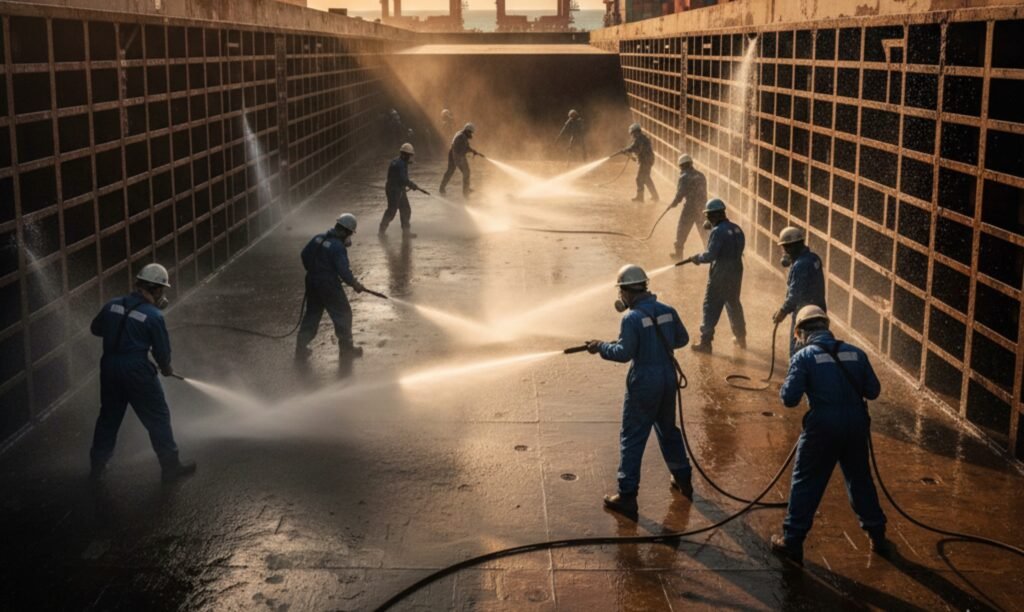
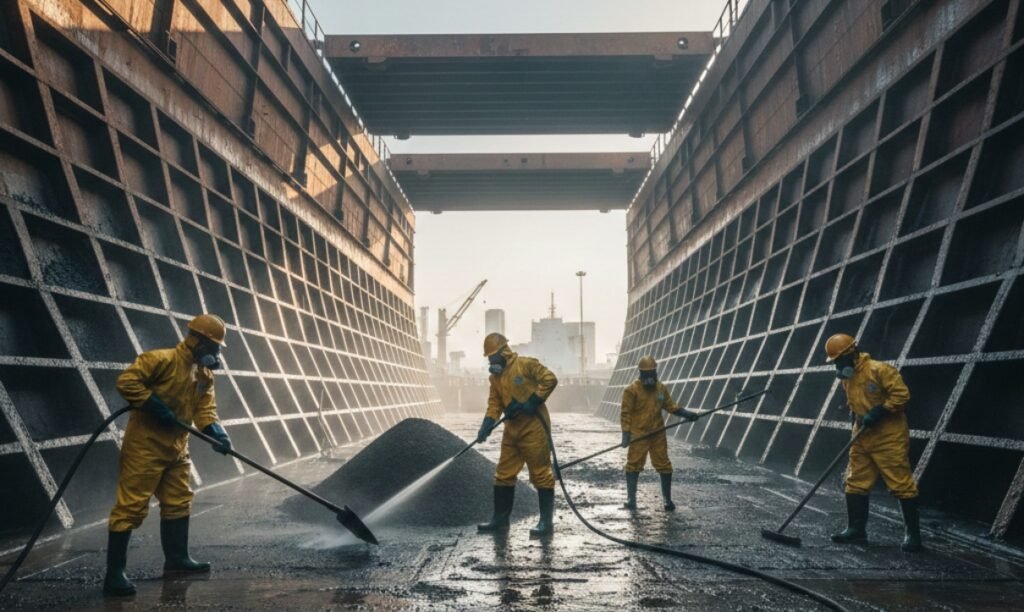
Clean holds and tanks are non-negotiable in pre-inspection rules for vessels at Sekondi Port. Residue invites vermin or contamination claims. Use high-pressure methods compliant with CleanShip.co standards. For bulk carriers, butter residue from cocoa needs 95% removal. Services like global tank and hold cleaning ensure residue-free states, preventing cargo disputes.
- Steps: Vacuum first, then rinse.
- Tools: Approved detergents only.
Bulk Carrier Cleaning for Compliance
Bulk carriers face scrutiny for dust and holds. Pre-inspection rules for vessels at Sekondi Port demand visual and swab tests. Story: A grain ship passed flawlessly after pre-cleaning, avoiding $20K claims. Expert cargo supervision verifies compliance.
Drug & Alcohol Testing: Crew Safety Boost
Newer in the mix: Professional drug & alcohol testing bolsters pre-inspection rules for vessels at Sekondi Port. Random tests per IMO cut impairment risks. It’s like a sobriety checkpoint at sea—essential for fog-prone approaches. Ensures regulatory nods and safer voyages.
Future Trends in Maritime Pre-Inspections
AI predicts failures, drones inspect hulls—transforming pre-inspection rules for vessels at Sekondi Port. Blockchain docs, per IAPH, cut fraud. By 2030, expect satellite verifications. Stay ahead: Integrate now for the edge. IMO’s digital twins simulate inspections. MARPOL’s e-logbooks save hours.
Real-World Examples from Sekondi Arrivals
A 2025 tanker aced pre-inspection rules for vessels at Sekondi Port with pre-cleaned tanks, berthing in record time. Contrast: An ore carrier was delayed over unlogged MARPOL waste. Lessons? Proactive checklists win.
Integrating Services for Seamless Compliance
Marine Supercargo provides global tank and hold cleaning, expert cargo supervision, and compliance support. Their recent drug & alcohol testing services align perfectly with pre-inspection rules for vessels at Sekondi Port, enhancing safety without hype. Factual edge: Proven in high-volume ports.
Conclusion
Mastering pre-inspection rules for vessels at Sekondi Port boils down to three takeaways: Prioritize IMO/MARPOL docs for compliance; invest in hold/tank cleaning and crew testing for safety, and embrace digital trends for cost savings. These steps slash delays, protect environments, and ensure smooth ops. For excellence in compliance and maritime services, partner with Marine Supercargo—they deliver proven tank cleaning, supervision, and testing tailored to ports like Sekondi. Contact them today to fortify your next voyage.
FAQs:
Q1. What are the key hold cleaning services for Sekondi Port vessels?
Hold cleaning under pre-inspection rules for vessels at Sekondi Port involves high-pressure water jets, vacuuming residues, and chemical approvals per MARPOL. Services ensure 99% cleanliness for bulk cargoes like grains or minerals.
Q2. How do tank cleaning services support pre-inspection compliance?
Tank cleaning services for pre-inspection rules for vessels at Sekondi Port use Butterworth machines and eco-detergents to remove oil residues. Pre-inspect for Annex I compliance; test oil content below 15ppm.
Q3. What role does bulk carrier cleaning play in Sekondi inspections?
Bulk carrier cleaning targets holds for dust-free states in the pre-inspection rules for vessels at Sekondi Port. Methods include mechanical sweeping and rinsing, verified by third-party surveys. Prevents cargo rejection, as seen in cocoa shipments.
Q4. Why is drug & alcohol testing part of pre-inspection now?
Drug & alcohol testing enhances pre-inspection rules for vessels at Sekondi Port by ensuring crew fitness under IMO standards. Random, certified tests reduce impairment risks during maneuvers.
Q5. How can cargo supervision aid vessel pre-inspections?
Cargo supervision during pre-inspection rules for vessels at Sekondi Port verifies stowage plans and condition reports. The expert’s draft holds pre-loading, aligning with IAPH sustainability. Prevents disputes, speeds customs, and integrates with cleaning services for full compliance.