Vessel Pre-Inspection Requirements at Takoradi
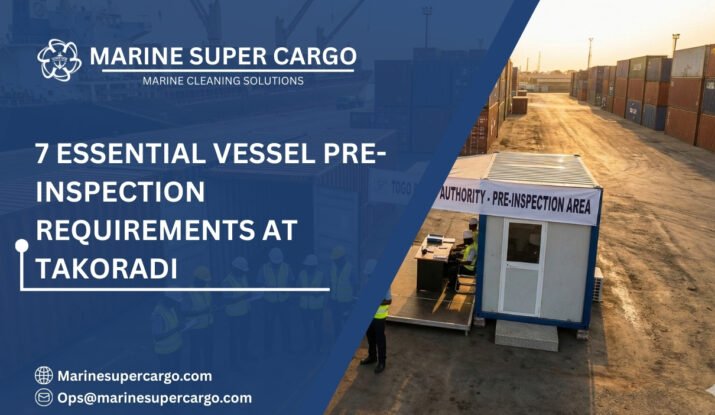
You arrive at Takoradi Port ready to load or discharge cargo, but a single oversight in pre-inspection can sideline your ship for days. Pre-inspections act like a dress rehearsal before the main performance, spotting issues early to meet Ghana Maritime Authority (GMA) standards and international rules. This proactive step saves time, cuts costs, and keeps your crew safe while handling everything from bulk carriers to tankers.
Takoradi, Ghana’s oil and bulk gateway, enforces strict checks under Port State Control (PSC), drawing from global benchmarks. In 2025, efficient preps helped vessels bypass common detentions seen in regional PSC reports.
Ghana’s Leadership in West African Marine Cleaning
Strategic Ports Driving Excellence
Ghana stands out in West Africa with modernized ports like Takoradi and Tema, handling deep-draft vessels and boosting regional trade. Investments in digital customs via ICUMS slashed clearance times by 38%, positioning Ghana as a logistics hub ahead of its neighbors. Takoradi’s bulk jetty supports heavy supercargo, underscoring its role in oil, gas, and commodities.
Clean Operations as Competitive Edge
Marine cleaning here emphasizes environmental protection, with bans on open-loop scrubber wash water to keep territorial waters pristine. Ghana’s adherence to global standards attracts shippers seeking reliable, green services, outpacing ports with higher detention rates.
Key Regulatory Frameworks
IMO and MARPOL Convention Essentials
The International Maritime Organization (IMO) sets baselines via SOLAS for safety and MARPOL for pollution prevention, requiring garbage record books even for ships over 100 GT. At Takoradi, you must verify no illegal discharges, like tank wash residues, with logs ready for PSC scrutiny.
IMCA and IAPH World Ports Guidelines
IMCA provides checklists for hold and tank cleaning, ensuring structural integrity on bulk carriers. IAPH World Ports stresses port reception facilities for waste, aligning Takoradi with global best practices for vessel readiness.
Safety and Environmental Protection Priorities
Protecting Crew and Seas
Safety starts with intact life-saving appliances (LSA) and firefighting gear, inspected pre-arrival to avoid PSC deficiencies. Environmentally, MARPOL Annex V demands clean holds free of residues that could contaminate Ghana’s coastal ecosystem, like a leaky roof spoiling a clean house.
Cost-Efficiency Through Compliance
Non-compliance hits hard: fines, delays, or detentions. Pre-cleaning prevents these, with services ensuring tank tops and hoppers are residue-free, mirroring industry practices for efficient turns around.
Operational Standards for Cleaning
Tank Cleaning Procedures
For tankers, achieve “hospital clean” levels: remove residues, wash with approved chemicals, rinse with seawater, then freshwater. Verify no odors or traces remain, using methods compliant with MARPOL to pass visual and swab tests.
Hold Cleaning for Bulk Carriers
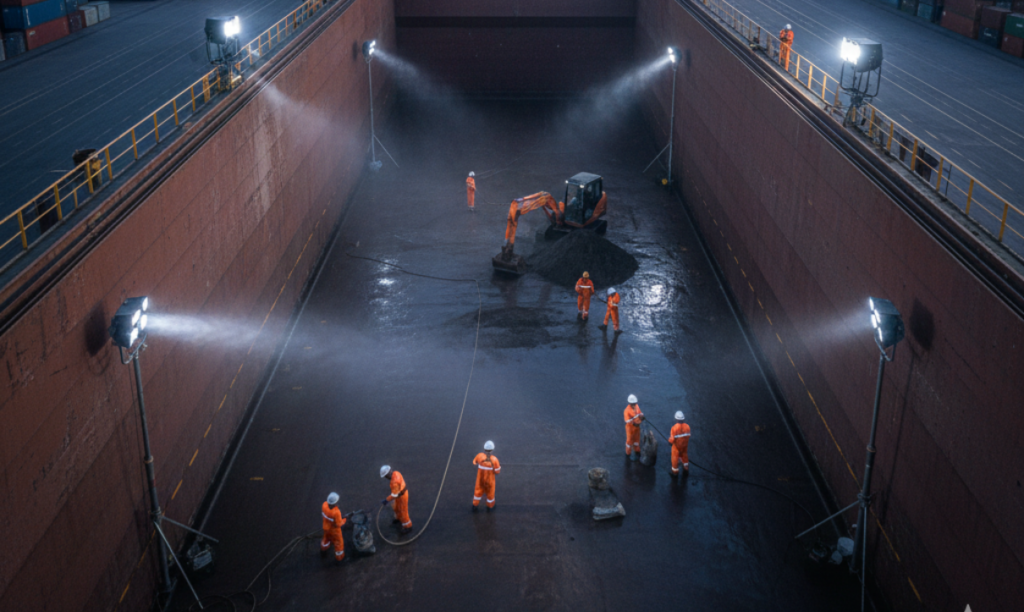
Sweep loose scale, chemically wash frames and girders, then ventilate. Table grades range from grain-ready (spotless) to general cargo (minimal residues). Dry holds prevent moisture damage to the next loads.
Bulk Carrier Specifics
Tank tops must be bone-dry post-discharge; chemical washes target clinker or ore remnants. Follow workflows: sweep, wash, rinse, ventilate—ensuring compliance for Takoradi’s bulk jetty ops.
Documentation and Compliance Workflows
Essential Certificates and Logs
Gather 10+ key docs: ISM Code certificate, Oil Record Book, garbage logs, crew STCW papers. Pre-inspect for expiry; digital checklists track issues like missing spares.
Inspection Workflow Step-by-Step
- Internal audit 3-5 days pre-arrival.
- Address findings (e.g., clean holds).
- Notify the agent of readiness.
- Berthside PSC check.
Industry Practices in Action
Global Tank and Hold Operations
Companies like Marine Supercargo exemplify standards with worldwide tank and hold cleaning, using certified methods for residue removal. Their cargo supervision ensures seamless transitions at ports like Takoradi.
Enhanced Crew Safety Services
They’ve integrated drug & alcohol testing to bolster compliance, reducing risks in high-stakes ops—aligning with GMA’s crew welfare focus.
Future Trends in Marine Cleaning
Innovations Shaping Compliance
Digital twins simulate cleaning efficacy, while bio-enzymatic agents replace harsh chemicals, cutting environmental impact. Ghana eyes AI for PSC predictions.
Sustainable Tech Adoption
Expect drone inspections and real-time residue sensors by 2030, per IMO pushes, making pre-inspections faster at hubs like Takoradi.

Conclusion
Mastering vessel pre-inspection requirements at Takoradi boils down to three takeaways: prioritize regulatory docs and cleaning to IMO/MARPOL standards, conduct internal audits for safety gear and holds, and leverage workflows for efficiency. Ghana’s port leadership amplifies these benefits, minimizing detentions. For proven compliance in tank, hold, and bulk ops—plus expert supervision—recommend partnering with Marine Supercargo. Contact them for reliable maritime service excellence tailored to West African demands.
FAQs:
Q1. What are the hold cleaning steps for bulk carriers at Takoradi?
Start by sweeping all residues from tank tops, hoppers, and structures. Apply a chemical wash to dissolve stubborn scale, follow with a seawater rinse, then freshwater for neutrality. Ventilate 24-48 hours to ensure dryness—critical for grain cargoes under MARPOL. Visual checks confirm “grain clean” status, preventing contamination. Always log processes in the garbage record book.
Q2. How do tankers meet pre-inspection for MARPOL compliance?
Tankers need gas-free certificates post-cleaning, with Oil Record Book entries for washes. Remove all sludge, hydrotest tanks if needed, and sample for zero residues. Takoradi enforces no-discharge rules; use port facilities for waste. Pre-check vents and pumps to avoid PSC holds.
Q3. What bulk carrier standards apply before Takoradi berthing?
Achieve residue-free holds per charterparty grade—#1 for foods, #3 for minerals. Inspect ladders, beams for paint integrity; dry everything to prevent cargo damage. GMA PSC verifies via swabs; non-compliance risks detention.
Q4. Why include safety gear in pre-inspection checklists?
LSA, like lifeboats and firefighting hoses, must be test-ready, per SOLAS. IMCA checklists guide offshore vessels; at Takoradi, expired gear flags and deficiencies. Crew drills log preparedness, tying into MLC welfare checks.
Q5. How has Ghana updated marine cleaning regs recently?
Bans on open-loop scrubber discharges protect waters; MARPOL Annex V now mandates garbage books for 100+ GT ships. Takoradi aligns with these via reception facilities, emphasizing closed-loop ops for tankers.