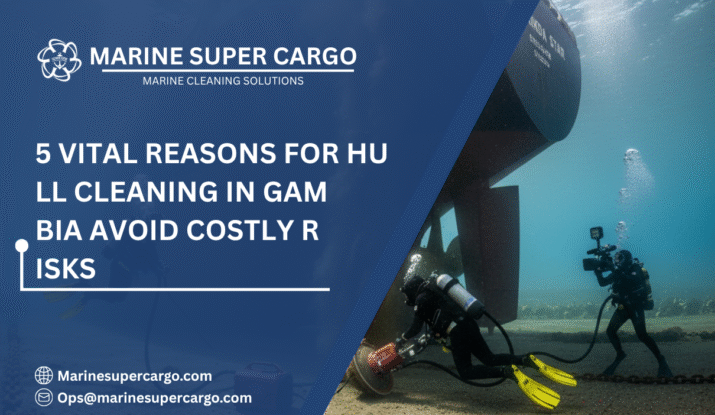
Hull Cleaning in Gambia: An Essential Overview
Hull cleaning in Gambia is fast becoming an indispensable service for ships docking at the Port of Banjul and along West Africa’s coast. The process involves removing algae, barnacles, and other marine growth from the submerged section of a vessel to restore smooth hull surfaces.
For you as a ship owner or operator, hull cleaning in Gambia represents more than maintenance—it is a strategic investment in fuel savings, performance, and compliance. The region’s maritime traffic is growing, and vessels that skip hull cleaning risk falling behind in efficiency, emissions control, and operational reliability.
Why Hull Cleaning in Gambia Matters for Vessel Efficiency
Every time a ship carries unwanted marine growth, it’s like pulling a sandbag behind you in water. Hull cleaning in Gambia removes that drag, letting your vessel glide more freely. Without it, fuel consumption rises, voyage times stretch, and engine wear accelerates. By choosing hull cleaning on a reliable schedule, you preserve hull shape, lower your operating costs, and maintain performance consistency. In a competitive shipping environment, skipping hull cleaning in Gambia can mean forfeiting margins and falling out of compliance.
How Hull Cleaning Is Performed
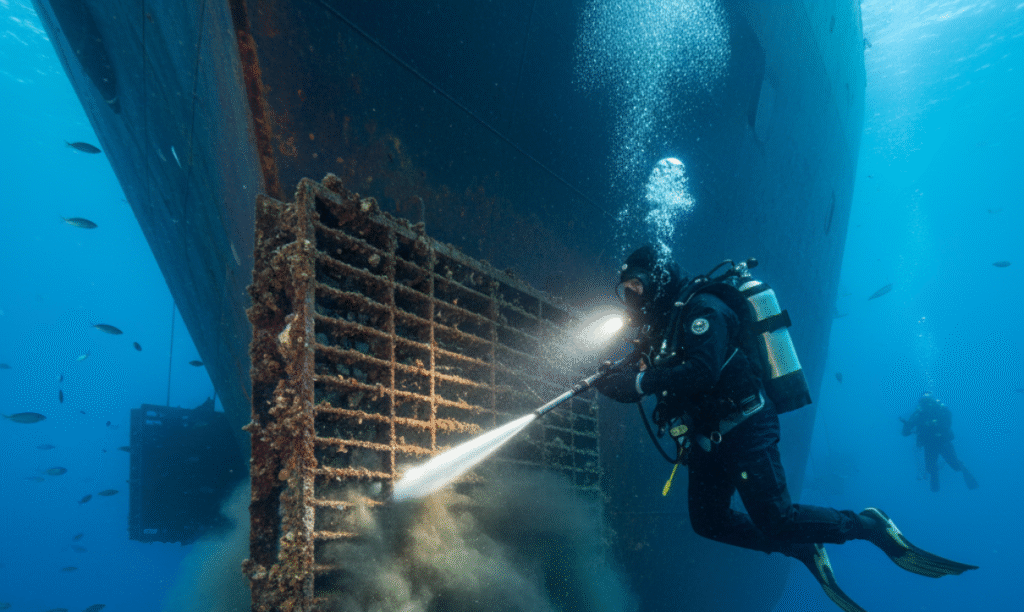
Hull cleaning in Gambia follows structured protocols to protect both the vessel and the marine environment. First, underwater inspection assesses fouling severity. Then trained divers or remotely operated vehicles (ROVs) use tools—brushes, scrapers, or low-pressure jets—to remove growth while preserving anti-fouling coatings.
Waste is captured in containment units to avoid dispersal into local waters. Finally, the cleaned hull undergoes a verification inspection and documentation. These practices adhere to IMO guidelines and IMCA best practices. When properly done, hull cleaning restores hydrodynamic efficiency without risking environmental damage. Also read about underwater ship hull cleaning in Moroni.
Environmental Impact of Hull Cleaning
Hull cleaning in Gambia plays a key role in safeguarding marine ecosystems. Accumulated biofouling can introduce invasive species to local waters, disrupting biodiversity. By removing growth proactively, hull cleaning reduces that risk. Moreover, cleaner hulls burn less fuel, yielding lower CO₂ and sulfur emissions.
In line with the MARPOL Convention, responsible hull cleaning ensures waste is managed and discharged properly, not dumped. If poorly executed, cleanup could release pollutants—but strict adherence to protocols prevents harm and helps vessels maintain green credentials. Also, know about underwater ship hull cleaning in Mutsamudu.
“Marine cleaning, anytime. Anywhere. 🌊 #GlobalMarine”#shipping #maritime #ship #cruises #sealife #port #shipping #marine #captain #vessel #ships #cargo pic.twitter.com/GgKTqEMETK
— Marine Super Cargo (@Marinsupercargo) October 4, 2025
Economic Benefits and Fuel Savings
One of the strongest justifications for hull cleaning in Gambia is the tangible cost savings. Marine growth increases drag, forcing engines to work harder and consume more fuel—sometimes by 10–20%. With effective hull cleaning, fuel efficiency improves, and you preserve engine life by reducing strain. The result: lower operational costs, fewer repairs, and better scheduling. As shipping rates tighten, the savings from regular hull cleaning can make the difference between profit and loss. Read more about Underwater ship hull cleaning in Congo.
Regulatory Compliance and International Standards
Hull cleaning in Gambia is not just an operational choice—it’s a compliance necessity. Global frameworks like IMO, IMCA, and the MARPOL Convention regulate how hull cleaning must be carried out, especially regarding waste disposal and pollution prevention. Ships must meet biofouling management requirements to avoid detention or penalties at ports.
When you prioritize hull cleaning, you align with these stringent standards and safeguard your vessel’s passage in global trade lanes. Learn more via IMO, IMCA, and the MARPOL overview on Marine Insight.
Advances in Hull Cleaning Technology
Innovation has reshaped hull cleaning in Gambia and beyond. Today, robotic crawlers, autonomous ROVs, and AI-guided sensors help clean hull surfaces faster and with less human risk. Some systems use hull-adhering robots that scrub while data sensors map fouling patterns. Others employ ultrasonic methods to inhibit growth before it becomes problematic.
Through these advanced tools, hull cleaning becomes safer, more precise, and more economical. The integration of data-driven scheduling also means you clean only when necessary, rather than on rigid timetables. Learn more about Underwater ship hull cleaning in Djibouti.
Challenges Facing Hull Cleaning
Even though hull cleaning in Gambia offers clear benefits, operational hurdles persist. The local industry may lack access to specialized equipment or certified divers compared to larger ports. Waste management infrastructure must be robust to handle cleaning residues. Tide intervals, weather, and port congestion can complicate scheduling.
Yet local authorities and service providers are working to upgrade capabilities. By collaborating with global platforms like CleanShip.co and adopting international best practices, hull cleaning can overcome these challenges and deliver reliable, eco-safe maintenance.
Marine Supercargo Expands Services: Drug & Alcohol Testing for Safer Seas
Marine Supercargo, well-known for its expertise in hull cleaning in Gambia and global waters, recently expanded its offerings to include professional drug & alcohol testing. This enhancement addresses a critical facet of maritime safety: ensuring crews remain fit for duty. For ship owners, operators, and managers, integrating this service means better risk management, compliance with IMO safety requirements, and higher crew accountability.
The testing service strengthens operational integrity by minimizing substance-related errors. In combination with hull cleaning in Gambia, this dual approach advances safety, reliability, and regulatory alignment across your fleet. Learn about Underwater ship hull cleaning in Egypt.
Future Trends in Hull Cleaning in Gambia
Looking ahead, hull cleaning will be shaped by smarter coatings, autonomous systems, and predictive maintenance. Self-cleaning hull materials may reduce fouling buildup. Real-time sensors could alert you as soon as drag increases. Drones and robotic platforms will make cleaning faster and safer. As West African shipping expands, partnerships with organizations like IAPH and international service providers will elevate cleaning standards. With CleanShip.co bringing global best practices, hull cleaning is poised to become more efficient, green, and seamlessly integrated into vessel operations.

Conclusion: Key Takeaways and Next Steps
Hull cleaning in Gambia is essential for performance, compliance, and sustainability. First, a clean hull cuts fuel use and improves speed. Second, it ensures conformance with IMO and MARPOL rules. Third, it helps preserve marine ecosystems and avoids invasive species transfer. To maintain your fleet at peak condition, partner with trusted service providers like CleanShip.co. Their expertise supports efficient, eco-conscious hull cleaning. Take action now—schedule a hull cleaning and steer your vessels toward cleaner, safer, and more cost-effective voyages.
FAQs:
Q1. What exactly is hull cleaning in Gambia?
Hull cleaning in Gambia is the process of removing marine growth from a ship’s submerged hull section to restore performance, reduce drag, and lower fuel use.
Q2. How often should hull cleaning in Gambia be done?
Vessels typically require hull cleaning every 3 to 6 months, depending on sea conditions, fouling rates, and operational routes.
Q3. Why is crew Drug & Alcohol Testing important in maritime operations?
Testing ensures that crew members are alert and fit for duty, reducing accident risk and meeting international safety standards set by IMO.
Q4. Can hull cleaning in Gambia hurt marine life?
If conducted well and in compliance with IMO and MARPOL rules, hull cleaning is eco-safe—waste is contained and managed responsibly.
Q5. How do hull cleaning and testing services work together?
Combining hull cleaning with crew testing ensures your vessel is mechanically optimal and crew-wise safe—protecting your performance, compliance, and reputation.