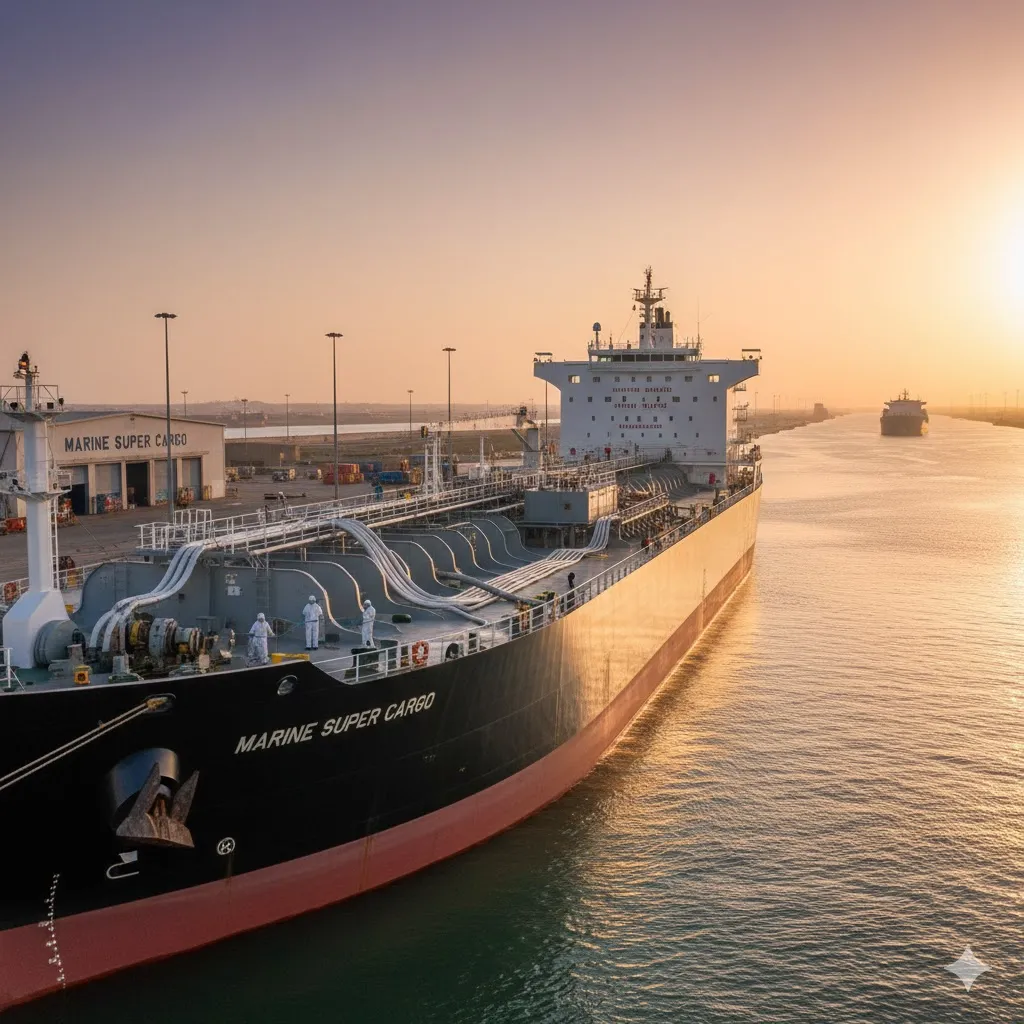
Food Grade Tank Cleaning Suez demands the highest hygiene standards in maritime operations. When vessels carrying edible oils, liquid food products, or potable liquids transit through Suez, stringent cleanliness protocols become mandatory. Marine Super Cargo provides certified services ensuring vessels meet international food safety requirements.
Contamination prevention remains paramount in food grade tank cleaning Suez. Even microscopic residues from previous cargoes can compromise entire shipments of edible products. Marine Super Cargo employs advanced methodologies ensuring absolute cleanliness for sensitive cargo operations.
International Standards and Certification Requirements
Food Grade Tank Cleaning Suez operations must comply with multiple regulatory frameworks. The International Maritime Organization (IMO) establishes baseline standards for tank cleaning operations, while food safety authorities impose additional requirements for edible cargo transport.
MARPOL Annex II governs the control of pollution by noxious liquid substances. Food Grade Tank Cleaning Suez must adhere to these environmental protection standards while meeting food safety criteria. Our facility maintains full MARPOL compliance throughout all operations.
Third-party certification validates standards. Independent surveyors inspect tank conditions, verifying cleanliness meets specifications for edible cargo loading. Marine Super Cargo coordinates with recognized inspection agencies ensuring proper certification.
Specialized Cleaning Methodology
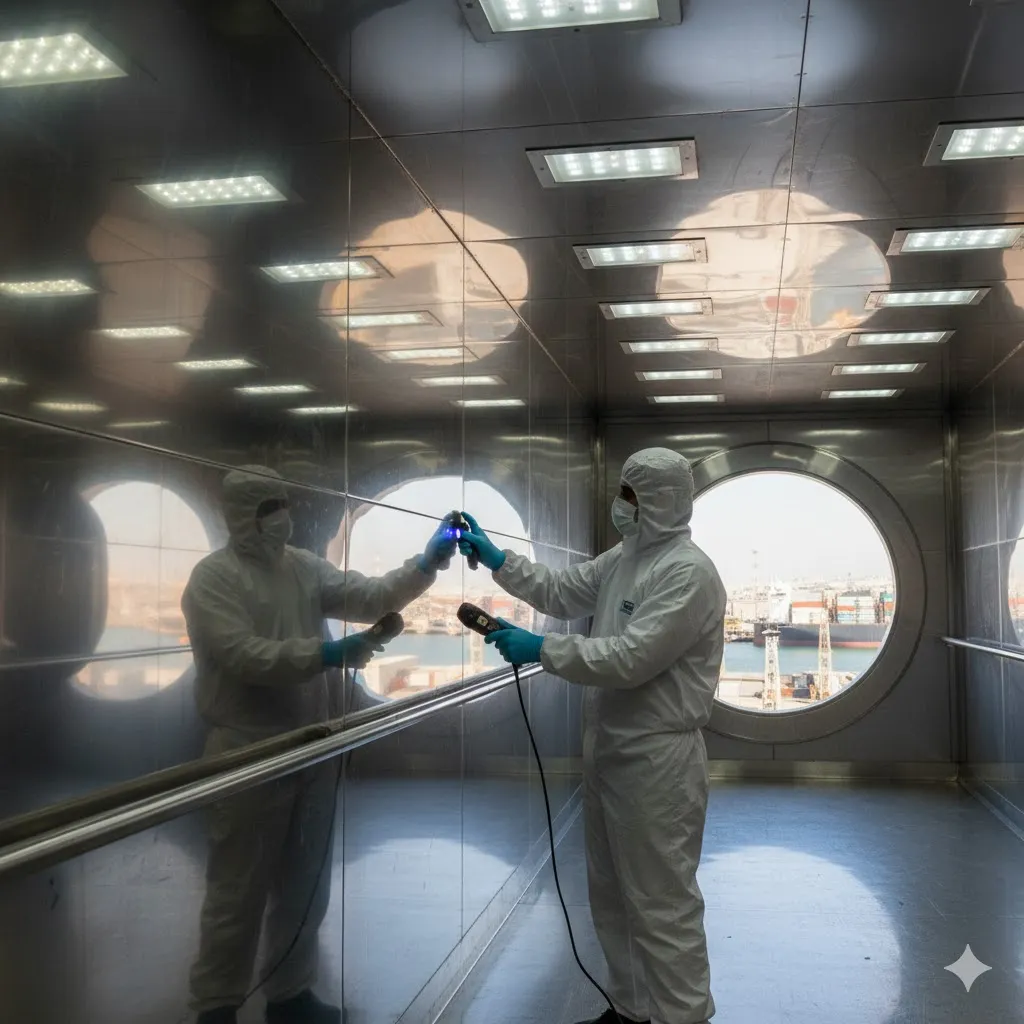
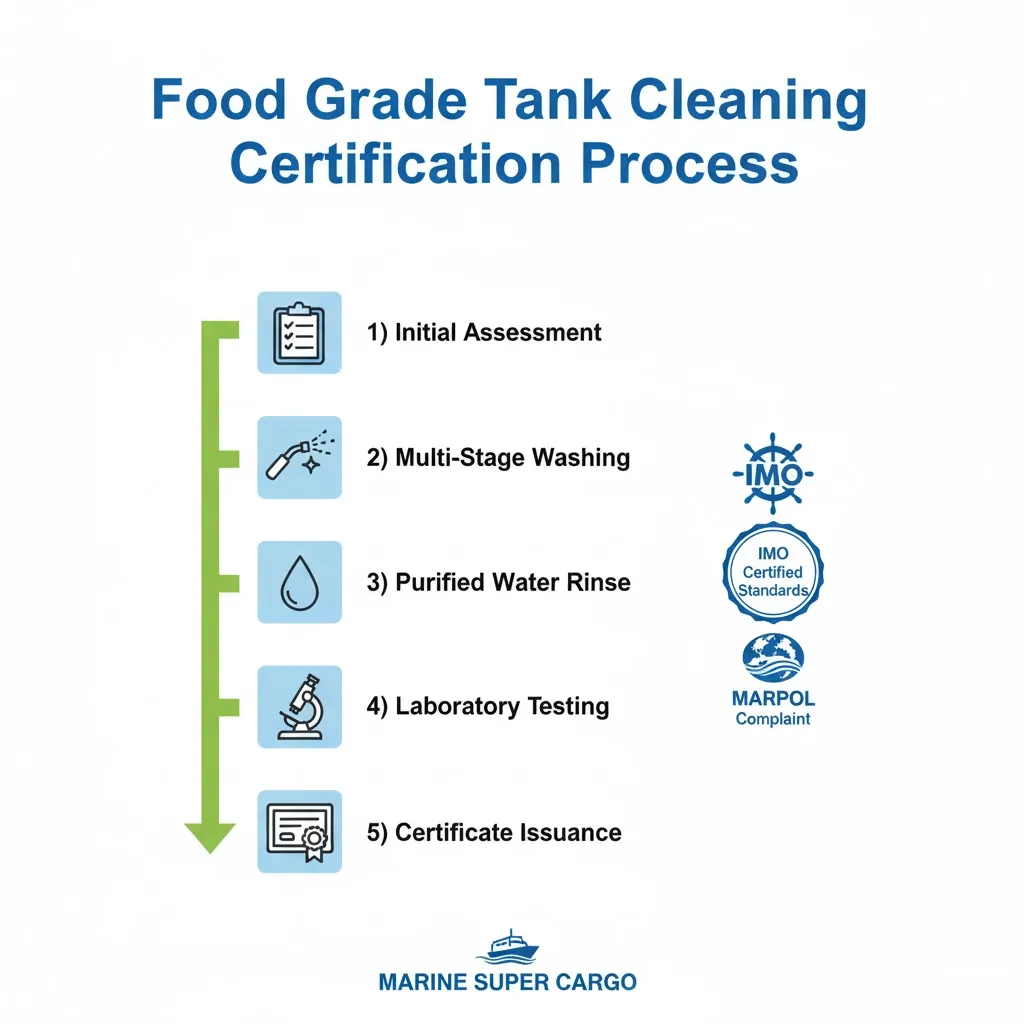
Our Food Grade Tank Cleaning Suez process begins with comprehensive tank assessment. Surveyors examine all surfaces including bulkheads, deck heads, and tank bottom structures. Port and starboard heating coils receive particular attention as residues often accumulate in these areas.
Pre-wash cycles remove bulk cargo residues using food-grade detergents. These specially formulated cleaning agents break down oil films without leaving harmful chemical residues. Temperature-controlled water enhances cleaning effectiveness across all tank surfaces.
Final rinse cycles utilize purified water meeting potable standards. This critical stage removes all detergent traces, ensuring tank surfaces remain chemically neutral. Water quality testing confirms rinse water purity before Food Grade Tank Cleaning Suez completion.
Hygiene Protocols and Quality Control
Food Grade Tank Cleaning Suez requires exceptional hygiene management. All equipment contacting tank interiors undergoes sterilization between operations. Hoses, spray heads, and sampling equipment receive thorough cleaning and inspection.
Our facility maintains segregated systems for Food Grade Tank Cleaning Suez . Dedicated equipment serves exclusively edible cargo operations, preventing cross-contamination from industrial chemical cleaning activities. This segregation parallels practices outlined in our chemical tank cleaning operations but with enhanced hygiene protocols.
Personnel training emphasizes contamination prevention. Workers handling Food Grade Tank Cleaning Suez complete specialized certification programs. These programs cover proper cleaning techniques, equipment handling, and quality verification procedures.
Documentation and Certification Process
Comprehensive documentation accompanies every Food Grade Tank Cleaning Suez operation. Tank cleanliness certificates detail the cleaning process, materials used, and inspection results. These certificates provide cargo interests with verified assurance of tank condition.
Marine Super Cargo issues certificates recognized by major food industry bodies. Documentation includes photographs of tank interiors, laboratory test results, and surveyor attestations. This thorough approach facilitates smooth cargo operations at loading terminals worldwide.
Similar to our crude oil tank washing procedures, detailed records track every cleaning stage. However, Food Grade Tank Cleaning Suez documentation includes additional food safety certifications and hygiene compliance attestations.
Environmental Responsibility and Waste Management
Environmental protection remains integral to Food Grade Tank Cleaning Suez operations. All washings undergo proper treatment before discharge, complying with IMO environmental standards. Wastewater treatment systems remove contaminants protecting marine ecosystems.
Biodegradable cleaning agents minimize environmental impact. These food-safe detergents break down naturally without accumulating in marine environments. Our commitment to sustainability aligns with MARPOL environmental protection objectives.
Conclusion
Premium Food Grade Tank Cleaning Suez requires expertise, specialized equipment, and unwavering attention to detail. Marine Super Cargo delivers certified services meeting the stringent requirements of edible cargo operations. Our Suez facility provides strategic advantages for vessels requiring cleaning between international voyages.
Compliance with IMO and MARPOL standards ensures environmental responsibility alongside food safety excellence. Trust our proven methodologies for all food-grade tank cleaning requirements.
Frequently Asked Questions
1. What makes food grade tank cleaning different from standard tank cleaning?
Food Grade Tank Cleaning Suez employs food-safe detergents, purified rinse water, and enhanced hygiene protocols. All equipment remains dedicated to food cargo operations, preventing cross-contamination from industrial chemicals.
2. How long does the complete food grade cleaning process require?
Complete food grade tank cleaning typically requires 24-36 hours including multiple wash cycles, rinse stages, drying time, and inspection procedures. Duration varies based on previous cargo type and tank configuration.
3. Which certifications are provided after food grade tank cleaning completion?
Upon completion, Marine Super Cargo provides tank cleanliness certificates, laboratory analysis reports, food safety compliance documentation, and independent surveyor attestations accepted by major food industry terminals.
4. Can tanks be switched between food grade and chemical cargoes?
Yes, but tanks require rigorous cleaning protocols approved by cargo interests. Switching from chemical to food-grade service demands intensive cleaning, multiple inspections, and comprehensive certification before edible cargo loading approval.
5. What inspection methods verify food grade cleanliness standards?
Verification includes visual inspection of all tank surfaces, surface swab sampling for microbiological analysis, chemical residue testing, and organoleptic assessment ensuring tanks remain odor-free and suitable for edible products.