DOT Guidelines for Driver Drug Testing
Driving is more than mobility—it’s trust and responsibility on the road. The DOT Guidelines for Driver Drug Testing were designed to ensure that every professional driver maintains focus, discipline, and safety at all times. Whether operating long-haul trucks, buses, or maritime vehicles, drivers carry lives and livelihoods with each trip.
These federal regulations balance fairness with safety by keeping impaired driving off the roads. For fleet operators and transport companies, compliance is about more than ticking boxes—it’s about creating a culture of accountability, preventing costly accidents, and demonstrating their commitment to safe, ethical, and efficient transportation.
Understanding DOT Drug Testing Guidelines
The DOT Guidelines for Driver Drug Testing define standardized rules for testing commercial drivers. These regulations apply to anyone operating vehicles requiring a commercial driver’s license (CDL). Overseen by the U.S. Department of Transportation, they aim to detect substances that may impair judgment or reaction time.
The program includes pre-employment, random, post-accident, and return-to-duty testing. Samples are typically collected under strict procedures ensuring confidentiality and accuracy. Employers must follow these standards precisely to maintain FMCSA compliance. Understanding the reasons behind the guidelines transforms compliance from an obligation into a powerful tool for operational excellence and public trust.
When and Why Testing Is Required
The DOT mandates drug and alcohol testing at specific times throughout a driver’s career. Under the DOT Guidelines for Driver Drug Testing, employers must test candidates before hiring and conduct random checks while they are employed. Testing is also mandatory after accidents or violations involving public safety.
This ensures that all drivers remain fit for duty under conditions outlined by the Federal Motor Carrier Safety Administration (FMCSA). Regular testing minimizes liability, deters misuse, and assures regulatory agencies that your operation runs by the book. It’s not policing—it’s preventing potential harm before it occurs.
Key Substances Detected in DOT Programs
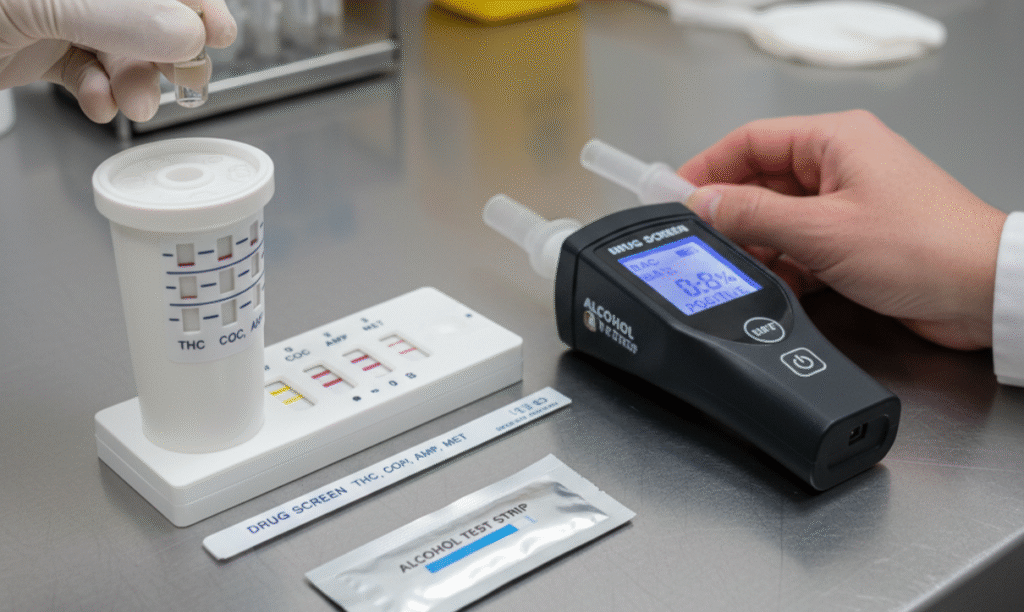
The science behind the DOT Guidelines for Driver Drug Testing focuses on identifying commonly misused substances that endanger driving performance. These include marijuana, cocaine, opioids, amphetamines, and phencyclidine (PCP). Each drug affects motor control, alertness, and decision-making in unique ways. DOT-approved laboratories test samples following rigorous chain-of-custody procedures to prevent tampering.
Additionally, breath alcohol testing ensures sobriety before and during operations. By targeting specific high-risk drugs, the testing process directly removes variables that could lead to major road or sea accidents. This is a scientific safeguard ensuring every driver operates with full mental and physical capability. Also read about Offshore Crew Testing: 7 Best Practices for Safer Seas.
Roles and Responsibilities of Employers
Employers hold the frontline role in maintaining compliance under the DOT Guidelines for Driver Drug Testing. They must implement written policies, communicate them clearly, and maintain accurate testing records. Training managers to recognize impairment indicators is also required. Employers are legally responsible for ensuring fair testing without discriminating or breaching privacy laws.
Compliance protects management from legal consequences while reinforcing accountability within the workforce. Proper documentation, timely submission, and electronic reporting keep audits seamless and transparent. Effective leadership isn’t about enforcement—it’s about building safe habits that protect drivers and public safety alike. Also, know about Crew Alcohol Testing: 7 Vital Insights for Safer Seas.
The Process: Step-by-Step Procedure
Following the DOT Guidelines for Driver Drug Testing ensures uniformity across industries. The process begins with a detailed notification to the employee, followed by specimen collection at a certified facility. The sample is split into two parts: one for testing and one for confirmation if needed. Laboratories approved by the Department of Health and Human Services (HHS) evaluate the results.
A Medical Review Officer (MRO) verifies findings before final employer reporting. This standardized system keeps results credible and legally defensible. When followed correctly, the procedure guarantees fairness and accuracy, minimizing errors or misunderstandings during safety evaluations. Read more about 7 Powerful Reasons Corporate Drug Testing Works.
Marine Supercargo Expands Services: Drug & Alcohol Testing for Safer Seas
Marine Supercargo, a trusted global name in marine cleaning, is expanding its services into Drug & Alcohol Testing to support ship operators, supercargo, and marine crew compliance worldwide. This initiative aligns with international maritime safety standards established by IMO and MARPOL regulations. Integrating the DOT Guidelines for Driver Drug Testing into maritime operations strengthens readiness and safety at every level.
Certified testing helps maritime employers ensure sober and efficient crews across long voyages. Marine Supercargo’s approach focuses on reliability, compliance, and protection of human and environmental resources—safeguarding seas and shipping operations alike with meticulous attention to global regulatory standards.
Data Management and Confidentiality Standards
Protection of personal and testing data is critical. The DOT Guidelines for Driver Drug Testing require strict confidentiality during collection, review, and record management. Employers must store results securely with limited access. Only authorized personnel may review these documents, and results are confidential unless mandated by law.
Electronic logging systems ensure traceability while preventing data misuse. These measures uphold employee dignity and prevent data breaches that could undermine trust. Transparency balanced with confidentiality demonstrates workplace ethics—ensuring compliance systems safeguard rights while maintaining the integrity of federally regulated testing processes across industries and agencies. Read more about 5 Crucial Reasons Drug & Alcohol Testing Matters.
Benefits of Proper Implementation
Proper adherence to the DOT Guidelines for Driver Drug Testing offers multiple benefits beyond compliance. It builds a safer workplace, decreases accident rates, and assures regulators that your company meets federal expectations. Transparency during testing boosts employee accountability, which leads to fewer infractions over time. Preventive measures also improve corporate reputation and market competitiveness.
For transport sectors like shipping and logistics, clean compliance records can directly influence client confidence and insurance premiums. Each test completed successfully reinforces the organization’s commitment to excellence, setting standards for safety-driven performance across national and international operations.
“Marine cleaning, anytime. Anywhere. 🌊 #GlobalMarine”#shipping #maritime #ship #cruises #sealife #port #shipping #marine #captain #vessel #ships #cargo pic.twitter.com/GgKTqEMETK
— Marine Super Cargo (@Marinsupercargo) October 4, 2025
Cost-Efficiency and Risk Prevention
Ensuring compliance with DOT Guidelines for Driver Drug Testing prevents costly legal disputes, downtime, and operator disqualifications. Periodic testing eliminates impaired drivers before damage occurs, saving millions in potential lawsuits and regulatory fines. Insurance premiums often drop when compliance is consistent and data-backed.
For fleet managers, regular drug testing acts as proactive maintenance for human resources—an investment that pays off through reliability and long-term stability. Prevention has always been more affordable than remediation. Adhering to DOT standards is not about punishment but protection, ensuring organizations remain profitable, compliant, and respected in their industries. Also read about 7 Vital Reasons Alcohol Testing Saves Shipping Companies.
Future Trends and Innovations in Testing
Technological advances continue to improve how organizations implement the DOT Guidelines for Driver Drug Testing. New saliva and hair analysis technologies provide faster, more accurate results. AI and cloud integrations simplify compliance tracking, ensuring up-to-date records during regulatory audits. Remote verification could soon allow on-site digital testing submissions in real time.
For maritime operators, these innovations mean better workforce oversight from ship to shore. Organizations leveraging modern compliance technology not only streamline testing but also demonstrate leadership in safe operations. The future of drug testing will merge science, efficiency, and ethical responsibility seamlessly.

Conclusion
The DOT Guidelines for Driver Drug Testing form the foundation of safe and accountable transportation. They protect drivers, companies, and communities through structure, fairness, and science-based accuracy. The three main takeaways: compliance prevents risk, transparency builds trust, and consistent testing strengthens safety culture.
For integrated compliance and marine testing solutions, visit CleanShip.co—leading the charge in building safer, cleaner, and more responsible global operations. Ensure every journey begins and ends with certified confidence and compliance.
FAQs:
Q1. What are the DOT Guidelines for Driver Drug Testing?
They are federal safety standards that require drug testing for all commercial vehicle drivers to prevent impaired driving and ensure road safety.
Q2. Who must comply with these guidelines?
Any company or individual operating vehicles under DOT supervision, including trucking, aviation, transit, and maritime industries, must follow these rules.
Q3. When are DOT drug tests required?
Testing is required pre-employment, post-accident, randomly, and during return-to-duty or follow-up processes to ensure continuous driver fitness.
Q4. Why is DOT compliance important for maritime operations?
It ensures crew sobriety and alignment with international maritime laws like IMO and MARPOL, reducing accidents and regulatory penalties.
Q5. How does CleanShip.co support compliance?
CleanShip.co provides marine compliance services, including testing integration, helping operators maintain safety and sustainability at every voyage stage.