
Crew Alcohol and Drug Testing
Running a ship is like orchestrating a complex symphony—every crew member must play their part in perfect harmony. But one wrong note, especially from substance misuse, can compromise lives, cargo, and compliance. Crew Alcohol and Drug Testing ensures that every ship operates with alert, responsible, and compliant personnel.
As global maritime safety regulations tighten, testing has become an indispensable part of ship management. From pre-employment checks to random onboard testing, the practice safeguards not just vessel operations but the reputation of the entire fleet. It’s the unseen shield that keeps maritime safety standards intact across the world’s oceans.
Why Crew Alcohol and Drug Testing Matters
At sea, small mistakes can lead to catastrophic consequences. Crew Alcohol and Drug Testing minimizes these risks by detecting impairment before it turns into an incident. Alcohol and drug use affect coordination, judgment, and reaction time—critical factors when navigating high-stakes maritime environments.
Employers have both legal and moral responsibility under IMO regulations to ensure crews stay alert and sober. Regular testing helps identify issues early, offering intervention before accidents occur. This commitment demonstrates that crew welfare and ship safety go hand in hand, setting the foundation for reliable, responsible, and compliant vessel management.
Types of Testing Conducted
Crew Alcohol and Drug Testing takes multiple forms depending on vessel operations and regional laws. Commonly used methods include pre-employment, random testing, post-accident, and for-cause testing. Pre-employment screening ensures all hires meet safety requirements before boarding. Random testing maintains accountability, ensuring ongoing compliance.
After incidents like collisions or equipment failure, post-accident testing helps determine causes and prevention strategies. Finally, for-cause testing is carried out when behavior raises suspicion. Each test type fulfills a critical role in creating a transparent and disciplined work culture that prioritizes personal responsibility and workplace safety.
Testing Methods Explained
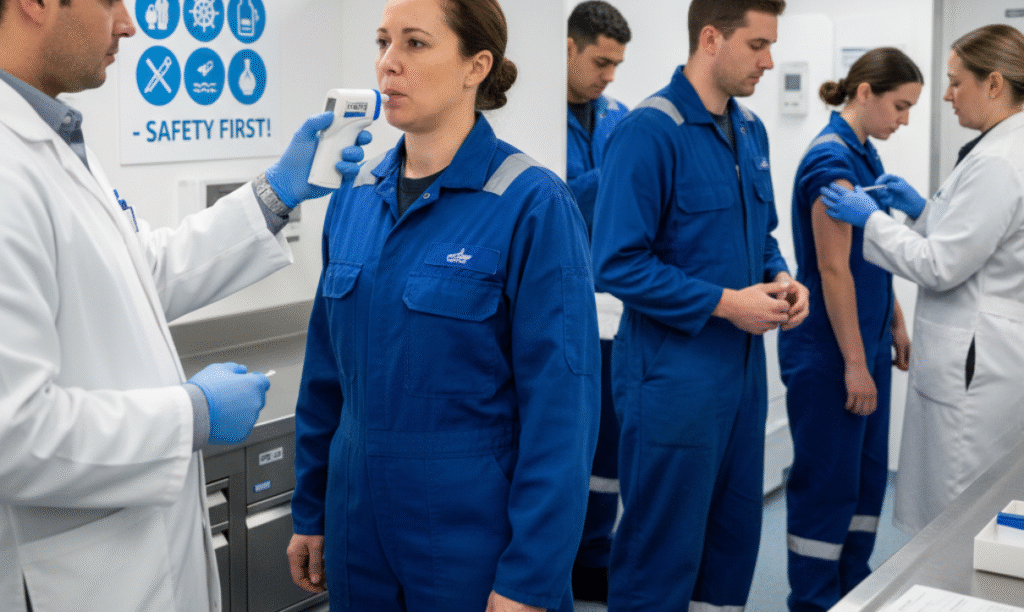
Modern Crew Alcohol and Drug Testing methods combine accuracy, speed, and convenience. The most common are breathalyzer tests, urine analysis, saliva sampling, and sometimes hair testing for long-term substance detection. Breathalyzer devices deliver near-instant results for alcohol levels, promoting proactive safety measures.
Laboratory-based urine tests identify a wide range of substances with high accuracy. Saliva tests detect recent use and are ideal for real-time monitoring on ships. In addition, some companies now use integrated test kits offering multi-substance detection. Together, these techniques ensure a fair, standardized approach to safety and compliance at sea. Also read about Offshore Crew Testing: 7 Best Practices for Safer Seas.
Maritime Regulations and Compliance
Strict international rules dictate how ships manage safety and crew behavior. Crew Alcohol and Drug Testing is required under IMO and MARPOL Convention frameworks to prevent marine accidents caused by impairment. Many flag states and port authorities impose penalties for non-compliance, including fines or detentions.
Employers must keep proper documentation of testing procedures and results to demonstrate ongoing adherence. Certification through organizations like IMCA further strengthens a vessel’s compliance profile. Following these guidelines protects not just your ship but your operational reputation and insurance standing as well.
Building a Safety-Driven Culture
A ship’s strength lies in its people. Crew Alcohol and Drug Testing does more than measure compliance—it reinforces a culture of safety and accountability. Regular testing, combined with awareness programs, normalizes sobriety as an industry standard. It tells crew members that their safety matters as much as the vessel’s cargo.
Transparent policies prevent resentment and promote trust between management and employees. When you weave proactive testing into your company’s culture, you shift from enforcement to empowerment, turning safety into a shared mission rather than a top-down mandate. Also, know about Crew Alcohol Testing: 7 Vital Insights for Safer Seas.
Benefits to Ship Owners and Operators
The business advantages of Crew Alcohol and Drug Testing are significant. Clean, alert crews mean fewer accidents, reduced damage claims, and better insurance rates. Testing helps companies meet charterer and client requirements—most marine contracts now demand compliance evidence. It reduces port delays caused by safety violations and avoids penalties from oversight agencies.
Operators also benefit from smoother audits during inspection by maritime authorities. On the human side, well-managed testing programs protect crew morale, preventing resentment and improving long-term retention in an industry where skilled seafarers are the backbone of success.
Implementing a Strong Testing Program
Setting up a reliable Crew Alcohol and Drug Testing program requires structure and consistency. Begin with a clear written policy covering test frequency, procedures, and confidentiality. Ensure tests are administered fairly across all ranks and positions. Collaborate with certified laboratories or marine health companies specializing in maritime regulation compliance.
Documentation is crucial—log every test and result to build a transparent compliance record. Training supervisors to handle sensitive discussions tactfully minimizes crew resistance. Combined with education programs, these steps transform testing from a rule into a standard part of operational excellence. Read more about 7 Powerful Reasons Corporate Drug Testing Works
Marine Supercargo Expands Services: Drug & Alcohol Testing for Safer Seas
Marine Supercargo has extended its services globally by offering specialized Crew Alcohol and Drug Testing programs to strengthen maritime safety. Known for comprehensive marine maintenance solutions, Marine Supercargo’s new testing initiatives help owners, managers, and operators maintain high safety performance and meet international maritime regulations.
Tests are designed to identify both alcohol intoxication and controlled substance use among crew members. This service supports compliance with IMO and MARPOL standards while improving onboard morale and reliability. By integrating professional testing into existing operations, Marine Supercargo ensures safer seas and sustained operational integrity for clients worldwide.
Legal and Ethical Considerations
While Crew Alcohol and Drug Testing is essential, it must be performed ethically. Maintaining crew privacy and confidentiality builds trust and prevents stigma. Testing policies should align with employment law and international privacy standards. Employers should provide counseling options or support systems for positive cases instead of resorting to immediate dismissal.
Combining monitoring with assistance builds a balanced program—strict yet humane. Such ethical integrity positions your organization as a responsible industry player committed to safer seas and compassionate workforce management, setting a new standard for crew welfare.
“Marine cleaning, anytime. Anywhere. 🌊 #GlobalMarine”#shipping #maritime #ship #cruises #sealife #port #shipping #marine #captain #vessel #ships #cargo pic.twitter.com/GgKTqEMETK
— Marine Super Cargo (@Marinsupercargo) October 4, 2025
Future Trends and Technologies
Technology is transforming Crew Alcohol and Drug Testing into a faster and more predictive process. AI-based systems can now analyze behavior patterns to detect impairment signs before incidents occur. Remote digital testing kits with cloud storage simplify reporting and reduce administrative time. Blockchain integration ensures data security and transparency, minimizing the potential for tampering.
Companies are also adopting wearable devices that track fatigue and alertness, creating early warning systems for safety intervention. These innovations will make maritime safety programs smarter, more responsive, and deeply integrated with day-to-day operations at sea. Read more about 5 Crucial Reasons Drug & Alcohol Testing Matters.
Training and Awareness
Knowledge closes the gap between enforcement and understanding. Crew Alcohol and Drug Testing becomes more effective when aligned with awareness campaigns and workshops. Regular training sessions educate crew about substance effects, safe practices, and reporting procedures. Supervisors learn how to handle delicate situations with empathy, ensuring fairness.
Awareness sessions also include updates on new maritime policies and testing regulations. The goal isn’t just detecting violations—it’s preventing them. The result is a healthier, more cohesive workforce that values clarity and trust as much as compliance in navigating global waters.

Documentation and Reporting
In marine safety, records are proof of responsibility. Effective Crew Alcohol and Drug Testing programs maintain detailed logs, certification records, and incident reports. Before a ship departs, compliance documents may be requested by port authorities or clients. Digitized tracking helps crews and managers access test histories instantly for reviews or audits.
Reports often include test type, date, results, and personnel involved, ensuring transparency throughout the process. Consistent documentation builds trust between regulators, clients, and crews while supporting insurance and legal compliance across all fleet operations. Also read about 7 Vital Reasons Alcohol Testing Saves Shipping Companies
Conclusion
Crew Alcohol and Drug Testing is the cornerstone of modern maritime safety. It ensures ships operate efficiently, protects lives, and helps maintain international compliance. Beyond audits and regulations, it builds a culture of responsibility and professionalism on the board.
As technologies evolve, seamless integration will make testing simpler and more transparent. To maintain your ship’s reputation, compliance, and safety standards, partner with experts like CleanShip.co to establish smart, ethical testing systems that strengthen both crew trust and operational safety across every voyage.
FAQs:
Q1. Why is Crew Alcohol and Drug Testing important?
It prevents accidents caused by impairment, supports international safety compliance, and ensures every crew member remains alert and fit for duty.
Q2. What are the types of tests used onboard?
Breathalyzer, urine, and saliva tests are common, while hair testing is used for long-term detection, depending on regulations and vessel needs.
Q3. How does the process protect crew rights?
Testing follows ethical guidelines, ensuring privacy, fairness, and support for individuals who test positive through counseling or rehabilitation.
Q4. How does Marine Supercargo support testing compliance?
Marine Supercargo provides professional testing services designed to align with IMO and MARPOL standards, helping ships avoid penalties and incidents.
Q5. What future technologies enhance testing accuracy?
AI-driven monitoring, blockchain-secured results, and wearable sensors are emerging innovations improving speed, accuracy, and data transparency.