Common Crew Change Delays & How to Avoid Them
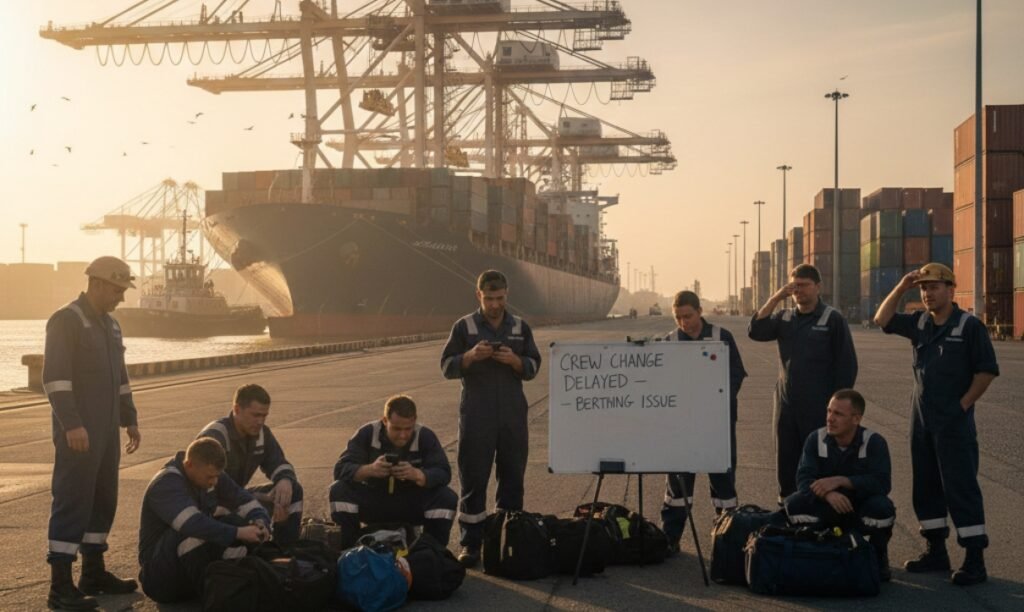
Common crew change challenges continue to irritate vessel plans, increase port costs, and make compliance perils. If you supervise task force operations, you as of presently know that a conceded sign-on or sign-off is not a minor inconvenience—it impacts security, contracts, and authoritative exposure.
In this coordinate, we break down the root causes of common group modify delays and clarify how you can expect them through organized orchestrating, authoritative course of action, and strong adjacent coordination.
Why Crew Change Efficiency Is Operationally Critical
Crew modify ensures secure keeping an eye o n levels, guarantees seafarer welfare, and keeps up vessel execution. When turns are conceded, onboard group may outperform contract periods, driving to shortcoming and extended security risks.
Operationally, undoubtedly a few hours of delay can result in billet extensions, flight rebooking costs, and cargo arrange disruptions.
Regulatory Framework Governing Crew Mobility
Crew change operations cross with widespread and port-level regulations.
Role of the International Maritime Organization (IMO)
International Ocean Organization sets around the world measures through conventions such as FAL (Help Convention), which progresses streamlined gather advancement though keeping up border control integrity.
Guidance from the International Marine Contractors Association (IMCA)
International Marine Brief specialists Alliance gives operational course for toward the ocean and marine transitory specialists, emphasizing organized gather coordination planning.
MARPOL and Environmental Compliance
International Maritime Organization coordinates MARPOL compliance. In show disdain toward of the reality that centred on defilement expectation, shortcoming caused by conceded crew turn can by suggestion increase normal event risk.
International Association of Ports and Harbors (IAPH)
International Alliance of Ports and Ports supports computerized port systems that unravel crew clearance and documentation processes.
Common Cause 1: Incorrect Visa Type
One of the most visit reasons for delay is misclassification of visa sort. Travel visas, seafarer visas, and passing landing gifts each have unmistakable rules.
Prevention Strategy: Confirm nationality-specific necessities at smallest one week a few time as of late vessel Evaluated time of entry and get composed certification from neighborhood agents.
Common Cause 2: Late Document Submission
Immigration masters require advance documentation, checking universal id copies, CDCs, trade ascension, and flight details.
Prevention Method: Execute an internal report convenience due date five to seven days a few time as of late arrival.
Common Cause 3: Passport Validity Issues
Many districts require slightest six-month visa authenticity. Slipping by travel licenses regularly lead to denied boarding or clearance refusal.
Prevention Procedure: Conduct quarterly chronicle audits interior your crew organization system.
Common Cause 4: Mismatch in Crew Lists
Discrepancies between the ship’s official group list and development passages trigger compliance checks.
Prevention Strategy: Cross-verify master’s gather list, administrator settlement, and interior HR records a few time as of late port arrival.
Common Cause 5: Flight Timing Conflicts
Flights arranged outside visa authenticity windows cause last-minu te complications. Prevention Procedure: Book tickets as it were after relocation pre-approval is confirmed.
Common Cause 6: Port Congestion
High-traffic ports experience boarding officer backlogs. Example: In major Indian ports, best cargo season may direct development boarding processes. Prevention Strategy: Avoid peak clog windows and encourage require clearance when possible.
Common Cause 7: Regulatory Changes
Sudden movement overhauls or prosperity area prerequisites can aggravate planning.
Prevention Procedure: Maintain consistent communication with port masters until the vessel is underway.
Operational Workflow for Seamless Crew Change
A structured workflow reduces ambiguity.
Step 1: Pre-Arrival Planning
Verify crew insurgency arrangements, nationality controls, and report status.
Step 2: Advance Submission
Send required documentation to pros for relocation processing.
Step 3: Endorsement Confirmation
Obtain composed visa bolster or electronic fragment confirmation.
Step 4: Onboard Inspection
Immigration officers certify documentation a few time as of late disembarkation.
Step 5: Airplane terminal Exchange Coordination
Ensure accommodating escort and exit clearance insides grasped travel timelines.
Inspection and Documentation Process
During port evaluation, pros frequently verify:
- Passport validity
- CDC and work agreement
- Visa support documentation
- Updated group list
- Exit and section stamps
Incomplete documentation routinely comes almost in extended billet time.
Risk Management Framework
To lessen introduction to common crew change disruption:
- Maintain computerized record tracking
- Establish fortification group planning
- Monitor visa authenticity windows
- Conduct internal compliance audits
- Work with experienced adjacent agents
Risk mitigation protects schedules and commercial performance.
Safety and Environmental Protection Considerations
Crew exhaustion is particularly associated to operational security. Underneath SOLAS secure keeping an eye on benchmarks, vessels must keep up fitting rest hours.
Environmental compliance underneath MARPOL as well depends on caution, well-rested gather. Helpful turn supports both security and defilement shirking objectives.
Real-World Port Example: Mumbai
In Mumbai, coordination between port immigration and airport authorities requires precise documentation. Delays often occur due to incomplete seafarer visa paperwork.
Real-World Port Example: Jebel Ali
At Jebel Ali, back letters are required. Misplaced sponsorship documentation comes almost in provoke clearance rejection.
Real-World Port Example: Singapore
Singapore’s electronic ocean passage engages faster clearance when documentation is correct. Data abnormalities routinely cause preventable delays.
Industry Best Practices
- Start organizing one week a few times as of late ETA
- Confirm nationality-specific requirements
- Align crew records with official submissions
- Secure composed relocation approval
- Maintain computerized and physical report backups
Consistency decreases introduction to operational disruption.
Future Trends in Crew Change Management
Ports are continuously accepting computerized maritime single window systems. Biometric relocation affirmation and computerized chronicle endorsement are rising tools.
Operators who facilitated development into group organization shapes experience less compliance setbacks.
Integrating Crew Change into Commercial Planning
Efficient gather modify supports structure execution and fortifies chairman legitimacy. Delays, by separate, make cascading commercial consequences.
Integrate group movability organizing into voyage organization from the outset.
Conclusion: Three Key Takeaways
Common group modify unsettling influences can be expected with organized organizing and regulatory mindfulness. To start with, affirm visa classification and documentation early. Minute, encourage proactively with neighbourhood pros and certify composed development supports a few times as of late passage. Third, facilitated progressed taking after systems to minimize human error.
Crew transformation is a safety-critical operation that particularly impacts taken a toll control and compliance. When directed productively, delays gotten to be exceptional exclusions. For organized, regulation-focused coordination over major ports, Cleanship.co gives capable group coordination’s back balanced with around the world ocean standards.
FAQs:
Q1. What is the fundamental reason crew changes are delayed?
Incorrect visa classification and late report convenience are the most visit causes. Development pros require improvement documentation and correct group list alignment.
Q2. How early should to group modify documentation be submitted?
Submission should to happen at smallest five to seven days a few times as of late vessel Assessed time of entry. High-traffic ports may require earlier processing.
Q3. Do all countries require visas for sign-off crew?
Not persistently. A few ports allow visa-free travel for specific nationalities, given flight focuses of intrigued and travel timelines meet movement rules.
Q4. How do delays impact vessel operations financially?
Delays increase compartment charges, discuss terminal rebooking costs, administrator costs, and potential lawfully authoritative penalties.
Q5. How can development decrease group modify risks?
Digital file taking after, computerized expiry cautions, and electronic pre-clearance systems through and through decrease human goof and move forward coordination.