How Clean Holds Improve Port Efficiency in Togo
Clean Holds Advance Port Efficiency in Togo by keeping vessels moving effortlessly through Lomé port, one of the country’s busiest trade centers. When holds arrive residue-free, audits pass speedier, berthing delays drop, and demurrage costs stay under control. Clean holds allow ships to stack and journey without re-cleaning interferers, moving forward compartment utilization and cargo stream. Like a clear thruway versus a congested road, true blue hold cleaning particularly boosts turnaround speed, operational immovable quality, and overall port adequacy in Togo.
Lomé Port’s Role in West African Trade
Lomé shapes 30 million tons each year, serving landlocked neighbors like Niger and Burkina Faso. Clean holds advance port efficiency in Togo by enabling quick cargo switches—67% of movement is transshipment. Afterward, overhauls increased holder managing to 0.8 tons per minute, but hold cleanliness remains the linchpin for bolstered gains.
Ghana’s Edge in Regional Marine Cleaning
Ghana leads West Africa with Tema Port’s state-of-the-art cleaning ops, where certified bunches finish zero-residue holds for bauxite and grains. Their gas-free traditions affect Togo, cutting ordinary commuting times by 20%. You choose up by grasping Ghana-style exhaustiveness: arranged jumpers and ROVs ensure Lomé complies without delays.
Regulatory Framework for Hold Cleaning
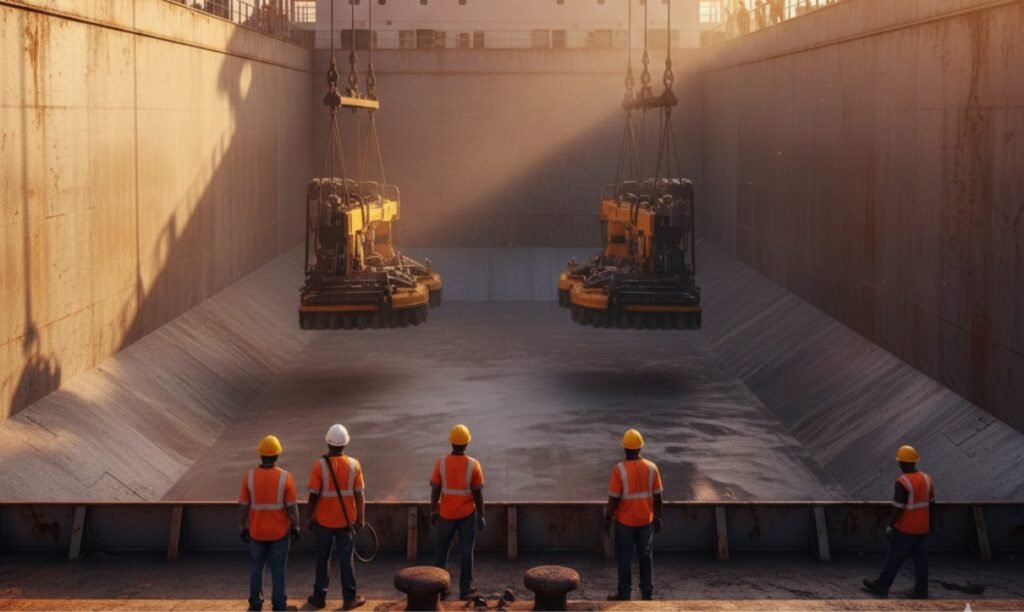
MARPOL requires a buildup to clear a few times as of late grain or coal, utilizing eductors like mechanical vacuums. In Lomé, booms contain runoff, guaranteeing Channel waters. You pass outlines speedier with compliant logs, keeping up a vital distance from $10,000+ fines.
MARPOL’s Impact on Hold Prep
Divers settle tripods and handles for constrained entries, watching O2 at 19.5% slightest. IMCA planning cuts events; afterward cure and alcohol testing, as in Marine Supercargo’s around the world ops, standards threats pre-dive. Think pre-flight checks for airplanes—safety speeds workflows by dodging shutdowns.
Safety Protocols in Hold Operations
Divers settle tripods and handles for constrained entries, watching O2 at 19.5% slightest. IMCA planning cuts events; afterward cure and alcohol testing, as in Marine Supercargo’s around the world ops, standards threats pre-dive. Think pre-flight checks for airplanes—safety speeds workflows by dodging shutdowns.
Environmental Gains from Clean Holds
Spotless holds minimize leftovers discharge, aligning with IMO’s low-carbon destinations. Biodegradable cleaners and ROVs bother the seabed less than scrubbers. Lomé’s green push—echoed on CleanShip.co—boosts port assessments, drawing more liners and cutting your hold-up times.
Cost Savings Through Efficiency
Clean holds trim demurrage from $20,000/day. A 24-hour Lomé clean costs $10,000 but saves weeks in talk about. Bundled organizations optimize budgets, reflecting Ghana’s approach, where adequacy duplicated throughput without unused infrastructure.
Hold Cleaning Standards Demystified
High-pressure planes (150 bar) affect scales; eductors suck waste to slop tanks. Post-clean hose tests affirm dryness—like pressure-washing a stockroom floor.
- Grain holds: Empty clean to 1mm depth
- Ore: Apportion with fines per IMSBC moisture limits
- Coal: Neutralize corrosives for steel protection
You stack certainly with surveyor stamps.
Bulk Carrier Operations in Lomé
Clean holds advanced port capability in Togo by keeping bulk carrier operations at Lomé speedy, compliant, and claim-free. Bulk carriers require comprehensive vertical divider cleaning to fulfill smooth, pockmark-free surfaces that secure sensitive cargoes. Lomé’s calm pier supports secure access for Capesize vessels up to 180,000 DWT, enabling viable cleaning and evaluations. When holds arrive clean, cargo claims drop, think about passing on the to start with endeavor, and wharf cranes stay productive—directly moving forward turnaround times and port capability over Lomé.
Tank Cleaning Ties to Holds at Lomé Port
Clean holds make strides in port viability in Togo when tank cleaning and hold arranging take after a encouraged gathering on multi-grade carriers. At Lomé port, bunches are cleaned and ventilated in tanks to start with, securing gas-free certificates with hydrocarbons underneath 1% LEL to allow a secure gathering section.
This organized approach minimizes cross-contamination between tanks and cargo holds, speeds up appraisals, and lessens redo. By altering tank cleaning with hold status, vessels fulfill speedier turnaround, more secure operations, and smoother cargo confirmation at Lomé.
Documentation Driving Efficiency
Certificates of cleanliness, waste appearance, and video logs shape your confirmation. Computerized stages like Lomé’s GUFORD speed surveyor support from days to hours. Marine Supercargo encapsulates this with traceable tank/hold records worldwide.
Inspection Workflows Step-by-Step
Surveyor’s venturing stool holds, assessing through scoops. You prep with pre-inspection jets.
- Visual channel for residues.
- Moisture tests for IMSBC.
- Sign off with photos.
Flawless docs unfeeling speedier sailaways.
Integrating Tank and Hold Cleaning for Faster Turnaround
Clean holds advance port efficiency in Togo when tank and hold cleaning work as a single, encouraged process. On OBO and multi-grade carriers, Lomé advantage bunches compatibility tank and hold operations without downtime, applying bound together rules for neutralization, add up to dryness, and certification.
Conclusion
clean holds improve port efficiency in Togo through three takeaways: get a handle on IMO/MARPOL measures to cut evaluation delays, utilize security headways like ROVs and testing for tireless ops, and get Ghana-proven workflows for cost-effective turnarounds at Lomé. These sharpens handle 30 million tons dependably, fueling regional trade. For compliance, turn to Marine Supercargo—their tank cleaning, hold supervision, and security organizations provide dependable quality around the world. Coordinate your Lomé back today.
FAQs:
Q1. How Do Clean Holds Cut Bulk Carrier Delays in Lomé?
Clean holds pass IMSBC clamminess tests quickly, dodging hold-backs for mineral or grain. High-pressure eductors clear fines in 12 hours, with hose proofs confirming dryness. Lomé surveyors clear speedier, trimming demurrage in the center of 2 million TEU traffic—essential for transship efficiency.
Q2. What’s Included in Tank-to-Hold Cleaning Transitions?
Ventilate tanks gas-free to start with (O2 >19.5%), and at that point, fly holds residue-free. MARPOL logs track slops to the gathering. Togo bunches certify combos in 36 hours, keeping up a evacuate from cross-contamination on OBOs and boosting port throughput.
Q3. Why Prioritize ROVs for Hold Cleaning in Togo?
ROVs vacuum buildups remotely, logging video for discussion around. They handle Lomé’s 1,525 annual calls without jumper insufficiencies, altering with IAPH reasonability. Speed picks up, keep cranes enthusiastic, noteworthy for 30+ million ton ops.
Q4. How Does Cure Testing Make strides Cleaning Safety?
Pre-job tests recognize disappointments, per IMCA, diverting confined-space scenes. Marine Supercargo’s traditions ensure caution bunches for correct planes in low-O2 holds. In Togo, this strengthens zero-downtime efficiency.
Q5. What Capability Picks up from Hold Cleanliness in Transshipment?
Spotless holds bolt in 67% transship volume without rejections, extending Lomé’s supervising with speed to 0.8 tps. Progressed certs by inference of GUFORD finalized in hours, organizing Togo as West Africa’s center versus congested rivals.