Professional Chemical Tank Cleaning Suez Operations
Chemical tank cleaning Suez services represent the most critical and complex maritime maintenance operations in the global shipping industry. The strategic location of Suez Port positions it as a vital hub where chemical tankers require expert cleaning between cargoes. Marine Super Cargo specializes in operations, handling hazardous residues with precision and unwavering safety standards that protect both personnel and the environment.
Chemical tank cleaning Suez operations strictly adhere to MARPOL Annex II regulations governing noxious liquid substances. These international standards mandate proper residue handling, disposal procedures, and documentation requirements. Marine Super Cargo maintains comprehensive compliance programs ensuring every operation meets International Maritime Organization specifications.
Safety Protocols in Chemical Tank Cleaning Suez Services
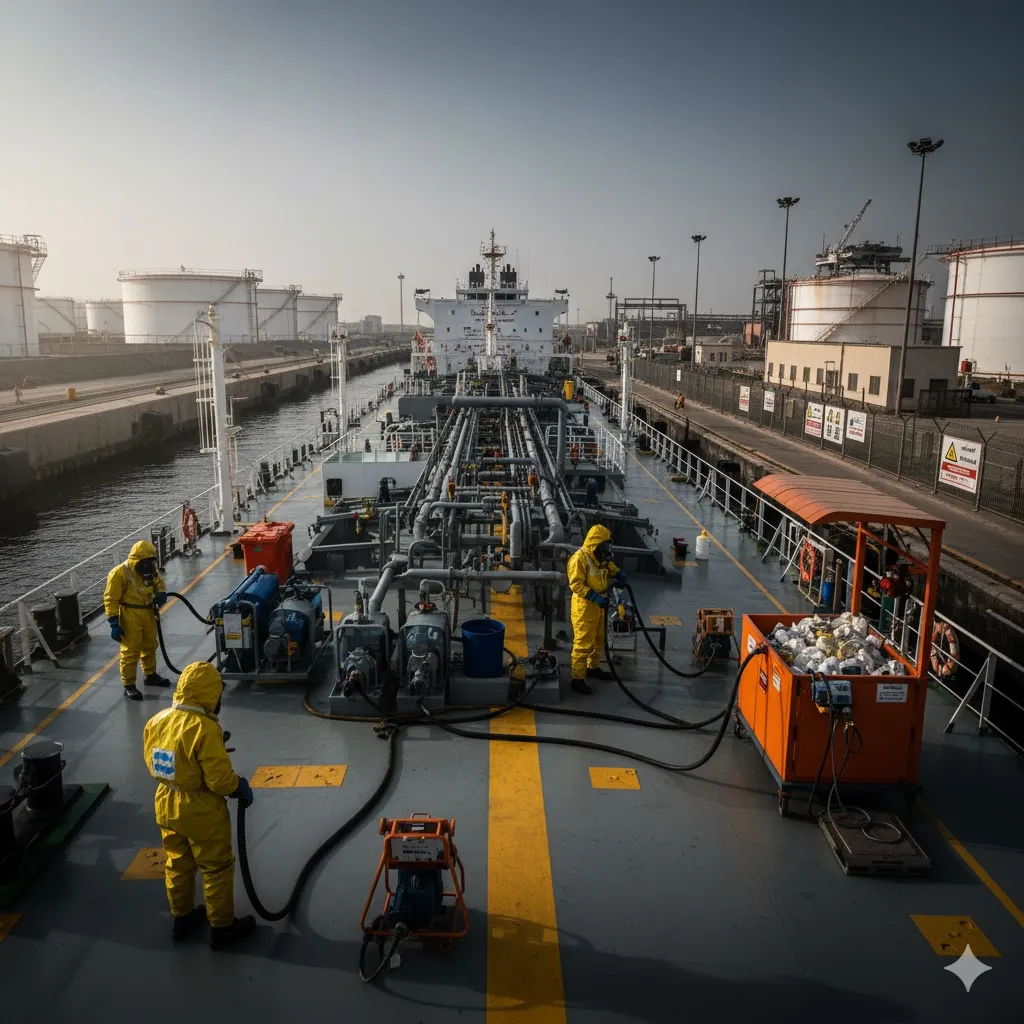
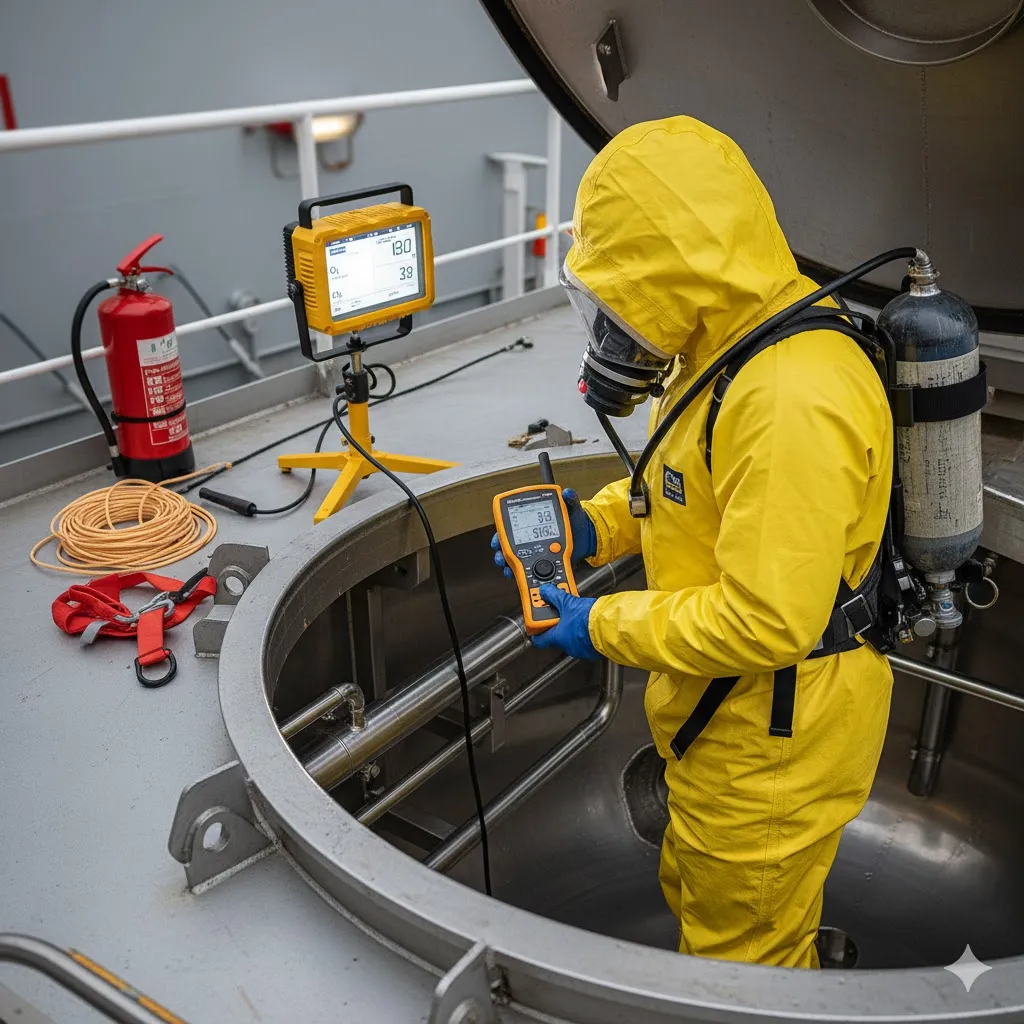
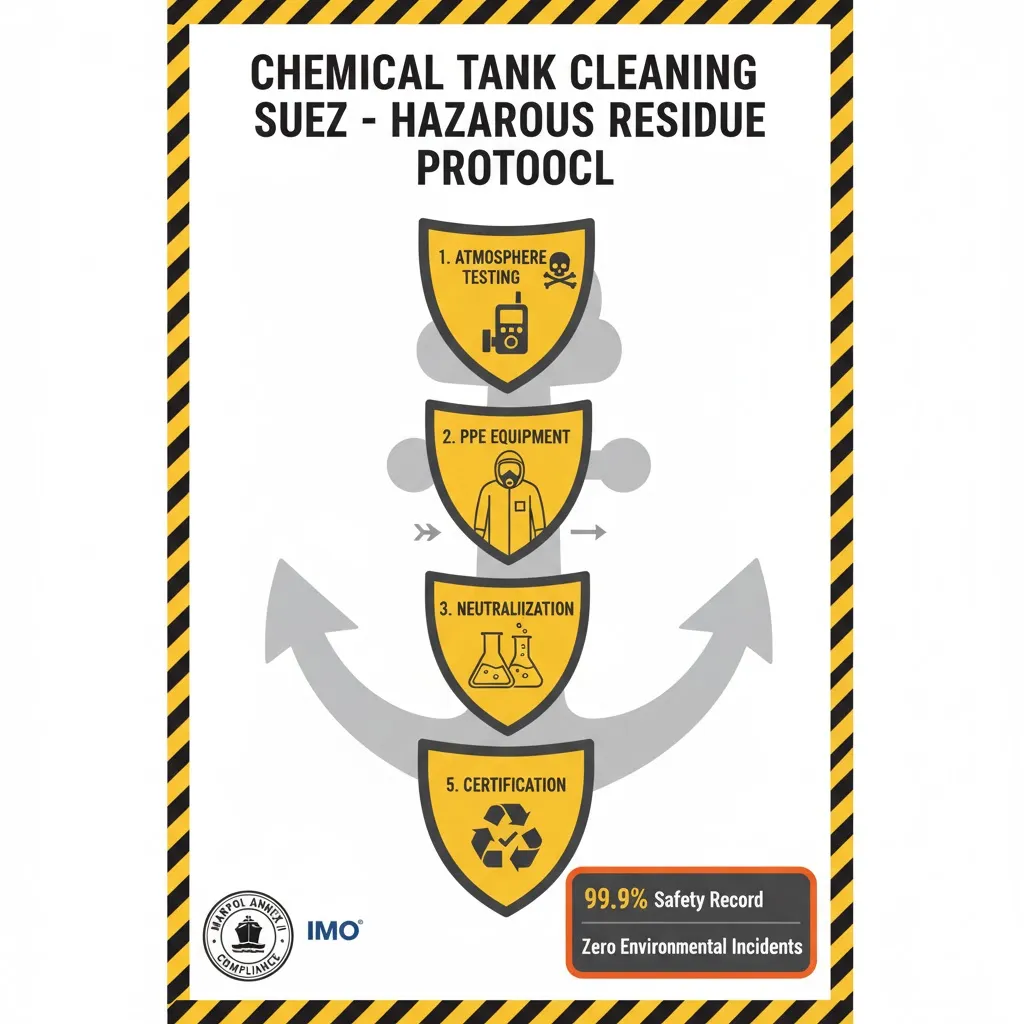
Chemical tank cleaning Suez operations prioritize safety above all considerations. Atmosphere testing precedes any tank entry, measuring oxygen levels, explosive gas concentrations, and toxic vapor presence. Continuous monitoring throughout procedures ensures safe working conditions as cleaning progresses from forward compartments to aft sections.
Personal protective equipment requirements for chemical tank cleaning Suez exceed standard maritime safety gear. Chemical-resistant suits, breathing apparatus, and specialized gloves protect personnel from exposure to hazardous residues. Gas detection equipment provides real-time warnings if dangerous conditions develop during cleaning operations. As detailed in our tank cleaning safety procedures article, proper equipment and training prevent workplace injuries.
Environmental Compliance and Waste Management
Chemical tank cleaning Suez generates hazardous waste requiring proper treatment before disposal. Sophisticated collection systems capture contaminated wash water, preventing environmental discharge into Suez Port waters. Treatment facilities neutralize chemical residues according to MARPOL Annex I and Annex II requirements, ensuring environmental protection throughout the cleaning process.
The IMO International Bulk Chemical Code governs waste disposal standards. Manifests documenting waste quantities, chemical compositions, and disposal methods provide regulatory compliance evidence. Marine Super Cargo maintains meticulous records satisfying port state control inspections and flag state requirements.
Technical Procedures for Hazardous Residue Removal
Chemical tank cleaning Suez methodologies vary based on previous cargo classifications. Category X substances—those presenting major hazards—require pre-wash procedures before vessels depart loading ports. Category Y and Z chemicals permit cleaning at discharge ports using approved methods. Understanding these classifications proves essential for effective operations.
Neutralization procedures transform reactive chemicals into stable compounds before removal. Acidic residues receive alkaline treatments, while basic substances undergo acidic neutralization. This careful approach to prevents violent reactions that could endanger personnel or damage tank structures. Temperature control throughout cleaning maintains safe conditions, preventing vapor pressure buildup.
Ventilation systems continuously exchange tank atmospheres during operations, removing toxic vapors and maintaining safe breathing conditions. Multiple air changes per hour ensure hazardous gas concentrations remain below permissible exposure limits. Forced ventilation continues until laboratory testing confirms tank atmospheres meet safe entry standards.
Certification and Documentation Requirements
Chemical tank cleaning Suez operations conclude with comprehensive certification procedures. Tank cleanliness certificates specify previous cargo, cleaning methods employed, and final inspection results. These documents satisfy MARPOL documentation requirements while providing cargo surveyors with verifiable cleaning evidence.
Laboratory analysis confirms effectiveness. Samples from tank surfaces and final rinse water undergo testing for residual contamination. Only after analytical results demonstrate acceptable cleanliness levels does Marine Super Cargo issue completion certificates permitting cargo loading operations.
Industry Best Practices and Continuous Improvement
Leading providers continuously update procedures based on industry developments and lessons learned. Regular training programs ensure personnel remain current with evolving safety standards and cleaning technologies. Marine Super Cargo participates in industry forums sharing knowledge that advances overall maritime safety standards.
Quality management systems govern every aspect of operations. Documented procedures, regular audits, and performance metrics ensure consistent service delivery. This systematic approach to quality control establishes reliability that vessel operators depend upon when scheduling critical cargo operations through Suez Port.
FAQs About Chemical Tank Cleaning Suez
Q1: What makes chemical tank cleaning Suez more complex than other tank cleaning?
Hazardous chemical residues require specialized neutralization, safety equipment, atmosphere monitoring, and MARPOL-compliant waste disposal that exceeds standard cleaning requirements.
Q2: How long does chemical tank cleaning take at Suez Port?
Duration varies from 24-72 hours depending on chemical classification, tank size, residue quantity, and subsequent cargo compatibility requirements.
Q3: What MARPOL regulations govern chemical tank cleaning Suez operations?
MARPOL Annex II specifically addresses noxious liquid substances, establishing discharge standards and documentation requirements for chemical cargo residues.
Q4: Can tanks be cleaned between incompatible chemical cargoes?
Yes, professional chemical tank cleaning Suez services achieve complete residue removal and neutralization, permitting safe transitions between chemically incompatible products.
Q5: What certifications does Marine Super Cargo provide after chemical tank cleaning?
Complete tank cleanliness certificates, laboratory analysis reports, waste disposal documentation, and IMO compliance records satisfying all international requirements.