

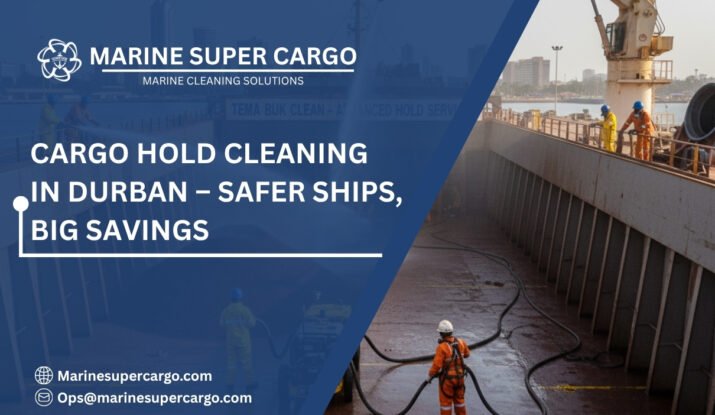
Cargo Hold Cleaning in Durban – Safe, Smart, and Sustainable
Cargo Hold Cleaning in Durban plays a vital role in ensuring ships remain seaworthy and cargo stays uncontaminated. Imagine trying to paint over dust—it never sticks right. Similarly, unclean cargo holds can ruin fresh cargo loads and cause costly disputes. Regular cleaning prevents cross-contamination, rust, and moisture damage, especially critical in Durban’s humid coastal climate.
The International Maritime Organization (IMO) and MARPOL Convention emphasize routine cleaning as part of ship hygiene and pollution prevention. Proper cleaning not only supports vessel efficiency but also symbolizes a shipowner’s commitment to safe, responsible maritime operations in southern Africa’s busiest port.
Benefits of Regular Hold Cleaning Services – Fuel Efficiency, Speed, Reduced Maintenance
Consistent Cargo Hold Cleaning in Durban brings remarkable operational benefits. By removing residues, rust, and damp buildup, it improves a ship’s overall balance and cargo capacity. Clean holds reduce drag and corrosion, enhancing hull performance and saving fuel—similar to trimming a racing yacht’s sails for smoother motion.
Maintenance cycles extend because corrosion is detected early, and coatings last longer. Durban’s busy trade environment, handling mineral and agricultural exports, demands tight turnarounds. Regular cleaning ensures smooth inspections, faster loading, and lower maintenance costs. Over time, these seemingly small savings translate into sustainable profitability for shipping operators.
Environmental Advantages of Eco-Friendly Cleaning – MARPOL and Local Compliance
Environmental compliance defines modern Cargo Hold Cleaning in Durban. MARPOL Annex V restricts waste and oily residue discharge, making eco-friendly cleaning essential. Local authorities under the Transnet National Ports Authority (TNPA) enforce similar environmental safeguards. The shift from harsh solvents to biodegradable agents keeps Durban’s marine life safe.
Cleaning operations now use closed-loop water systems that capture contaminants, aligning with IAPH World Ports’ sustainability goals. This eco-conscious strategy ensures every wash strengthens Durban’s role as a clean, future-ready port. Ships benefit too—reducing risk of violations and building their environmental reputation across global trade routes.

Cost Savings Through Hold Cleaning Services – Reduced Fuel and Dry-Docking Costs
Cargo Hold Cleaning in Durban is an investment that repays itself. Residue buildup adds unnecessary weight and interference within cargo spaces, indirectly increasing fuel consumption. Routine cleaning prevents corrosion and coating wear, reducing the frequency of expensive dry-docking.
Think of it like regular car servicing—it’s cheaper than replacing the engine later. Clean holds also minimize cargo rejection risk, which can cause heavy demurrage penalties. For shipowners calling at Durban, maintaining strict cleaning schedules cuts unforeseen delays while extending a vessel’s operational lifespan. Even marginal efficiency improvements translate into measurable long-term cost savings.
Manual vs Mechanical Cleaning – Pros, Cons, Safety Considerations
Both manual and mechanical techniques play critical roles in Cargo Hold Cleaning in Durban. Manual cleaning provides detailed precision for localized or stubborn areas—important when removing caked residues left by minerals or cement.
Mechanical systems, using pneumatic hammers or pressure jets, achieve speed and consistency but rely heavily on trained operators. While manual work requires strict ventilation and chemical handling protocols, mechanical systems demand power and maintenance. Safety supervision remains non-negotiable.
Inspection and Maintenance Integration – Combining Cleaning with Surveys
Integrating inspections into Cargo Hold Cleaning in Durban helps shipowners maximize their port stays. Once cleaning concludes, surveyors can assess the structural integrity of coatings, bulkheads, and ballast tanks.
This combination is akin to polishing a mirror before inspection—it reveals hidden flaws clearly. Using ultrasonic scanners, acoustic testing, and photo documentation, crews identify corrosion early. These records support upcoming class surveys and flag documentation updates.
Hold Cleaning Services Regulations – IMO, MARPOL, Local Port Rules
Cargo Hold Cleaning in Durban follows a structured intersection of international and local regulations. MARPOL’s Annex V sets strict limits on waste discharge, while IMO guidelines standardize cleaning operations globally.
Locally, Durban’s port authority enforces waste management, chemical use, and safety certification before cleaning commences. Ships must submit cleaning records, waste manifests, and safety documentation for port clearance. Non-compliance can lead to costly detentions or environmental penalties.
Crew Safety During Cleaning Operations – Diver Protocols and Risk Management
Crew safety forms the backbone of Cargo Hold Cleaning in Durban. Cleaning within confined holds involves exposure to rust flakes, moisture, and chemical vapors. To reduce risks, IMCA safety frameworks recommend pre-entry gas testing, continuous ventilation, and emergency planning.
Divers and cleaning teams must complete thorough briefings and safety drills. Drug & alcohol testing ensures all personnel stay alert during the operation. The process resembles controlled teamwork—each member depends on another’s precision.
Hold Cleaning Services – Regional Differences and Challenges
Cargo Hold Cleaning in Durban comes with unique regional influences. The port’s humid subtropical climate accelerates corrosion, requiring regular dehumidification and inspection post-cleaning. Unlike temperate ports, Durban’s exposure to oceanic salt levels demands specialized marine coatings and washing techniques.
Freshwater scarcity during drought seasons can challenge cleaning operations, prompting alternative water reuse systems. These constraints inspire innovative cleaning models in South Africa, such as energy-saving pressure nozzles and closed-loop recycling.
Technology in Hold Cleaning – Sensors, AI, Real-Time Monitoring
Digital transformation deepens efficiency in Cargo Hold Cleaning in Durban. Sensors now track cleaning progress by measuring pressure, residue, and pH values. Artificial intelligence uses these readings to determine the optimum cleaning intensity and duration. Real-time dashboards guide supervisors remotely, improving oversight. It’s like giving the cleaning process its own nervous system—responsive and self-adjusting.
Fuel Efficiency Case Studies – Real-World Savings Post-Cleaning
Several shipping companies report tangible results after opting for Cargo Hold Cleaning in Durban. One bulk carrier handling coal achieved fuel savings of nearly eight percent post-cleaning, verified by onboard monitoring. Another grain vessel reduced downtime by five hours due to faster loading inspections. Clean holds also preserved coating lifespan, minimizing repainting expenses. Such case studies prove that cleaning isn’t just maintenance—it’s cost engineering.
Future Trends in Hold Cleaning Services
The future of Cargo Hold Cleaning in Durban lies in smart cleaning and environmental innovation. Predictive maintenance systems will forecast residue buildup using AI and integrate scheduling automatically with vessel management tools. Autonomous robots powered by renewable energy will further reduce manpower risks.
MARPOL and IMO’s green shipping agenda will guide innovation toward full circular waste systems—collecting, recycling, and reporting automatically. Durban’s adaptation to these trends reflects its ambition as a leading African maritime player, merging technology, compliance, and sustainability in one forward-looking model.
Marine Supercargo – Global Maritime Expertise and Compliance Support
Marine Supercargo provides global tank and cargo hold cleaning, cargo supervision, and compliance solutions for shipowners and managers. Their teams handle documentation, drug & alcohol testing, and inspection coordination to ensure adherence to IMO and MARPOL requirements. With experience spanning energy, dry bulk, and marine logistics, Marine Supercargo maintains reliability through efficient coordination and transparency.
Conclusion – Clean Holds, Confident Voyages
Cargo Hold Cleaning in Durban promotes cleaner ships, cost-effective voyages, and international compliance. It embodies safety, technology, and sustainability in motion.
Key Takeaways:
- Regular cleaning preserves cargo quality and vessel longevity.
- Eco-friendly processes align with MARPOL and port compliance.
- Accurate documentation secures inspections and customer trust.
For global-standard maritime cleaning and compliance support, visit CleanShip.co.
FAQs:
Q1. Why is Cargo Hold Cleaning in Durban important?
It prevents corrosion, residue buildup, and cargo contamination while improving fuel efficiency and maintaining MARPOL and IMO compliance in Durban’s busy port.
Q2. Why does flag documentation matter in shipping?
It proves that cleaning and maintenance meet international maritime standards, ensuring smooth inspections and protecting operators from legal complications.
Q3. How does flag documentation connect to maritime law?
Flag documentation serves as verified proof of compliance under IMO conventions, linking operational safety with international maritime legal frameworks.
Q4. What is the role of Drug & Alcohol Testing during cleaning operations?
Testing ensures fatigue-free, alert crews maintain safe operating environments, reducing accidents and fulfilling IMCA and flag authority safety standards.
Q5. What are the future trends in vessel inspection and documentation?
Future systems will use AI, IoT sensors, and blockchain to automate inspection data and verify compliance with real-time transparency across maritime networks.