

Why Ship Operational Delays Despite “Everything Planned”
Ship operational delays stay one of the most baffling substances in sea exchange. You arrange plans, affirm billets, organize bunkers, yield records, and still the vessel loses hours—or days. When everything shows up organized on paper, delays as a rule cover up interior administrative crevices, coordination disappointments, or outside disturbances. Understanding these root causes makes a difference you secure constitution commitments and decrease monetary exposure. Planning is fundamental. But arranging without hazard expectation welcomes disruption.
The Dream of Idealize Planning
Many administrators expect that once the plan is settled and merchants are booked, operations will run easily. Oceanic coordinations does not work that way.
Port clog, climate, traditions investigation, and last-minute compliance checks can rapidly supersede a well-prepared itinerary.
Regulatory Compliance Bottlenecks
Global sea directions impact each harbour call. The Worldwide Sea Organization sets security and natural guidelines that ships must follow.
Pollution control commitments beneath MARPOL influence squander release, outflows, and tank cleaning methods. Seaward security hones frequently adjust with benchmarks backed by the Worldwide Marine Temporary workers Affiliation. Harbour coordination approaches regularly reflect systems molded by the Universal Affiliation of Ports and Harbors.
Non-compliance can trigger assessment holds or documentation surveys, driving to transport operational delays.
Incomplete Documentation Submission
Missing or off base printed material remains a common delay trigger.
Examples include:
Inaccurate team lists
Incorrect cargo manifests
Missing certificates
Late traditions filings
Even minor blunders can require redress cycles that expend profitable harbour time.
Port Clog and Billet Allocation
High-traffic centres regularly confront compartment deficiencies. Vessels may hold up at mooring for allocation.
In India, Jawaharlal Nehru Harbour regularly encounters blockage amid top cargo seasons. Deferred berthing straightforwardly impacts turnaround time.
Congestion is frequently past your control—but proactive opening booking decreases exposure.
Weather and Environmental Conditions
Rough oceans, tall winds, or destitute perceivability can suspend cargo operations and pilot boarding.
Monsoon designs in South Asia and sandstorms in Center Eastern ports influence planning unpredictably.
Weather is the extreme update that oceanic arranging must stay flexible.
Bunkering and Supply Coordination Gaps
Fuel, new water, and arrangements require tight scheduling.
If bunker freight boats arrive late or documentation is deficient, the vessel cannot leave. Misaligned supply timing contributes altogether to dispatch operational delays.
Clear communication between specialist, provider, and ace decreases this risk.
Cargo Taking care of and Hardware Failure
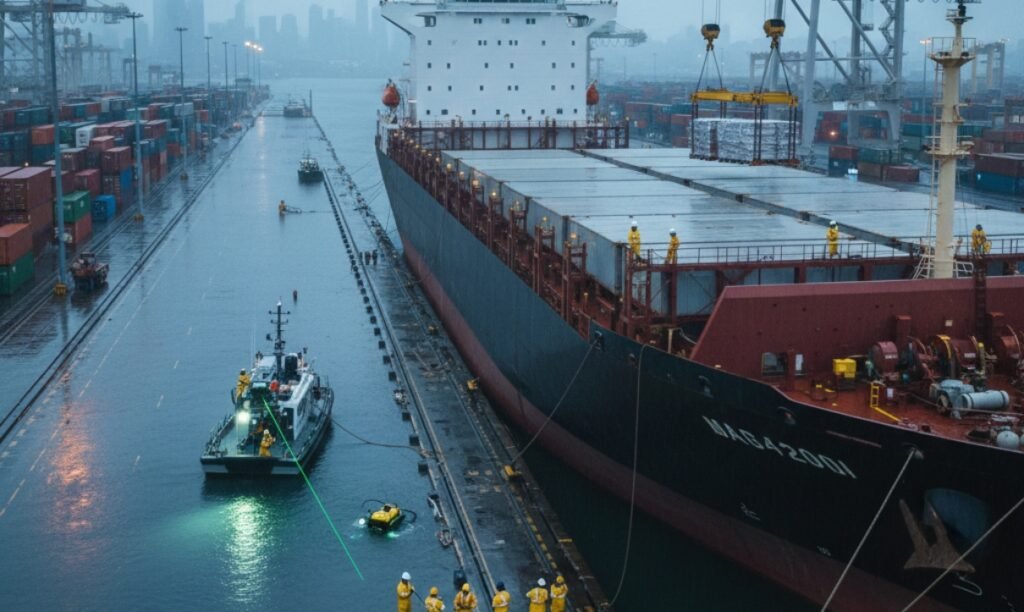
Crane breakdowns, transport flaws, or shore hardware breakdown can stop stacking and release operations.
In a few cases, cargo documentation debate moreover stop operations mid-process.
Technical excess arranging and reinforcement merchant coordination offer assistance moderate this exposure.
Customs and Immigration Clearance Issues
Port specialists uphold movement and traditions conventions strictly.
Late team changes, fragmented visa endorsements, or review banners can hold a vessel at compartment longer than expected.
Advance clearance arranging is critical.
Inspection and Overview Interruptions
Port State Control assessments frequently happen without long take note.
While compliance checks are schedule, arrangement crevices can amplify review time.
Structured review preparation avoids pointless downtime.
Safety Incidents and Stop-Work Orders
Any onboard harm, spill, or near-miss occurrence may trigger a stop-work order.
Environmental or security infringement require examination some time recently continuing operations. Indeed minor spills can make authoritative delays.
Safety culture specifically impacts plan reliability.
Cost Structure and Financial Impact
Ship operational delays carry quantifiable taken a toll implications.
In India, billet expansion charges gather hourly.
In the UAE, ports such as Jebel Ali Harbour apply premium benefit expenses amid expanded stays.
In Singapore, Harbour of Singapore keeps up proficient operations, but delay-related demurrage can raise rapidly due to tight schedules.
Time misplaced rises to income lost.
Communication Breakdown Between Stakeholders
Owners, charterers, specialists, terminal administrators, and surveyors must adjust continuously.
A single miscommunication—such as erroneous Estimated time of arrival reporting—can disturb billet sequencing or provider booking.
Real-time communication stages diminish confusion.
Risk Administration Failures
Risk evaluation must include:
- Weather forecasts
- Port congestion status
- Equipment redundancy
- Regulatory audit preparedness
Reactive administration leads to delays. Proactive administration limits them.
Real-World Case Patterns
Common delay designs include:
- Bunker freight ship lost tide window
- Cargo documentation jumble between shipper and consignee
- Unexpected Harbour State review activated by lost certificate
These are not uncommon occasions. They are dispatch operational delays realities.
Industry Best Hones for Delay Prevention
Leading administrators adopt:
- Pre-arrival compliance checklists
- Digital documentation systems
- Predictive support programs
- Centralized communication dashboards
Consistency makes strides predictability
Technology and Prescient Planning
Modern vessel following instruments coordinated climate analytics and harbour clog data.
AI-driven planning stages presently figure potential delay zones some time recently arrival.
Technology cannot kill uncertainty—but it diminishes surprise.
Environmental and Sustainability Pressures
Stricter outflow checking and balance water assessments include procedural steps.
As natural directions fix, compliance time increments. Administrators must coordinated these variables into plan planning.
Strategic Coordination as a Competitive Advantage
Companies that treat delay anticipation as strategy—not reaction—outperform competitors.
Efficient coordination ensures constitution notoriety and reinforces client trust.
Ship operational delays seldom stem from a single cause. They result from covering chance factors.

Conclusion
Ship operational delays endure since oceanic operations include energetic factors past basic planning. To begin with, administrative compliance crevices regularly trigger review holds. Moment, coordination breakdowns among partners make avoidable disturbance. Third, outside powers such as climate and clog open up little arranging mistakes.
Strategic chance evaluation, organized documentation, and proactive communication essentially decrease presentation. For compliance-focused oceanic coordination adjusted with worldwide harbour guidelines, Cleanship.co gives organized operational bolster outlined to ensure plans, minimize downtime, and guarantee administrative keenness over universal ports.
FAQ:-
Q1. Why do vessels get delayed even with full documentation?
Even with correct paperwork, congestion, weather, or unexpected inspections can cause delays. Maritime operations depend on multiple external factors beyond documentation accuracy.
Q2. Are ship operational delays always preventable?
Not entirely. Weather and force majeure events cannot be controlled. However, proactive planning and compliance readiness significantly reduce avoidable delays.
Q3. How does port congestion affect vessel turnaround?
Limited berth availability forces ships to wait at anchorage. Extended waiting increases fuel consumption, crew overtime, and schedule disruption.
Q4. Do environmental regulations cause delays?
Yes, stricter inspections and documentation checks may extend port stays. Compliance preparation minimizes inspection time and prevents penalties.
Q5. What is the best way to reduce ship operational delay risk?
Implement structured pre-arrival checklists, maintain transparent communication, monitor weather and congestion, and ensure regulatory compliance before arrival.