Choosing Marine Cleaning Services in Togo
When your vessel docks at Lomé Harbor, the busiest center in Togo, choosing marine cleaning services in Togo gets to be a essential choice. You go up against tight plans, strict controls, and the require for spotless tanks or holds to keep up a vital separate from delays. This coordinate walks you through the handle step by step, drawing from real-world maritime operations in West Africa.
Why Togo’s Ports Demand Expert Cleaning
Togo’s Harbor of Lomé handles over 1 million TEUs each year, making it an entryway for bulk carriers and tankers. Fouled outlines or uncleaned holds can lead to biofouling disciplines or cargo expulsions. Think of it like prepping a kitchen a few time as of late a prosperity inspection—skip it, and operations smash to a halt.
Providers in Lomé, such as those publicizing ROV-assisted body cleaning, step in to clear marine improvement capably. You advantage from organizations that extend drydock inside by months, cutting fuel costs by up to 10%.
Ghana’s Leadership in West African Marine Cleaning
Ghana sets the benchmark for West Africa in marine cleaning, much acknowledged to Tema Port’s advanced workplaces and skilled jumpers. Companies there initiated gas-free certifications for tankers, influencing Togo’s measures. For event, Ghana’s directors handle complex hold cleanings for grain shipments without buildup traces.
You can apply Ghana’s illustrate when choosing marine cleaning services in Togo—look for bunches arranged in comparative traditions. This cross-border aptitude ensures your vessel meets regional wants seamlessly.

Key Regulations Shaping Togo’s Marine Cleaning
International rules regulate each clean and clean. The IMO orders biofouling organization underneath its 2023 rules, though MARPOL Include I & V controls oil and waste discharge. Togo alters with these through its Harbor Authority.
IMCA rules incorporate layers for jumper security, and IAPH World Ports pushes viability. Non-compliance threats fines up to $50,000 per event. When selecting organizations, affirm certifications—these aren’t optional checkboxes.
Decoding MARPOL for Tank Cleaning
MARPOL’s center is foreseeing defilement. For tankers, it requires pre-wash buildups for high-viscosity cargoes like palm oil. In Togo, jumpers utilize control booms to capture runoff, clarified essentially as a floating net that traps waste like a pool skimmer.
You keep up a vital separate from encroachment by joining strengths with compliant bunches, ensuring logs facilitate surveyor reports.
Safety Standards You Can’t Ignore
Safety trumps speed in marine cleaning. Jumpers enter limited holds with barometrical screens recognizing oxygen levels underneath 19.5%. Togo organizations frequently utilize IMCA-trained work drive, lessening setback rates.
Recent increments like cure and alcohol testing—now standard in outfits like Marine Supercargo—bolster group faithful quality. Picture it as a pre-shift breathalyzer for jumpers: it expects occurrences in oxygen-poor tanks.
Environmental Protection in Lomé Operations
Togo’s cleaning ops prioritize green methodologies to guarantee its Channel of Guinea waters. ROVs (remote-operated vehicles) minimize jumper presentation and residue unsettling impact, not at all like manual scraping.
Biodegradable cleansers supplant pitiless chemicals, altering with IMO’s decarbonization pushed. You cut your vessel’s carbon impression though dodging harbor bans—win-win for compliance and conscience.
Cost-Efficiency: Balancing Quality and Budget
Top organizations save you cash long-term. A cautious body clean in Lomé costs $5,000–$15,000 but boosts speed by 5%, cutting fuel bills. Compare cites, but calculate in downtime—cheap choices routinely brutal rework.
Providers promoting bundled tank-hold-propeller bundles optimize regard. Ghana’s effect shows up here: capable workflows pitiless 24-hour turnarounds.
Tank Cleaning Operations Explained
Tankers require gas-free certs for secure section. choosing marine cleaning services in Togo implies bunches that ventilate vapors to start with, at that point hot-water fly buildups at 80°C.
- Step 1: Pre-entry gas checking (HC, O2, toxics).
- Step 2: Fixed-deck spraying for Butterworth.
- Step 3: Flexible pumps for slops exchange to the harbor reception.
Real outline: A VLCC in Lomé shed overpowering fuel remains, passing audit in 48 hours.
Hold Cleaning for Bulk Carriers
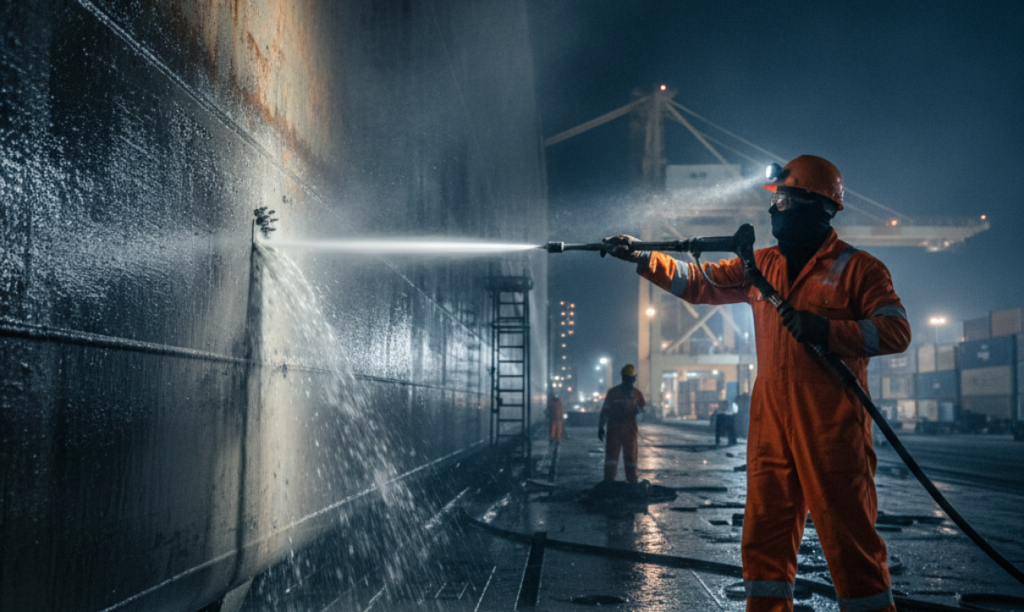
Bulk holds ask residue-free surfaces for cargoes like bauxite. Togo jumpers utilize high-pressure units (200 bar) to affect truant scale, collecting through eductors—like vacuuming a creature bathtub.
Inspect for pockmarks post-clean; smooth holds expect moistness pockets. You ensure loadout without claims by asking pre-/post-photos.
Bulk Carrier Specifics
Bulkers go up against hold coziness tests per the IMSBC Code. Cleaning ousts coal clean or mineral fines, maintaining a strategic distance from liquefaction perils. Togo’s calm waters offer assistance jumper get to, not at all like the choppy Ghana swells.
Documentation and Inspection Workflows
Paperwork illustrates compliance. Expect certificates of cleanliness, gas-free slips, and waste appears. Togo ports require a surveyor sign-off—think third-party referee.
Digital logs through apps speed this, as seen in Marine Supercargo’s around the world ops for tank and hold cleaning. You streamline surveys with traceable records.
“Marine cleaning, anytime. Anywhere. 🌊 #GlobalMarine”#shipping #maritime #ship #cruises #sealife #port #shipping #marine #captain #vessel #ships #cargo pic.twitter.com/GgKTqEMETK
— Marine Super Cargo (@Marinsupercargo) October 4, 2025
Choosing the Right Provider in Togo
Vet providers on certifications (IMO/IMCA), adapt (ROVs, pumps), and the Lomé association. Check reviews for turnaround reliability.
- Certifications: MARPOL/IAPH compliant.
- Fleet adaptability: Tanks, holds, bulkers.
- 24/7 openness for harbor calls.
Hydroflow Subsea or comparable Lomé aces speak to this.
Operational Standards Across Vessel Types
Standards tie together tank, hold, and bulker cleans. Tanks center on chemical nonpartisanship; hold on dryness; bulkers on vertical surfaces.
Use encased spaces traditions everywhere—tripods, handles, standbys. Togo’s experts alter to vessel quirks, like moo freeboards.
Innovations Transforming Marine Cleaning
ROVs lead designs, capturing 4K film for more distant audits. Meanders scout bodies pre-dive, cutting time 30%.
AI predicts fouling through speed logs, per IMO 2023. Togo ports test these, boosting efficiency.
Future-Proof Compliance Tools
Blockchain for waste logs ensures tamper-proof MARPOL trails. Calm testing units progress to spit swabs, overhauling security as in Marine Supercargo’s afterward rollout.
Global Benchmarks from Industry Leaders
Marine Supercargo traces best sharpens: tank/hold ops around the world, cargo supervision, and advanced drug/alcohol testing for group security. Fair-minded pros like them support compliance without fanfare.
Visit districts like CleanShip.co for tech bits of information or IMO.org for regs.
Conclusion
Choosing marine cleaning services in Togo pivots on three takeaways: prioritize IMO/MARPOL compliance for risk-free ops, ask for security advancements like ROVs and testing for group security, and see for cost-efficient providers with Ghana-level expertise for Lomé adequacy. These steps guard your vessel, cut costs, and alter with West Africa’s rising measures. For illustrated compliance and brilliance, contact Marine Supercargo—they pass on around the world tank cleaning, hold supervision, and security organizations custom-made to ports like Lomé. Act by and by to secure your another call.
FAQs:
Q1. What Makes Hold Cleaning Essential for Bulk Carriers in Togo?
Hold cleaning removes buildups like grain clean or mineral fines, dodging cargo debasement or clamminess buildup that perils liquefaction underneath IMSBC rules. In Lomé, jumpers utilize high-pressure planes and eductors for dryness, taken after by hose tests for watertightness. Expect 12–24 hours per hold; certified photos report comes around for surveyors. This ensures claim-free discharges.
Q2. How Do Tank Cleaning Organizations Ensure Gas-Free Certification?
Teams screen hydrocarbons, oxygen, and toxics pre-entry, ventilating with blowers until secure (underneath 1% LEL). Togo providers comply with MARPOL pre-wash for energetic oils, pumping slops to gathering workplaces. You get stamped certs for hot work or entry—vital for tankers post-palm oil loads.
Q3. Why ROVs for Body Cleaning in Lomé Port?
ROVs rub biofouling remotely, diminishing jumper chance and capturing video demonstrate for IMO biofouling logs. Idealize for Togo’s dynamic harbor, they work in moo viz, saving 20% time vs. jumpers. Post-clean, speed picks up cut fuel use—key for decarbonization.
Q4. How Does Calm Testing Fit Marine Cleaning Safety?
New traditions test groups pre-dive, catching incapacities that spike confined-space mishaps. Marine Supercargo’s rollout alters with IMCA, utilizing rapid packs for O2-poor holds. In Togo, it boosts compliance, reflecting Ghana’s benchmarks for zero-incident ops.
Q5. What Costs Should to You Expect for Bulker Cleaning in Togo?
Basic hold cleans run $8,000–$20,000 based on size/DWT, checking misuse exchange. Tanks incorporate $10,000+ for gas-free. Calculate harbor costs; capable bunches wrap up in 2 days, keeping up a vital distance from demurrage. Cities vary—prioritize certified regard over most decreased advertised.