Drug & Alcohol Testing as a Risk Management Tool
Every vessel that sails carries more than cargo—it carries lives, responsibility, and reputation. Among the key safety measures today, maritime drug testing services serve as a powerful risk management tool. Whether you’re operating tankers, bulk carriers, or passenger liners, knowing your crew remains fit for duty protects both your assets and operations.
When we think of drug and alcohol misuse at sea, we think of delayed reactions, poor decisions, and potential disasters. With consistent drug and alcohol testing programs, maritime operators can detect issues before they escalate, promoting safer navigation, regulatory trust, and long-term workforce reliability across all global routes.
Defining Maritime Drug Testing Services
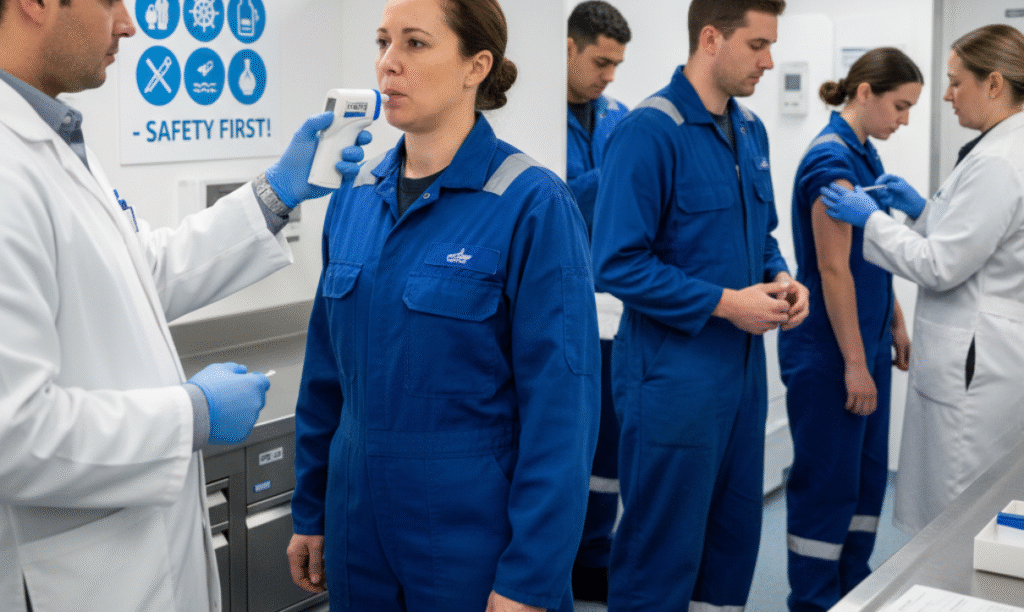
Maritime drug testing services involve structured programs designed to detect and prevent substance abuse among seafarers. These programs combine science-based testing with compliant documentation to meet international maritime safety standards. Samples such as urine, saliva, or sweat are collected onboard or at port and processed under strict chain-of-custody protocols.
The aim is not punishment but prevention—identifying risk early to safeguard crew efficiency and reputation. By integrating these systems into routine operations, shipping companies don’t just comply with the law; they reinforce a culture of vigilance. Their approach becomes a proactive shield against avoidable safety lapses and operational disruption.
Why Drug Testing Is a Vital Risk Control
In risk management, prevention costs far less than a catastrophe. Maritime drug testing services prevent collisions, equipment mishandling, fatigue-related errors, and fatalities by identifying impaired performance early. Think of it as an anchor of reliability—it grounds your organization’s safety systems. Every vessel at sea faces unpredictable conditions, but crew impairment is an avoidable risk.
Testing provides measurable proof that your crew operates responsibly and under compliant standards. When paired with education programs, it helps sustain performance and morale. Above all, having reliable testing systems conveys an enduring message to regulators and insurers: accountability drives operations, not chance.
The Science of Detection and Prevention
Maritime drug testing services use validated methodologies like immunoassay screens and chromatographic confirmation to ensure precision. Samples can be tested for substances such as alcohol, amphetamines, opiates, or cannabis with high accuracy. Modern portable equipment even allows ship-side testing before departure. The tests detect metabolized residues—chemical signatures left behind after drug consumption.
These measurements confirm not only the presence but the duration of use. Accuracy ensures fair assessments while protecting employee rights. The combination of science and procedure helps organizations maintain transparency during audits. With each test conducted, the message is clear: safety, science, and integrity sail side by side. Also read about Offshore Crew Testing: 7 Best Practices for Safer Seas.
Importance of Compliance at Sea
Compliance isn’t just paperwork—it’s about ensuring safe voyages, legal protection, and professional reputation. Maritime drug testing services help fulfill international standards such as those set by the IMO and MARPOL Convention. Many ports and flag states now mandate clear evidence of active drug and alcohol policies. Non-compliance can result in delayed departures, fines, or vessel detention.
For operators managing multinational crews, maintaining consistency across borders is crucial. Compliance also improves trust between shipowners, insurers, and charterers. The result is smooth operation and peace of mind when navigating international waters under rigorous regulatory oversight.
“Marine cleaning, anytime. Anywhere. 🌊 #GlobalMarine”#shipping #maritime #ship #cruises #sealife #port #shipping #marine #captain #vessel #ships #cargo pic.twitter.com/GgKTqEMETK
— Marine Super Cargo (@Marinsupercargo) October 4, 2025
Marine Supercargo Expands Services: Drug & Alcohol Testing for Safer Seas
Marine Supercargo, recognized globally for its expertise in marine cleaning and compliance, has expanded its offerings to include advanced drug and alcohol testing services for the maritime sector. This new addition helps ship owners, managers, and operators maintain crew safety and compliance with international maritime regulations.
The integrated testing program coordinates with global frameworks such as IMO, MARPOL, and IMCA standards. It utilizes portable testing technologies to deliver accurate, real-time results both at sea and portside. This expansion reaffirms Marine Supercargo’s commitment to safer operations and well-managed fleets. For full-service environmental and compliance support, CleanShip.co provides detailed operational solutions tailored for modern marine requirements.
Environmental and Ethical Responsibilities
Effective maritime drug testing services contribute to environmental protection, an often-overlooked benefit. A sober, focused crew ensures that spills, leaks, and operational oversights are minimized. Human error remains a leading cause of marine accidents—many connected to substance misuse. Ensuring clear-headed navigation protects ecosystems and reduces costly remediation. Ethically, testing upholds fairness and accountability.
It secures confidence not only among employers but also within crew communities. Responsible companies set transparent expectations, balancing compassion with discipline. Such accountability forms the social backbone of sustainable maritime operations, aligning human well-being with environmental stewardship. Also, know about Crew Alcohol Testing: 7 Vital Insights for Safer Seas.
Key Benefits to Operations and Finance
From an operational standpoint, regular drug testing increases consistency, confidence, and performance. Maritime drug testing services reduce costly delays, insurance claims, and maintenance downtimes. Ships with verified safety programs often gain favorable inspection reports and insurance premiums. Financially, the savings from accident prevention outweigh the cost of implementation.
Beyond numbers, crews perform better when safety standards are clear and uniformly applied. Each completed test adds credibility to company audits and professional certifications. With transparent systems in place, management strengthens its reputation among charterers, investors, and maritime authorities—an asset that compounds over time. Read more about 7 Powerful Reasons Corporate Drug Testing Works.
Technology Driving New Testing Standards
The evolution of maritime drug testing services is propelled by digital integration. Portable analyzers, tamper-proof digital records, and AI-supported verification are reshaping how fleet compliance is managed. Today’s systems reduce manual oversight while improving speed and accuracy. Imagine a maritime operation where test data uploads directly to compliance dashboards, eliminating paperwork.
Automated alerts inform supervisors of test completions and reports. These innovations align perfectly with IMO’s digital initiatives. They transform drug testing from a manual process into an active surveillance mechanism that continuously strengthens safety culture aboard ships and within global marine networks. Read more about 5 Crucial Reasons Drug & Alcohol Testing Matters.
Integration with Broader Risk Management Systems
For top-tier shipping companies, maritime drug testing services are part of a broader safety management system. Integrated with incident reporting, health assessments, and crew training, testing acts as both a preventive and corrective tool. Combining these measures within maritime risk frameworks builds resilience.
Data from testing programs can identify trends, helping managers predict and prevent future issues. This integration supports ISO and ISM safety audits while reinforcing the company’s commitment to continuous improvement. The more data-driven an operation becomes, the safer and more adaptable its workforce grows—reducing both human and operational risks across global sea routes. Also read about 7 Vital Reasons Alcohol Testing Saves Shipping Companies.
Future Outlook: Towards Safer, Smarter Seas
The future of maritime drug testing services lies in automation, AI analytics, and remote monitoring solutions. As fleets become digitally managed, test integration with performance software will be standard. Predictive analytics may soon help identify potential fatigue or exposure risks. In parallel, regulatory requirements will grow more stringent, prompting companies to embed testing deeper into operational culture.
We are moving toward safer, smarter seas—where surveillance and compassion coexist harmoniously. With advanced tools and ethically sound policies, maritime operations can evolve into fully transparent, safety-first ecosystems benefiting crews, companies, and the oceans alike.

Conclusion
Maritime drug testing services are more than compliance—they are a commitment to safety, trust, and sustainability. They enable fleet managers to prevent risk, protect people, and ensure clean, compliant voyages.
The three key takeaways: testing enhances operational safety, safeguards reputations, and supports long-term sustainability. For streamlined marine compliance and efficient drug testing coordination, visit CleanShip.co today—because safety at sea begins with informed, responsible action backed by reliable systems.
FAQs:
Q1. What are maritime drug testing services?
They are structured programs for detecting and preventing substance abuse among ship crews to ensure compliance and safe sea operations.
Q2. Why is drug testing crucial for maritime operators?
It helps prevent accidents, ensures crew alertness, and maintains compliance with global maritime regulations such as IMO and MARPOL.
Q3. How often should vessels conduct testing?
Most companies schedule testing pre-departure, post-incident, and randomly throughout voyages to maintain consistent safety awareness and reliability onboard.
Q4. What types of samples are used in testing?
Commonly used samples include saliva, urine, sweat, or breath, depending on organizational policies and specific maritime safety requirements.
Q5. How does CleanShip.co support compliance?
By offering integrated environmental cleaning and testing solutions, CleanShip.co helps ship operators stay compliant while optimizing safety and efficiency.