Underwater Ship Hull Cleaning in Eswatini: The Complete Guide
Underwater ship hull cleaning in Eswatini is becoming a vital part of the maritime industry’s sustainability efforts. As ships sail through African waters, biofouling — the accumulation of algae, barnacles, and microorganisms on the hull — can drastically slow vessels, increasing fuel use and emissions. In Eswatini, even though it is landlocked, ship-related services in nearby ports and inland waterways depend on effective hull maintenance.
This guide explores how underwater hull cleaning in Eswatini contributes to smoother operations, reduced costs, and compliance with international marine standards such as the IMO and MARPOL Convention.
What Is Underwater Ship Hull Cleaning in Eswatini
Underwater ship hull cleaning in Eswatini refers to the process of removing marine growth, debris, and corrosion from the submerged part of a vessel’s hull. While Eswatini doesn’t have a coastline, it collaborates with nearby maritime regions and inland water transport operators who rely on these cleaning solutions for cargo and logistics efficiency.
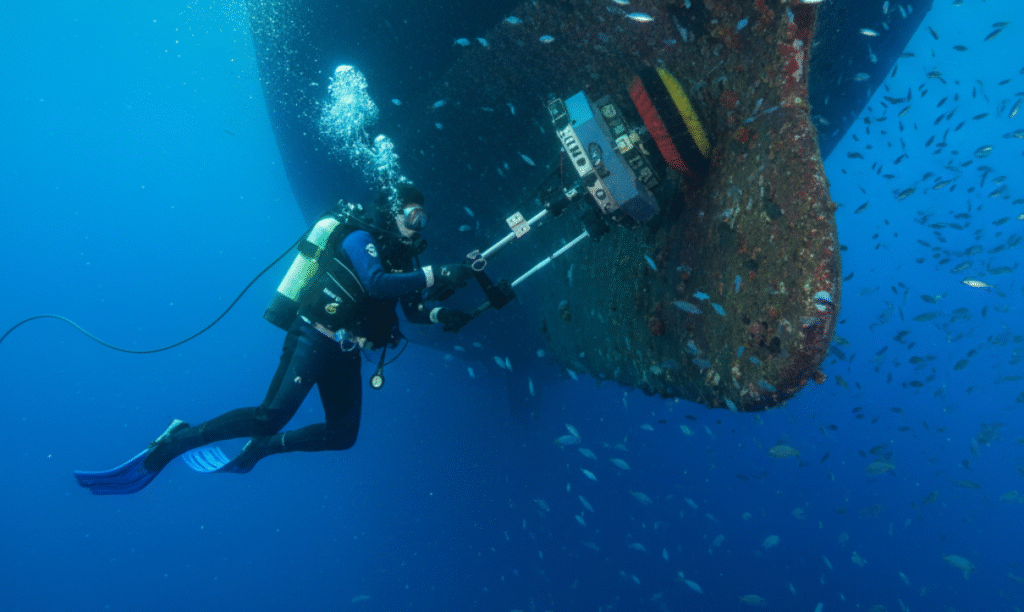
Using high-pressure water jets, brushes, or remotely operated vehicles, professionals restore hull smoothness without drydocking. This reduces downtime and ensures ships maintain optimal performance. Clean hulls also prevent invasive species transfer, helping the ecosystem stay balanced. Companies following IMCA and IMO cleaning guidelines ensure environmentally safe procedures.
Why Hull Cleaning Matters for Every Vessel Operator
For ship owners and operators, underwater ship hull cleaning in Eswatini represents more than a maintenance task—it’s an investment in long-term efficiency. A fouled hull can reduce speed, increase drag, and force engines to work harder, raising fuel consumption by up to 30%. Over time, that means thousands of dollars lost per voyage.
Regular cleaning restores the hull’s hydrodynamic shape, allowing smoother water flow and consistent fuel economy. Additionally, clean hulls reduce CO2 emissions, supporting compliance with international green shipping goals. Maintaining clean underwater surfaces directly translates to cost savings, improved safety, and sustainability across every voyage.

The Step-by-Step Process of Hull Cleaning
The underwater ship hull cleaning process in Eswatini follows strict safety and environmental procedures. First, a team of certified divers or ROV operators inspects the hull using cameras and sensors. This step identifies the type and severity of fouling. Next, mechanical or hydraulic brushes remove biofouling without damaging anti-fouling coatings.
High-pressure water jets are used where mechanical cleaning isn’t possible. After cleaning, the hull is inspected again to confirm complete removal. The collected waste is safely disposed of or recycled under MARPOL regulations. Each stage is documented for compliance, ensuring ship owners meet international maritime maintenance standards. Also read about underwater ship hull cleaning in Moroni.
Environmental Importance of Hull Cleaning
Underwater ship hull cleaning in Eswatini plays an essential role in protecting marine ecosystems. When marine growth accumulates, it can travel with ships to foreign waters, introducing invasive species that disrupt local biodiversity. By cleaning hulls regularly, ships minimize this risk. The process also helps reduce underwater noise pollution and carbon emissions from increased fuel burn.
Companies following the IMO and MARPOL Convention guidelines adopt environmentally friendly cleaning agents and waste-handling systems. These measures ensure that underwater cleaning supports both operational goals and ecological responsibility, aligning Eswatini’s maritime sector with global sustainability initiatives.
“Marine cleaning, anytime. Anywhere. 🌊 #GlobalMarine”#shipping #maritime #ship #cruises #sealife #port #shipping #marine #captain #vessel #ships #cargo pic.twitter.com/GgKTqEMETK
— Marine Super Cargo (@Marinsupercargo) October 4, 2025
Cost and Fuel Efficiency Benefits
One of the biggest advantages of underwater ship hull cleaning in Eswatini is the significant cost and fuel efficiency benefit it provides. A clean hull can improve a vessel’s hydrodynamic efficiency, reducing drag and allowing smoother movement through water. This directly lowers fuel consumption, sometimes by 10–20%, depending on the fouling level.
For large commercial vessels, this means major annual savings and less engine strain. Moreover, avoiding drydocking for cleaning reduces maintenance costs. Regular underwater hull cleaning ensures that vessels maintain consistent performance, save fuel, and operate in compliance with international standards while keeping operational budgets in check. Also, know about underwater ship hull cleaning in Mutsamudu.
Compliance with Global Maritime Regulations
International maritime organizations like the IMO, IMCA, and MARPOL emphasize the importance of hull cleanliness for safety and environmental protection. Underwater ship hull cleaning in Eswatini ensures vessels meet these standards even when operating through inland or connecting ports. Compliance helps ship operators avoid penalties, insurance issues, and cargo delays.
The MARPOL Convention outlines how hull cleaning waste should be managed to prevent pollution. By following these regulations, Eswatini’s marine service providers align with global standards, maintaining cleaner operations, reducing the risk of contamination, and supporting responsible international shipping practices. More details are available at IMCA and marineinsight.com. Read more about Underwater ship hull cleaning in Congo.
Advanced Technologies in Hull Cleaning
Technology is transforming underwater ship hull cleaning in Eswatini. Modern solutions include remotely operated vehicles (ROVs) and underwater drones equipped with rotating brushes and suction systems. These robots clean hard-to-reach areas efficiently without needing divers. High-resolution cameras enable real-time inspection, reducing risks and improving accuracy.
Some service providers use eco-friendly ultrasonic systems that prevent marine growth without harsh chemicals. Data from these cleanings is stored digitally, allowing ship owners to track performance and schedule maintenance smartly. The combination of robotics, AI monitoring, and digital reporting makes hull cleaning safer, faster, and more precise for Eswatini’s maritime operators. Learn more about Underwater ship hull cleaning in Djibouti.
Challenges in Hull Cleaning Operations
Despite its many benefits, underwater ship hull cleaning in Eswatini also faces challenges. The lack of direct ocean access means the nation relies on partnerships with coastal service providers for offshore maintenance. Another challenge involves managing waste generated during cleaning to prevent environmental harm.
Skilled manpower and access to specialized underwater cleaning technology are still developing in regional facilities. However, training programs and international collaborations are closing these gaps. By adopting advanced cleaning tools and aligning with IMO’s green shipping vision, Eswatini continues to improve its maritime service quality and operational resilience. Learn about Underwater ship hull cleaning in Egypt.
Marine Supercargo Expands Services: Drug & Alcohol Testing for Safer Seas
Marine Supercargo, known globally for its professional underwater ship hull cleaning in Eswatini and beyond, has expanded its services to include drug & alcohol testing. This initiative supports the maritime industry’s growing focus on crew safety and compliance. Through systematic and certified testing, Marine Supercargo helps ship owners and managers maintain healthy, sober crews — essential for operational safety and adherence to IMO and MARPOL standards.
These services ensure vessels meet global safety audits while reducing human error caused by substance misuse. This expansion not only promotes safer seas but also reflects the company’s dedication to responsible and compliant maritime practices.
The Future of Hull Cleaning in Eswatini
The future of underwater ship hull cleaning in Eswatini looks promising as the country strengthens its connections to regional maritime trade. Upcoming trends include AI-driven inspection systems that predict fouling levels, self-cleaning hull coatings that reduce maintenance needs, and advanced waste recovery systems.
Collaboration between Eswatini’s transport sector and international organizations like IAPH ensures better knowledge sharing. With CleanShip.co setting new standards for eco-friendly hull maintenance, the region is on course toward sustainable, cost-effective, and technologically advanced maritime operations that safeguard both profits and the planet.
Conclusion: 3 Key Takeaways and a Call to Action
Underwater ship hull cleaning in Eswatini is not just maintenance—it’s a strategic decision for efficiency, safety, and environmental responsibility. First, it reduces drag and fuel costs. Second, it aligns ships with IMO and MARPOL compliance. Third, it promotes sustainability through responsible waste handling.
To ensure your vessel meets these standards and achieves maximum efficiency, collaborate with professional cleaning providers like CleanShip.co. Their certified divers and innovative methods ensure your operations stay smooth, compliant, and cost-effective. Take the next step toward safer and cleaner shipping operations today.
FAQs:
Q1. What is underwater ship hull cleaning?
It’s the process of removing marine growth, dirt, and corrosion from the submerged hull of a vessel to improve performance and fuel efficiency.
Q2. How often should hull cleaning be done?
For optimal performance, vessels should undergo underwater ship hull cleaning in Eswatini every 3 to 6 months, depending on operating conditions and fouling levels.
Q3. Why is Drug & Alcohol Testing important for ships?
Testing ensures crew members are fit for duty, reducing the risk of accidents and maintaining compliance with international maritime safety regulations.
Q4. Does hull cleaning harm marine life?
When performed under IMO and MARPOL guidelines using eco-safe tools, hull cleaning prevents pollution and protects marine biodiversity.
Q5. Which company offers both hull cleaning and crew testing?
Marine Supercargo, supported by CleanShip.co, provides professional underwater hull cleaning and Drug & Alcohol Testing services worldwide for safer, compliant operations.