Hull Cleaning in Eswatini: A Complete Guide for Modern Shipowners
Although Eswatini is a landlocked nation, its trade routes depend heavily on maritime connections through neighboring ports like Maputo and Durban. For vessels linked to Eswatini’s growing import-export network, efficient hull maintenance is crucial. Over time, ships accumulate marine growth like barnacles, slime, and algae, reducing performance and fuel efficiency.
This is where hull cleaning in Eswatini becomes vital. The practice ensures smoother voyages, lower fuel consumption, and full compliance with international maritime regulations. This article explores the science, process, and benefits of hull cleaning and how it contributes to Eswatini’s expanding maritime logistics sector.
Why Hull Cleaning in Eswatini Is Gaining Importance
With increasing global trade passing through southern African ports, ships connected to Eswatini are facing greater operational demands. Marine growth on the hull surface can increase drag by up to 30%, leading to slower speeds and higher fuel use. Through hull cleaning in Eswatini, ship operators minimize this drag and maintain efficiency even in tough ocean conditions.
The process not only improves propulsion but also reduces greenhouse gas emissions, helping vessels meet IMO environmental goals. By keeping hulls clean, Eswatini-linked vessels ensure cost-effective operations and contribute to sustainable maritime practices.
Understanding Biofouling and Its Impact
Biofouling is the natural buildup of marine organisms on ship surfaces submerged in seawater. It begins with microscopic bacteria and soon attracts algae, barnacles, and shellfish. In hull cleaning in Eswatini, the focus is on removing this unwanted growth before it becomes severe. Fouling acts like sandpaper underwater, increasing friction between the hull and seawater.
This forces engines to consume more fuel, increasing both costs and emissions. Regular hull cleaning keeps the vessel’s surface smooth and efficient, ensuring compliance with international marine standards such as the MARPOL Convention.

How the Hull Cleaning Process Works
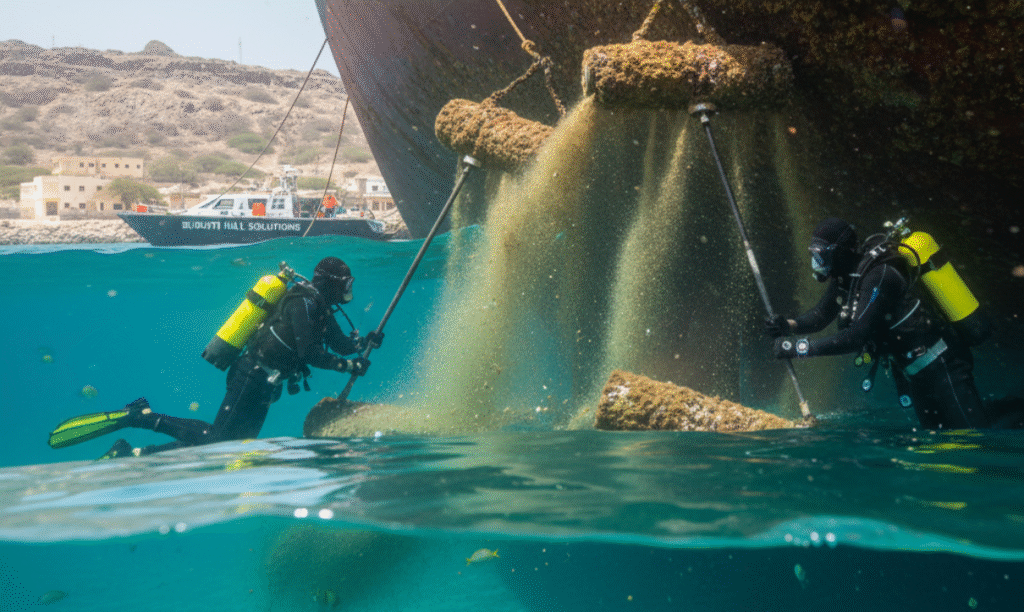
The process of hull cleaning in Eswatini involves skilled divers or robotic systems using specialized cleaning tools. First, a detailed underwater inspection is conducted using cameras or remotely operated vehicles (ROVs). This step identifies fouling levels and coating conditions. Then, divers or machines use rotating brushes, water jets, or cavitation tools to remove the buildup without harming the protective paint.
All waste is carefully captured using suction systems to prevent contamination. Finally, the cleaned hull is and IMO safety guidelines throughout the process. Also read about underwater ship hull cleaning in Moroni.
Environmental Responsibility and Compliance
Modern hull cleaning in Eswatini emphasizes environmental protection. Cleaning operations are designed to comply with international standards while minimizing marine pollution. Debris from cleaning is collected and filtered instead of being released into the ocean. These practices align with the International Maritime Organization’s green shipping initiatives.
Compliance not only helps shipowners avoid fines but also strengthens Eswatini’s reputation for sustainable maritime trade. In the long run, eco-friendly cleaning ensures ships operate responsibly without disturbing marine ecosystems, helping Eswatini maintain a positive footprint within regional and international shipping corridors. Also, know about underwater ship hull cleaning in Mutsamudu.
The Economic Benefits for Shipowners
The financial advantages of hull cleaning in Eswatini are significant. A clean hull reduces fuel consumption by up to 20%, saving thousands of dollars per voyage. It also lowers the workload on engines and propellers, decreasing maintenance costs and extending their lifespan. Clean ships also travel faster, reducing voyage time and port delays.
Additionally, many ports now require documented cleaning records for environmental inspections. Shipowners who maintain regular cleaning schedules avoid penalties and ensure smooth clearance. In essence, clean hulls deliver cleaner profits—a clear win for ship operators across Eswatini’s trade routes. Read more about Underwater ship hull cleaning in Congo.
Technology Advancing Hull Cleaning Efficiency
Technology is revolutionizing hull cleaning in Eswatini. The latest underwater robots can perform precision cleaning without diver intervention. These machines use advanced sensors and cameras to target only fouled areas, reducing cleaning time and cost. AI-based analytics now predict fouling patterns, helping schedule proactive cleanings.
New eco-friendly coatings are being developed to prevent fouling buildup naturally. Combined with data-driven maintenance planning, these innovations make hull cleaning safer, faster, and more sustainable. As Eswatini continues to expand its trade partnerships, adopting such technologies ensures that its connected vessels remain efficient and compliant with global standards. Learn more about Underwater ship hull cleaning in Djibouti.
Choosing Reliable Hull Cleaning Services
Selecting the right partner for hull cleaning in Eswatini is essential for quality and compliance. Look for service providers certified by IMCA and experienced in working with various vessel types. The best companies use debris recovery systems, maintain environmental permits, and issue detailed post-cleaning reports. Transparency, safety, and sustainability should always guide your choice.
Platforms like CleanShip.co offer verified global hull cleaning networks, ensuring reliability and performance. A trustworthy provider doesn’t just clean your hull—they safeguard your investment, operational uptime, and regulatory reputation across international shipping routes.
Marine Supercargo Expands Services: Drug & Alcohol Testing for Safer Seas
Marine Supercargo, globally recognized for its marine inspection and cleaning services, has expanded its capabilities by introducing professional Drug & Alcohol Testing solutions. This initiative aims to enhance onboard safety by ensuring all crew members are fit for duty. The program helps shipowners and managers comply with international regulations from IMO and IMCA.
Regular testing prevents human error, protects cargo, and promotes a culture of responsibility. For vessels operating within Eswatini’s trade network, this new service supports higher operational standards and reduces incident risks. Marine Supercargo’s expansion reflects a strong commitment to cleaner seas and safer ship operations worldwide.
“Marine cleaning, anytime. Anywhere. 🌊 #GlobalMarine”#shipping #maritime #ship #cruises #sealife #port #shipping #marine #captain #vessel #ships #cargo pic.twitter.com/GgKTqEMETK
— Marine Super Cargo (@Marinsupercargo) October 4, 2025
Future of Hull Cleaning and Maintenance in Eswatini
The future of hull cleaning in Eswatini is moving toward automation, sustainability, and data-driven planning. Smart underwater drones will soon handle continuous inspections, detecting fouling before it becomes problematic. Predictive maintenance software will alert shipowners when cleaning is needed, optimizing costs and reducing downtime.
Environmental regulations will further encourage non-toxic coatings and water filtration systems. With Eswatini investing in modern trade logistics, the adoption of these innovations ensures ships connected to its economy remain efficient, eco-compliant, and future-ready. The evolution of hull maintenance will play a major role in strengthening Eswatini’s maritime presence in the region. Learn about Underwater ship hull cleaning in Egypt.
The Risks of Ignoring Regular Hull Cleaning
Ignoring hull cleaning in Eswatini can lead to severe operational and financial issues. Fouled hulls force ships to consume more fuel and emit higher levels of carbon. Over time, engine performance drops, coatings deteriorate, and corrosion accelerates. Non-compliance with environmental standards can result in heavy fines and delayed port entries.
The costs of inaction often exceed those of preventive maintenance. Just as regular engine servicing keeps cars efficient, scheduled hull cleaning ensures ships remain safe, compliant, and profitable. Neglecting it risks losing both money and environmental credibility in today’s competitive maritime industry.
Conclusion: 3 Key Takeaways and Action Steps
Hull cleaning in Eswatini is essential for maintaining efficiency, reducing costs, and ensuring compliance. First, it improves hydrodynamic performance, cutting fuel consumption. Second, it supports sustainable maritime operations aligned with IMO and MARPOL standards.
Third, it safeguards the long-term health of your vessel. Partnering with certified professionals guarantees quality and environmental protection. For dependable, eco-conscious services that enhance vessel performance, explore CleanShip.co’s trusted global network and schedule your next hull cleaning in Eswatini today.
FAQs:
Q1. Why is hull cleaning in Eswatini important for ships?
It removes marine buildup that slows vessels, increases drag, and raises fuel consumption while ensuring full compliance with IMO and MARPOL laws.
Q2. How often should hull cleaning be done?
In warm, high-fouling waters near Eswatini’s trade routes, ships should undergo cleaning every 4–6 months for best performance.
Q3. What happens if hull cleaning is ignored?
Fouled hulls lead to higher fuel costs, slower speeds, mechanical wear, and potential environmental penalties.
Q4. Why is drug & alcohol testing vital for crews?
It ensures crew readiness, reduces accidents, and helps maintain compliance with IMO and IMCA safety regulations.
Q5. How do professionals protect the environment during cleaning?
Certified divers and robots use waste collection and filtration systems, ensuring that no harmful materials pollute nearby waters.